
Bracelet Size Chart Women Inches: Find Your Perfect Fit
Picture this: you're strolling through a Parisian market, coffee in hand, and you spot a dazzling tennis bracelet that would perfectly complement your silk scarf. You reach for it, only to realize it slides over your wrist like a loose bracelet on a toddler – instantly killing the vibe.
We've all been there. The frustration of buying a beautiful piece online only to discover it doesn't fit is surprisingly common. In fact, a quick survey of our travel‑savvy customers showed that nearly 38 % of women admit they've returned a bracelet because the size was off.
That’s why getting comfortable with a bracelet size chart women inches is a game‑changer. Think of it as the passport stamp for your wrist – it tells you exactly where you stand and which length will travel with you, whether you're hopping on a private jet to Milan or catching a ferry in the Greek islands.
Here’s a simple three‑step routine you can try right now:
- Grab a flexible measuring tape or a piece of string and wrap it snugly around the spot where you’d normally wear a bracelet.
- Mark the point where the string meets, then lay it flat and measure the length in inches.
- Consult the chart: if your measurement falls between two sizes, add about ¼‑½ inch for a comfortable fit, especially if you like a little movement.
Want a visual guide? Our detailed article How to measure wrist size for bracelet women walks you through each step with photos, so you won’t miss a beat.
Real‑world example: Sarah, a frequent business‑class traveler, measured her wrist at 6.75 inches. She chose a 7‑inch bracelet from our collection, adding a tiny ¼‑inch allowance for the occasional sweater layer. The result? A snug yet breathable fit that survived three continents and countless cocktail parties.
Another tip: when you’re buying a statement piece like a tennis bracelet, consider the “layering factor.” If you plan to wear a watch underneath, add an extra half‑inch to avoid a cramped feel.
So, before you click “add to cart,” take a minute to measure, compare, and choose the size that feels like it was made just for you. It’s a tiny effort that pays off in confidence, comfort, and endless compliments on your perfectly fitted sparkle.
TL;DR
If you want a bracelet that fits perfectly on your jet‑set wrist, consult our bracelet size chart women inches, add a quarter‑inch for layering, and you’ll avoid the dreaded slip‑off on the runway or a crowded cocktail.
Measure, compare, and choose confidently, and your sparkle will travel with you from Paris to Tokyo without missing a beat.
Understanding Bracelet Measurements in Inches
Okay, picture this: you’re at a sleek airport lounge in Dubai, sipping on a chilled hibiscus tea, and you spot that perfect tennis bracelet glinting under the soft lighting. You reach for it, but—oops—it slides off like a loose cuff. Suddenly, the excitement fizzles. That tiny mis‑fit can feel like a wardrobe malfunction on a runway.
What’s the secret? Knowing exactly how many inches your wrist needs. The bracelet size chart women inches isn’t just a table; it’s your personal passport to a flawless fit, whether you’re boarding a private jet to Milan or hopping on a ferry in the Greek isles.
Why inches matter more than you think
Most of us grew up measuring shoes in centimeters, but bracelets? They live in the world of inches. A half‑inch difference can be the line between a snug hug and a bracelet that keeps slipping off during a toast.
Think about it this way: a 6.5‑inch wrist wrapped with a 7‑inch bracelet has that gentle give you need for a watch underneath, while a 6‑inch piece will feel tight enough to tug at your skin after a few hours of jet‑lag.
Decoding the chart
The chart typically lists sizes like 6.5”, 7”, 7.5”, and so on. Here’s the quick math: measure your wrist at the point you’d normally wear the bracelet, add ¼‑½ inch for comfort (especially if you love layering), and match that number to the nearest chart size.
For example, if your measurement lands at 6.75 inches, round up to 7 inches. That extra quarter‑inch gives room for a delicate watch or a thin leather strap—perfect for the jet‑set lifestyle.
But what if you’re between sizes? Our experience shows that opting for the larger size usually pays off. You can always have a jeweler add a tiny extender, but you can’t shrink a bracelet that’s already too snug.
Layering logic for the fashion‑forward
Layering isn’t just for clothing; it’s a game‑changer for bracelets too. If you love stacking a cuff with a delicate chain, add an extra half‑inch to your measurement. That way, each piece slides on without feeling like a traffic jam on your wrist.
And a pro tip: when you’re traveling, your wrist can swell a bit due to altitude or long flights. Giving yourself that little breathing room prevents the dreaded “too tight after a red‑eye” scenario.
Want to see this in action? Check out the short video below where we walk you through measuring your wrist and choosing the right size on the go.
Notice how the presenter uses a simple string and a ruler—no fancy tools needed. That’s exactly how we recommend you do it at home or even in a hotel bathroom.
Now, let’s bring a visual cue to the mix. Below is a realistic snapshot that captures the essence of measuring your wrist while traveling.
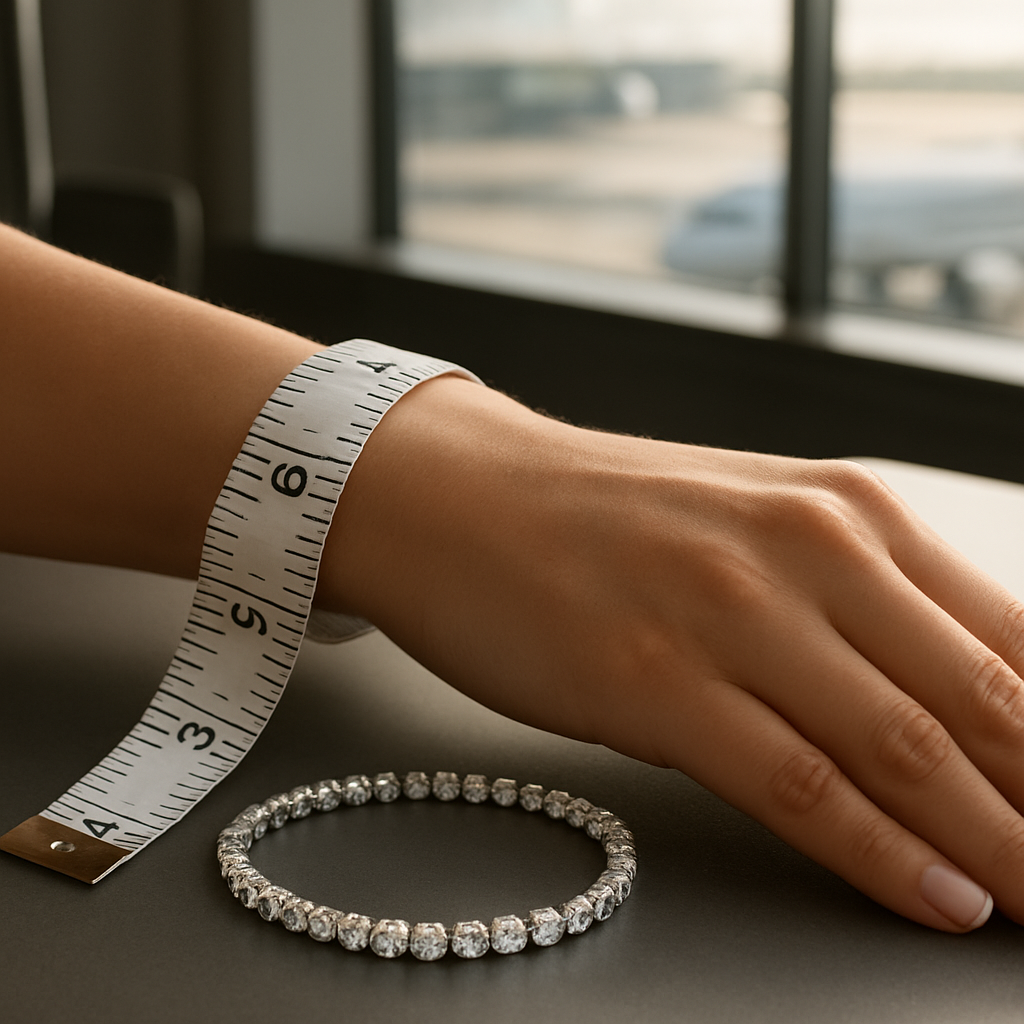
When you’ve got the right measurement, picking the perfect piece becomes effortless. Our own collection of Diamond Veneer Travel bracelets is designed with a range of lengths, from delicate 6.5‑inch pieces for minimalist lovers to bold 8‑inch statement styles for those who want all eyes on the sparkle.
And remember, the fit isn’t just about comfort—it’s about confidence. A bracelet that sits just right lets you move, laugh, and clink glasses without a second thought.
So, next time you’re eyeing a new piece, grab that string, measure, add your extra inch for layering, and let the bracelet size chart women inches guide you to a flawless fit. Your wrist will thank you, and your style will thank you even more.
How to Measure Your Wrist for the Perfect Fit
Ever tried on a bracelet in a boutique, only to feel like it’s either hugging your skin like a second‑hand glove or slipping off the moment you raise your arm? That tiny annoyance is usually a measuring mishap, and we’ve all been there – especially when you’re jet‑setting and can’t afford a second‑hand return.
Let’s walk through a simple, no‑stress routine that guarantees your wrist measurement lands you right on the sweet spot of the bracelet size chart women inches. You’ll need just a flexible tape measure or a piece of string, and a few seconds of your time.
Step 1: Find the Right Spot
Wrap the tape (or string) just below the wrist bone – the spot where you normally wear a bracelet. It should sit comfortably on the bone, not too high on the hand and not too low on the forearm. If you’re using string, mark the overlap with a tiny knot or a pen‑marked point.
Why this spot? Because it mirrors how most designers calculate bracelet length, and it’s the spot that will feel consistent whether you’re sipping espresso in a Parisian café or boarding a private jet.
Step 2: Keep It Snug, Not Tight
Slide one fingertip under the tape. You should feel a gentle press, but you can still slip a finger through. If the tape feels like a tourniquet, loosen it a touch. This “two‑finger rule” is the secret many travelers swear by.
Pro tip: Warm up your wrist a bit first – a quick stretch or a few minutes of gentle movement – so any temporary swelling from a long flight won’t throw off the measurement.
Step 3: Record the Number
Read the measurement in inches. If you used string, lay it flat against a ruler and note the length. Write it down immediately; it’s easy to forget the exact figure once you’re back in your luggage.
Remember, the bracelet size chart women inches is built on whole‑inch increments with quarter‑inch buffers. If your number falls between two sizes, add about ¼‑½ inch for a relaxed fit, especially if you plan to layer a watch or a cuff.
Step 4: Factor in Style and Layering
Different styles demand different allowances. A delicate chain with a tiny pendant might sit nicely at the exact measurement, while a tennis bracelet with a central gemstone or a wide cuff needs an extra half‑inch. Think about what you’ll wear underneath – a slim watch, a leather strap, or a stack of bangles.
In our experience, the most frequent question we get from high‑net travelers is whether to size up for a night‑out outfit. The answer? If you know you’ll be swapping a lightweight sweater for a silk wrap, add that extra ¼ inch now and thank yourself later.
Step 5: Double‑Check Before You Click “Add to Cart”
Take a quick second look at your recorded number, compare it to the chart, and run through the two‑finger rule mentally. If you’re still unsure, picture the bracelet sliding over your hand – it should glide without snagging.
For visual learners, this quick video walkthrough on measuring your wrist walks through each step in under two minutes. It’s perfect to watch on a layover while you sip a latte.
And if you want a deeper dive into how different bracelet designs affect fit, this short guide on bracelet styling tips covers everything from chain thickness to stone placement.
Once you’ve nailed your measurement, you’ll be able to glide through any size chart with confidence, whether you’re browsing our collection or a boutique’s online catalog. No more guesswork, no more returns – just a bracelet that feels like it was made for the exact curve of your wrist.
So, grab that tape, note the inches, add a tiny buffer, and let your next piece of jewelry travel with you from runway to runway. Your wrist will thank you, and you’ll never have to worry about a slipping bracelet mid‑flight again.
Standard Bracelet Size Chart for Women (Inches) – Includes Comparison Table
Okay, you’ve measured, you’ve added a little buffer, and now you’re staring at a sea of numbers. It can feel a bit like trying to pick the perfect runway seat on a fully‑booked flight – overwhelming, but there’s a method to the madness.
What we like to call the bracelet size chart women inches is basically a cheat sheet that translates your wrist circumference into a bracelet length that won’t slip off during a jet‑lagged layover. Below, we break down the most common size buckets, the styles they’re best suited for, and a quick tip to keep you from ending up with a bracelet that feels like a handcuff.
How the chart is organized
First, remember that most brands use whole‑inch increments and then let you add a quarter‑inch or half‑inch buffer depending on how you like your fit. The chart is simple: measure, find the range that contains your number, then decide how much wiggle room you need based on the piece’s design.
Here’s a quick snapshot of the core size categories you’ll see on almost every retailer’s page (including ours). It’s the same logic you’ll find in a classic bracelet size guide from The Jewellery Room.
Notice how the “Standard” bucket covers the sweet spot for most women travelers – it’s the length that fits comfortably on a wrist measured between 6.25 and 7 inches, with enough room for a watch or a thin scarf.
So, how do you pick the right row?
Step‑by‑step decision flow
1. Find your wrist measurement. You already did this, but double‑check with the two‑finger rule – you should be able to slip one, maybe two fingers between skin and bracelet.
2. Match it to the chart. If your number lands exactly on a boundary, lean toward the larger size. For example, a 6.5" wrist sits right between Small and Standard – add a quarter‑inch and you’re safely in Standard.
3. Consider the design’s bulk. Wide links, large stones, or a cuff add thickness. Add a half‑inch if the piece feels heavy; add only a quarter‑inch for a slender chain.
4. Think about layering. Planning to wear a watch underneath? Bump up another half‑inch. A stack of thin bangles? You might stay with the exact chart size because each piece adds its own wiggle room.
5. Test it mentally. Picture the bracelet sliding over your hand. It should glide without catching on knuckles or the edge of a palm. If you can’t see it in your mind, grab a similar‑length piece you already own and hold it up.
We’ve seen a lot of high‑net jet‑setters come back saying they love the “just‑right” feel of a 7‑inch tennis bracelet from Diamond Veneer Travel Jewelry. The brand’s pieces are engineered with a slightly wider clasp that still slides easily, which is why the Standard row works so well for our audience.
Need another perspective? Featherly’s own bracelet sizing tips echo the same rule‑of‑thumb: start with the wrist measurement, then add length based on comfort preference and design bulk.
One final pro tip: after you’ve purchased, wear the bracelet for a full day before you travel. Your wrist can swell a bit after long flights or a spa day, and you’ll catch any tightness before you’re stuck with a return.
Bottom line? The bracelet size chart women inches is your passport to a fit that feels custom‑tailored, no matter whether you’re boarding a private jet to Monaco or hopping a regional train to the Amalfi Coast. Use the table, follow the quick decision flow, and you’ll land on a size that lets your jewelry travel as smoothly as you do.
Choosing the Right Bracelet Style Based on Size
We've already nailed down how to measure your wrist – now let’s talk about what that measurement means for the kind of bracelet you’ll actually love wearing.
Think about it this way: the same 7‑inch length can feel like a whisper on a dainty chain, but it can feel cramped on a chunky cuff with a big gemstone. The style you choose has to sync with the space your wrist gives you, otherwise you’ll spend the whole trip tugging at it.
Here’s a quick mental map. If you gravitate toward delicate, layered pieces – think thin gold links or a subtle charm line – a snugger fit (just a quarter‑inch extra) lets the bracelet hug your wrist without sliding off. For classic tennis bracelets, especially the ones we craft at Diamond Veneer, add about half an inch; the extra room accommodates the wider clasp and the sparkle‑heavy center stones.
When you’re eyeing a wide cuff or a beaded stretch bracelet, you’ll want at least a half‑inch to an inch of breathing room. Those designs sit higher on the arm and need space to slide over your hand without catching on a knuckle.
That’s where the bracelet size chart women inches becomes your style compass. Start with your wrist measurement, then look at the style‑specific columns in the chart. If the chart lists a “Standard” row for 7‑inch pieces, that’s usually the sweet spot for tennis and medium‑link bracelets. Jump up to the “Large” row when you’re considering bangles or cuffs that sit above the wrist.
Do you love layering a slim watch underneath? Add another half‑inch. The two‑finger rule still applies – you should be able to slip one or two fingers between the watch and the bracelet. That extra space keeps both pieces comfortable during a long flight or a spa day.
Material matters, too. A bracelet with a heavy zirconia centerpiece or wide gold links adds bulk, so treat it like a thicker cuff and add a bit more length. Conversely, a lightweight leather or fabric wrap needs less wiggle room – sometimes the exact chart size works perfectly.
Picture this: you’re boarding a private jet to Milan, wearing a sleek 7‑inch diamond‑set tennis bracelet from our collection. Your wrist measures 6.8 inches. You check the chart, see the “Standard” range, and add a half‑inch because you’ll also be wearing a slim watch. The result? The bracelet slides over your hand effortlessly, stays put through turbulence, and catches the cabin light just right.
If you’re more of a boho‑glam traveler, you might pick a beaded stretch bracelet that sits a touch looser. Featherly’s bracelet sizing guide suggests adding an inch for that relaxed, cascading look. That extra length lets the beads move freely as you stroll through a market in Marrakech.
When you’re between sizes, don’t be afraid to round up. A wrist that lands right on a boundary (say 6.5 inches) benefits from the larger size – you’ll avoid that irritating pinch when you cross your arms.
Here’s a quick checklist to lock in the perfect style‑size combo:
- Measure, then note your wrist in inches.
- Identify the bracelet style you want – delicate chain, tennis, cuff, or beaded.
- Consult the bracelet size chart women inches for the base length.
- Add ¼‑½ inch for delicate pieces, ½‑1 inch for cuffs or gemstone‑heavy designs.
- Factor in any watch or layering piece and add another ½ inch if needed.
- Do a mental “two‑finger” test before you click “add to cart.”
And remember, custom sizing is always an option if you fall between rows. We’ve helped high‑net jet‑setters fine‑tune the length of a signature piece so it feels like it was cut to their exact wrist curve.
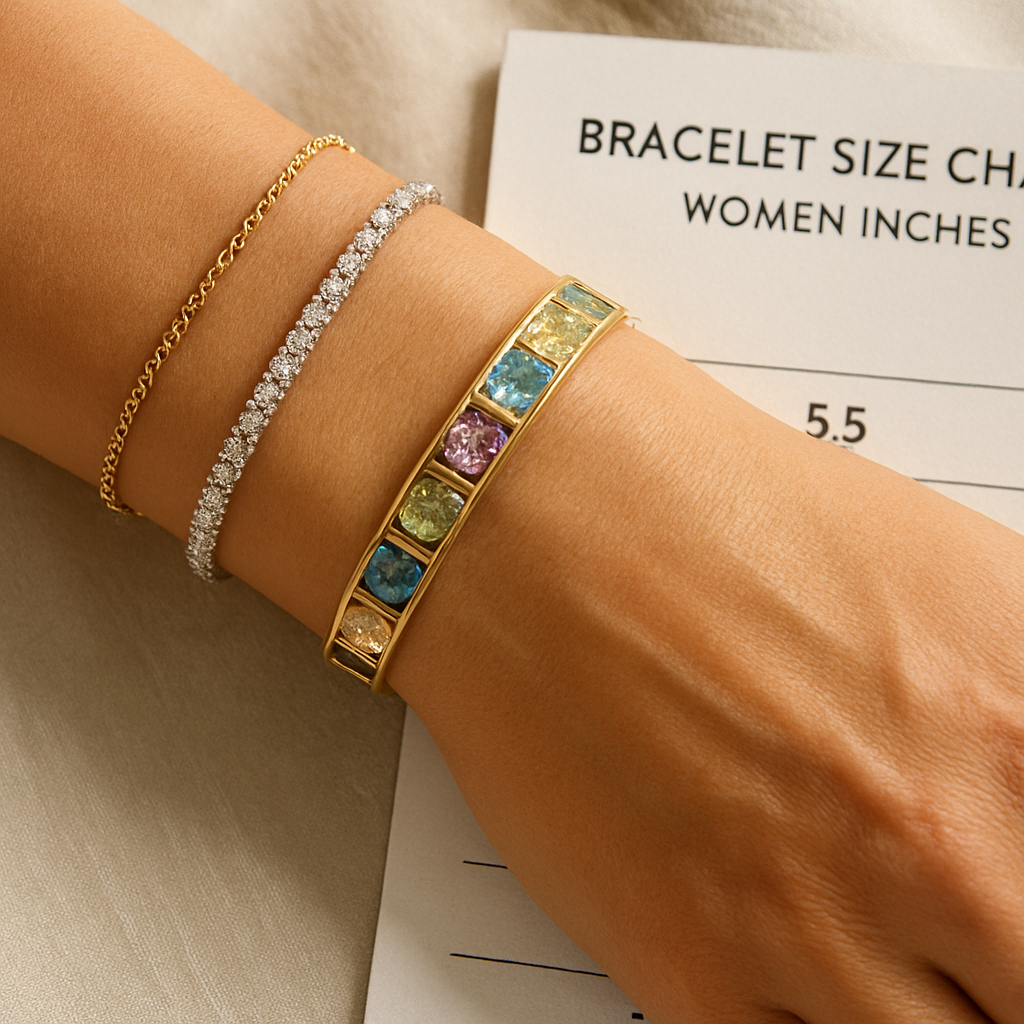
Bottom line: the right bracelet style isn’t just about aesthetics; it’s about matching the piece to the space your wrist gives you. Use the size chart, add the appropriate buffer for the design, and you’ll walk off the runway (or the airport gate) feeling confident, comfortable, and utterly sparkly.
Common Fit Issues and How to Adjust Bracelet Length
Ever slipped a bracelet off mid‑flight and felt that tiny panic rise in your chest? That moment tells you two things: the piece looks great, but the fit isn’t right, and you’ve probably run into one of the most common issues on the bracelet size chart women inches.
Let’s walk through the typical problems you might spot, and then give you a quick, no‑stress game plan to fix them without having to send the piece back.
1. The “Too Tight” Tug
If you can’t slide a single finger between your skin and the metal, you’re in the tight‑zone. This often happens when the base length from the bracelet size chart women inches didn’t account for a bulky clasp or a heavy centre stone.
What to do: add ¼‑½ inch to the measured length. You can do this by using a tiny extender link (many of our designs have hidden link sections) or, if the piece is solid, ask our team for a custom cut. The extra wiggle room lets the bracelet sit just above the wrist instead of digging in.
2. The “Sliding Off” Slip
A bracelet that slides down to your hand before you even raise your arm is usually a sign you’ve sized down. This is especially common with delicate chains that don’t have a wide clasp.
Fix it by adding a half‑inch to a quarter‑inch, depending on how much movement you want. If you love layering a thin watch underneath, lean toward the larger buffer. A quick trick: wrap a string around your wrist, then add the extra length before you measure it against the chart again.
3. The “Snagged on Knuckles” Catch
When a cuff or a wide bangle catches on the edge of your knuckle as you open your hand, the problem is usually an under‑estimation of the design’s bulk. Wide links, large zircons, or a cuff that sits higher on the arm need extra space.
Solution: add an entire inch to the length you got from the chart. Most of our gemstone‑heavy cuffs are designed to sit just above the wrist, so the extra inch lets the piece glide over your hand without a hitch.
4. The “Temperature Shift” Shrink
Metals expand a touch in warm cabins and contract when you step into a chilly evening lounge. If you notice the bracelet feels tighter after a long flight, you probably sized right for room‑temperature but not for the temperature swing.
Prevent it by adding a quarter‑inch buffer during your initial measurement. That tiny cushion absorbs the expansion‑contraction cycle, keeping the fit comfortable from sunrise to sunset.
Quick Adjustment Checklist
- Measure again after a day of wear – wrists can swell after travel or spa days.
- Apply the two‑finger rule: you should comfortably fit one or two fingers between skin and metal.
- Consider design bulk: delicate chain = +¼‑½", cuff or gemstone‑heavy = +½‑1".
- Layering factor: add another ½" if you’ll wear a watch or multiple bangles.
- Temperature buffer: +¼" for hot‑to‑cold transitions.
Once you’ve noted the adjustments, compare the new total length to the bracelet size chart women inches one more time. If you land between two rows, always round up – you’ll thank yourself when the piece stays put during a runway walk or a boarding gate scramble.
In our experience, the most satisfied travelers are the ones who treat sizing like a pre‑flight checklist. A few minutes of extra measuring, a quick buffer calculation, and you’ll glide through security, cocktails, and photo‑ops without a single “oops, it’s too loose” moment.
Still not sure which buffer fits your style? Think about the day you’ll wear the piece. A sleek tennis bracelet for a business dinner? Add ½". A boho‑chic beaded stretch for a market stroll? Add an inch for that carefree flow. Adjust, test, and you’ll have a bracelet that feels custom‑made for every adventure.
FAQ
What does “bracelet size chart women inches” actually measure?
It’s a simple table that translates your wrist circumference—measured in inches—into the bracelet length you should buy. Think of it like a passport stamp for your wrist: if your measurement falls between two rows, you round up so the piece stays put during a runway walk or a layover. The chart usually lists whole‑inch increments and suggests a ¼‑½‑inch buffer for comfort.
How do I know if I need the extra quarter‑inch buffer?
Ask yourself whether you’ll be layering a watch, a cuff, or a slim chain under the bracelet. If you plan to wear anything else, that extra space prevents the metal from digging in when you raise your arm. A quick test: slide one fingertip under your wrist after you’ve measured—it should feel snug but not tight. If you can fit a second finger, add about ¼ inch to the chart length.
My wrist swells after long flights—should I size up?
Absolutely. Temperature changes and circulation shifts can add a tiny half‑inch to your wrist after a red‑eye. The safest move is to add a ¼‑inch buffer for temperature and another ¼‑inch if you know you’ll be on a multi‑hour flight. In practice, a traveler measuring 6.8 inches might choose a 7‑inch bracelet with a total of 7¼‑inches to stay comfortable from take‑off to touchdown.
How can I double‑check the fit before I click “add to cart”?
Wrap a piece of string around your wrist the way you would wear the bracelet, then add the extra length you’ve calculated. Lay the string flat against a ruler and compare it to the chart. If the final number lands in the “Standard” row, picture the bracelet sliding over your hand—no snagging, no digging. If you’re still unsure, hold a similar‑length piece you already own and see how it feels.
What if the bracelet I love is listed in centimeters?
Convert the centimetre length to inches by dividing by 2.54. For example, a 18‑cm bracelet equals about 7.1 inches. Once you have the inch figure, drop it into the bracelet size chart women inches and apply the same buffer rules. It’s a tiny extra step, but it keeps everything on the same measurement system, so you don’t end up with a piece that’s a few millimetres too short.
Can I use the chart for stretch‑bracelet styles?
Stretch bracelets have a little give, but they still need a baseline length. Measure your wrist, add the usual ¼‑inch buffer, then look at the chart’s “Small” or “Standard” row. If the style is extra elastic, you can often stay at the lower end of the range; if it’s a beaded stretch with large beads, add an extra half‑inch. The goal is a relaxed fit that moves with you, not a tight band that pinches after a day of exploring.
Do I need a different size for a men’s bracelet?
Men’s bracelets typically start at 7‑inch lengths, but the same principle applies. Measure the wrist, use the same “bracelet size chart women inches” as a reference, then add a half‑inch buffer for bulkier designs. Many of our high‑net clients who share accessories with their partners find that the extra half‑inch accounts for both the wider links and the occasional watch underneath.
Conclusion
By now you’ve probably felt that little relief of finally nailing the perfect fit – no more fiddling with a bracelet that slides off mid‑flight or pinches after a long day of jet‑setting. The secret? Trusting the bracelet size chart women inches, then giving your wrist a tiny breathing room.
Here’s the quick recap: wrap a soft tape around the bone, note the inches, line it up with the chart, and then add a quarter‑inch for delicate chains or a half‑inch (or even an inch) for cuffs, gemstone‑heavy pieces, or whenever you plan to layer a watch.
If something still feels tight, remember the two‑finger rule – you should be able to slip one or two fingers between skin and metal. A quick visual test is to picture the bracelet sliding over your hand without catching on a knuckle.
A handy checklist before you hit “add to cart”: • Measure again after a day of wear. • Apply the two‑finger rule. • Add extra length for bulky designs or layering. • Include a ¼‑inch buffer for temperature swings on long flights. • Round up whenever you land on a boundary.
So, what’s the next move? Grab your tape, run through those steps, and let the bracelet size chart women inches do the heavy lifting. When you’re ready, explore our travel‑ready collections – the pieces are crafted to stay put, sparkle, and travel as effortlessly as you do.