

Can You Wear Jewelry Through Airport Security: A Complete Traveler’s Guide
Picture this: you’re strolling through a bustling terminal, coffee in one hand, a delicate necklace glinting in the sunlight, and the security line stretching ahead like a never‑ending runway. You’ve probably wondered, can you wear jewelry through airport security without setting off alarms or getting asked to ditch your favorite piece?
Honestly, the answer is a lot more relaxed than the movies make it seem. Most TSA agents treat your sparkle the same way they treat your watch or a simple bracelet – they’ll scan it, maybe give it a quick glance, but they won’t force you into a jewelry‑free zone.
That said, a few practical hiccups can pop up. If you’re sporting a chunky cuff or a pendant with intricate metalwork, the scanner might flag it as a potential metal object. In those moments, you might be asked to place it in a bin alongside your laptop. It’s quick, but it can feel like a tiny inconvenience when you’re already juggling passports and boarding passes.
So, what can you do to keep your style intact and glide through security? First, think about the material. Stainless‑steel or plated pieces usually glide through without a hitch, while high‑karat gold or dense gemstones sometimes need a second look. Second, consider a travel‑friendly version of your favorite look – a lighter, detachable charm or a sleek chain that still gives you that luxe vibe.
In our experience at Diamond Veneer Travel Jewelry, we’ve seen jet‑setting women opt for our cubic zirconia pieces that are both eye‑catching and TSA‑approved. They love the way the stones catch the light without setting off the metal detector, and they’re easy to slip into a carry‑on pouch.
Here’s a quick mental checklist before you zip up that suitcase: Is the piece solid metal or mostly decorative? Does it have moving parts that could be mistaken for a lock? Can you quickly remove it if asked? If you can answer “yes” to most of these, you’re good to go.
Bottom line: you don’t have to sacrifice your runway‑ready look just because you’re boarding a flight. A little foresight and the right travel‑friendly jewelry mean you’ll glide through security with the same confidence you strut onto the plane. Ready to pack your sparkle?
TL;DR
Yes—you can wear jewelry through airport security as long as you pick TSA‑friendly pieces, check for solid metal versus decorative parts, and know how to remove anything that might trigger the scanner.
Try packing one of our lightweight cubic zirconia necklaces—they sparkle, stay under the metal threshold, and glide right through the checkpoint.
Step 1: Check TSA Guidelines for Jewelry
First thing’s first: before you even think about slipping that pendant through the metal detector, take a quick glance at the TSA’s official jewelry guidance. It’s surprisingly short – they basically say any item that’s solid metal, a watch, or a piece with moving parts will be scanned, and if the scanner flags it, you’ll be asked to place it in a bin.
Sounds simple, right? But the devil is in the details. A chunky cuff that looks like a fashion statement can actually be interpreted as a small weapon, and a dangling charm with a hidden clasp might set off the alarm because the detector sees a “moving part.” That’s why we always start with a mental checklist.
Quick Checklist Before You Pack
- Is the piece made of solid metal or mostly decorative plating?
- Does it have hinges, clasps, or any part that moves independently?
- Can you easily slip it off or put it in a small pouch if an agent asks?
If you answered “yes” to most of those, you’re already in the clear. If not, consider swapping it for a travel‑friendly version – think lightweight cubic zirconia necklaces or a sleek stainless‑steel chain that catches the eye without the bulk.
Here’s a little anecdote: a client of ours was headed for a business conference in Lisbon and wanted to wear her favorite gold pendant. The TSA flagged it, and she had to put it in a bin. After that, she switched to our detachable charm set that clips on a simple chain. No more bins, just smooth sailing.
And speaking of Lisbon, if you’re planning a bike‑tour through Portugal’s scenic routes, you might want to pack a bit lighter. Top Bike Tours Portugal has great advice on what to bring for a comfortable ride, and they even suggest a minimalist jewelry approach so you don’t have to worry about security checkpoints while hopping on a train or ferry.
Now, let’s talk about the actual scan. When you step up to the X‑ray machine, the agent will usually give a quick visual once the conveyor belt moves your bag past the detector. If you’re wearing a piece that’s clearly a necklace or bracelet, they may ask you to remove it. That’s totally normal – they’re just double‑checking.
Pro tip: keep a tiny zip‑lock bag in your carry‑on specifically for jewelry. It’s cheap, it’s reusable, and it makes the “remove‑and‑replace” step feel almost effortless.
Wondering what a good travel‑ready piece looks like? Picture a delicate chain with a small cubic zirconia pendant that weighs under 5 grams. It sparkles, stays under the metal threshold, and slides right into a zip‑lock without adding bulk.
Watch the short video above for a visual walk‑through of how TSA agents handle jewelry at the checkpoint. It’s reassuring to see the process in action, and you’ll notice how quickly things move when you’re prepared.
After you’ve cleared security, the real joy begins – you get to strut through the terminal with your sparkle still intact. That feeling of confidence? It’s worth the few extra seconds of planning.
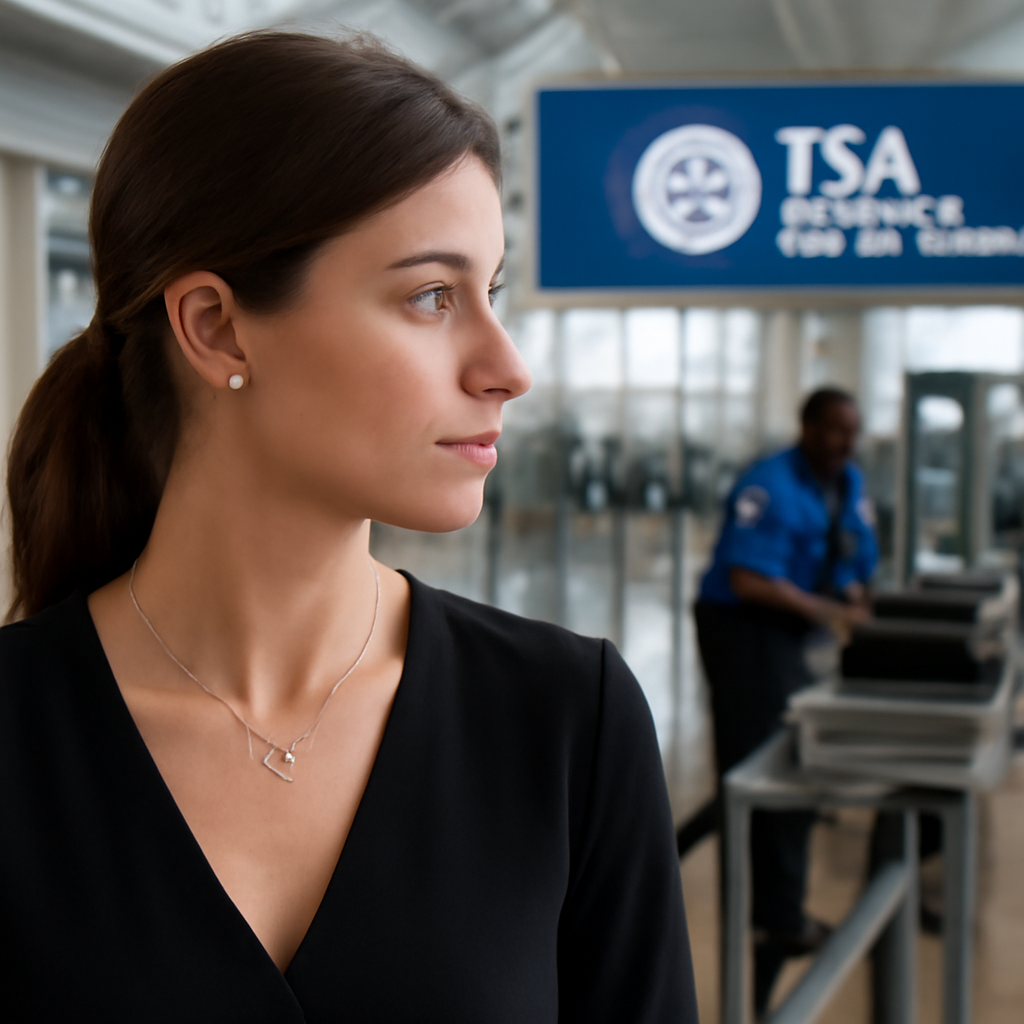 .
.
In a nutshell, the key is to know what the TSA is looking for and to have a backup plan ready. By checking the guidelines, using our quick checklist, and packing a lightweight, detachable piece, you’ll keep your style and glide through security without a hiccup.
Step 2: Prepare Your Jewelry for Screening
Okay, you’ve checked the TSA rules and you’ve decided you want to keep a little sparkle on. The next question is – how do you actually get that piece through the metal detector without a drama?
First thing’s first: do a quick “metal‑mass” test at home. Hold the necklace, bracelet, or ring in one hand. If you need both hands to keep it steady, it’s probably heavy enough to set off the scanner. In that case, either swap it for a lighter travel‑friendly version or stash it in a dedicated pouch inside your carry‑on.
Pack a tiny “screen‑ready” jewelry kit
We like to keep a small zip‑away pouch in the front pocket of our bag. Slip your everyday studs, a thin chain, or a simple band into it. When you approach the line, you can quickly dump the pouch into the bin without digging through a suitcase. It’s the same trick many frequent flyers swear by.
Pro tip: line the pouch with a soft cloth so stones don’t get scratched. If you’re traveling with a statement piece, wrap it in a tiny silk bag – it looks classy and protects the sparkle.
Know your metal composition
Stainless steel, titanium, and most cubic zirconia settings are low‑ferrous, meaning the detector usually lets them pass. Pure gold, silver, or chunky brass can be troublemakers. If you’re not sure, give the piece a quick magnet test; a strong magnet will cling to ferrous metals but not to titanium or stainless steel.
Here’s a real‑world scenario: Sarah, a business‑woman flying from New York to London, loved her 18‑carat gold pendant. At the checkpoint, the detector pinged. She calmly removed it, placed it in the bin, and the agent quickly returned it after a brief secondary scan. She learned that swapping to a titanium‑based replica for travel saved her the extra minute.
When to remove and when to keep on
– Keep on: tiny stud earrings, thin gold bands, silicone or fabric bracelets, and any piece under about 2 grams per hand.
– Remove: chunky bangles, layered necklaces, watches with metal bezels, and pieces with moving parts like lock‑style clasps.
And if you’re wondering whether a watch needs to come off – if the case is larger than a palm or has a metal strap, it’s safer to slip it off. A smartwatch with a plastic band usually sails through.
Quick‑check checklist at the gate
- Is the piece lightweight enough for one hand?
- Does it have a metal clasp or moving part?
- Do you have a pouch ready to toss it in?
If you answered “yes” to all three, you’re good to go. If not, give yourself a minute to swap it out before you step onto the conveyor belt.
We’ve found that travelers who pre‑pack a 5 Must-Have Luxury Travel Jewelry Pieces – all designed to be lightweight and TSA‑friendly – rarely face delays. Those pieces are engineered with low‑density metals and detachable charms, so they stay under the detector threshold.
Don’t forget the little accessories that keep your valuables safe beyond jewelry. A compact anti‑theft pouch or a RFID‑blocking travel wallet can hold your pouch and keep everything organized. Check out some smart travel accessories that fit right in a carry‑on.
And while you’re protecting your sparkle, consider protecting your tech too. A sleek case or a portable charger that slides into the same pocket can keep your phone powered for those long security lines. Premium tech gear often comes with TSA‑approved materials, so you won’t have to juggle extra bags.
Bottom line: a few minutes of prep – a quick weight test, a dedicated pouch, and a backup travel‑friendly piece – turns “will this set off the alarm?” into “I’m ready, let’s fly.”
Step 3: What Happens at the Security Checkpoint?
So you’ve pre‑packed your favorite lightweight pendant and slipped it into your carry‑on. Now you’re standing in line, wondering, can you wear jewelry through airport security without a hiccup. Let’s walk through what actually goes on when you step onto the conveyor belt.
What the machines see
The first thing you’ll encounter is the X‑ray scanner. It separates materials by density, so metals and gemstones show up as bright, solid shapes. A thin titanium chain looks like a faint line, while an 18k gold cuff flashes like a chunky block. That’s why a dense piece can trigger a closer look.
Right after the X‑ray, you’ll pass through a walk‑through metal detector (WTMD). It measures the total metal mass on your body. If you’ve got a heavy watch or a layered necklace, the detector can ping.
When agents ask you to remove a piece
If the scanner flags something “unusual,” a TSA officer will politely ask you to place the item in a separate bin. They’re not looking for sparkle—they’re making sure the object isn’t hiding contraband. A quick pat‑down or a handheld wand may follow, especially if the metal detector lit up.
Here’s a tip: keep your jewelry in a soft pouch that you can toss into the bin in one motion. No need to rummage through your bag; a single, tidy swipe saves you minutes and keeps the piece safe.
What to expect during a secondary inspection
If the X‑ray image looks dense, the officer might open your carry‑on and ask you to hand the piece over. You can request a private screening—just say, “These are valuable pieces; may I have a private inspection?” Most airports honor that request.
During a secondary check, agents may wear gloves and place the jewelry on a clean tray. Watching the process can give you peace of mind; you’ll know exactly who handled it and how.
How to stay smooth and stress‑free
1. Wear only what you can easily remove. A thin stud or a single pendant under 2 grams per hand usually sails through.
2. Keep paperwork handy. A quick photo of the piece or its appraisal can speed up any questions.
3. Know your metal. Stainless steel and titanium are low‑ferrous, so they’re less likely to set off the detector. Pure gold or platinum can be a trigger.
4. Ask for a private screening if you’re nervous. It’s your right, and it often feels less invasive.
Real‑world snapshot
Imagine you’re boarding a flight from New York to London. You’re wearing a sleek cubic zirconia necklace from Diamond Veneer. The X‑ray shows a light line, the metal detector stays quiet, and the officer gives you a friendly nod. You glide through, bag in hand, and still look runway‑ready.
Now picture the same scenario with a chunky 18k gold cuff. The detector pings, the officer asks you to place it in a bin, and a brief secondary scan follows. No drama, just a minute extra—nothing you can’t handle.
That’s the whole picture: a quick visual check, a possible secondary look, and a chance to keep your sparkle. Knowing the process lets you decide whether to wear, stash, or swap a piece before you even reach the checkpoint.
For a deeper dive into how X‑ray and metal detectors differentiate jewelry from other items, check out this detailed guide from Jewellers Reviews. It breaks down the science behind the alarms and gives extra tips for protecting high‑value pieces.
Bottom line: you can definitely wear jewelry through airport security, as long as you pick TSA‑friendly pieces, know your metal, and have a tiny pouch ready. A little preparation turns “Will this set off the alarm?” into “I’m good to go, let’s fly.”
Step 4: Protect Delicate Pieces During Screening
So you’ve made it past the metal detector, but you still have that glittering necklace or heirloom bracelet in your hand. The next hurdle is the X‑ray bin, and that’s where delicate pieces can get a little nervous. Let’s walk through how you can keep those fragile gems safe while still answering the big question: can you wear jewelry through airport security without a disaster?
Wrap it, don’t fold it
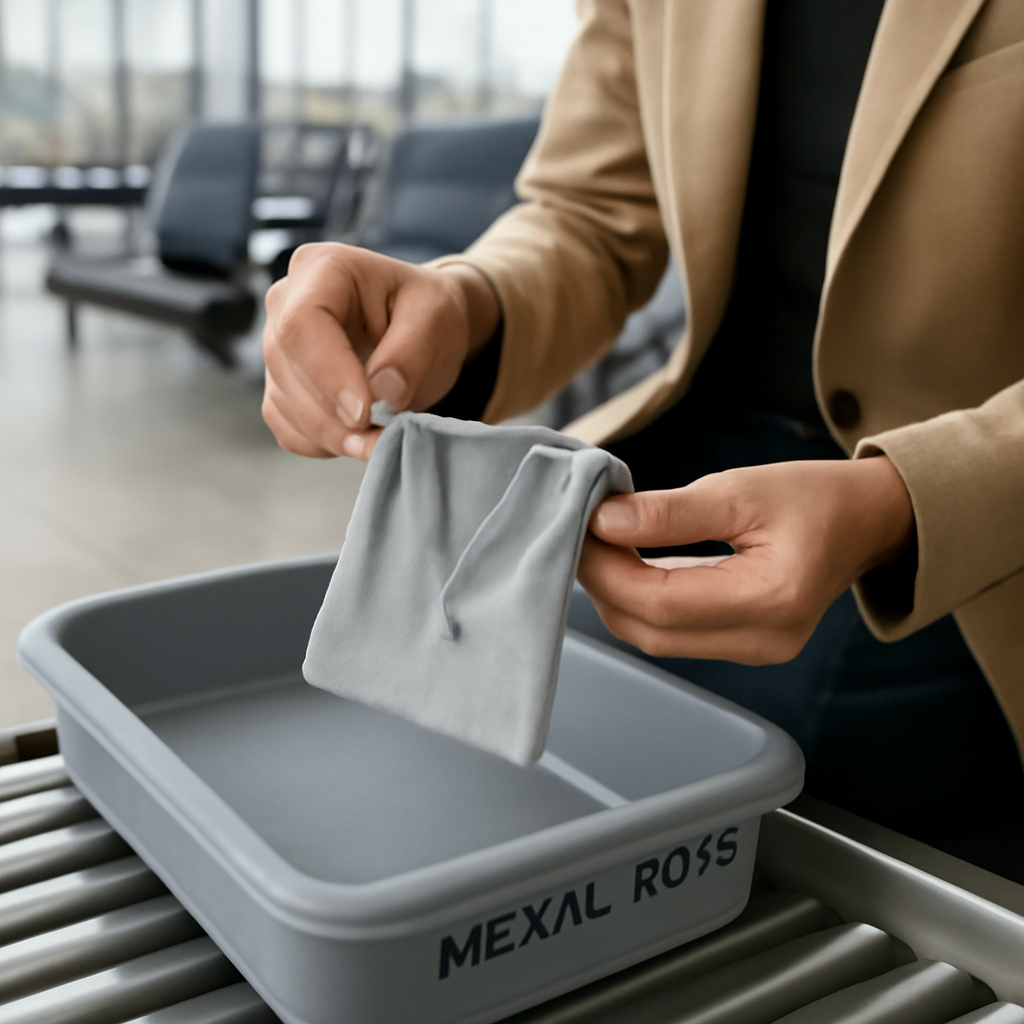
First thing’s first – give your jewellery a soft home before it meets the conveyor belt. A tiny silk pouch or a padded jewelry travel case does wonders. Slip the piece inside, seal it, and you’ve created a barrier against the jostle of other passengers' bags.
Why silk? Because it’s smooth, it won’t snag on clasps, and it looks elegant enough to make you feel like you’re still on the runway. If you don’t have a silk pouch, a clean cotton handkerchief works just as well – just make sure it’s dry.
Separate the fragile from the sturdy
When you place your bag on the X‑ray belt, keep the wrapped jewellery in a separate bin. That way the scanner’s wand won’t accidentally brush against a delicate chain or a loose gemstone.
It might feel a little extra, but trust me – the extra second you spend pulling a tiny pouch out of your carry‑on saves you from a cracked pendant later. A quick visual check by the officer is all that’s needed, and you keep control of your piece the entire time.
Use a “screen‑ready” pocket
Many frequent flyers swear by a dedicated front‑pocket in their carry‑on. It’s shallow enough to slide out in one motion, yet deep enough to hold a small pouch, a pair of stud earrings, and a thin chain.
When you’re in line, pull the pocket open, dump the pouch into the bin, and close it back up. No rummaging, no panic, just a smooth motion that looks like you’ve done this a hundred times.
Secure moving parts
Clasps, lock‑style charms, and dangling beads are the culprits that love to get caught on the scanner’s wand. Before you head to the checkpoint, give each moving part a quick test – try opening and closing it with one hand. If it feels stiff, consider tightening the screw or, better yet, swapping it for a travel‑friendly version from our collection.
Our lightweight cubic zirconia pendants, for example, have snap‑fit closures that stay shut during the scan but open easily once you’re past security.
Checklist before you walk through
- Is the piece wrapped in a soft, non‑abrasive material?
- Do you have a separate bin or a dedicated pouch ready?
- Are all clasps and charms securely fastened?
- Can you remove the item in under ten seconds if asked?
If you can answer “yes” to all of those, you’re in the clear.
What to do if a secondary inspection is required
Sometimes the scanner flags a dense setting, even if it’s wrapped. The officer will politely ask you to hand it over for a closer look. Stay calm, hand them the pouch, and watch the process. Most agents will place the jewellery on a clean tray, inspect it quickly, and return it to you.
Feel free to request a private screening if you’re uneasy – it’s your right, and agents are used to it. A private booth means fewer eyes on your valuables and a quieter environment for you to keep your composure.
Extra tip: protect the sparkle with a travel‑size polishing cloth
A quick wipe after you retrieve your piece can remove any faint smudge from the scanner’s tray. Keep a microfiber cloth in the same pocket as your pouch; it’s a tiny habit that keeps your jewellery looking runway‑ready.
Bottom line: protecting delicate jewellery during screening is all about preparation, separation, and a little bit of gentle handling. By wrapping, isolating, and double‑checking fastenings, you turn the “can you wear jewelry through airport security” question from a worry into a confident “yes, I’ve got this.”
Step 5: International Airport Variations
We've covered the basics of prepping your sparkle for a U.S. checkpoint, but the world isn’t a single security system. When you hop onto a flight from Paris to Tokyo, the rules can feel like a different language—literally and figuratively.
Know the regional scanner vibe
In Europe, most hubs use millimetre‑wave body scanners that see both metal and non‑metallic items. They tend to be a bit more lenient on jewellery because the image shows a clear silhouette. That means a delicate gold chain often sails through without a second glance.
Contrast that with many Asian airports, where walk‑through metal detectors are still the workhorse. Places like Hong Kong International or Singapore Changi will flag anything over roughly 100 grams on your body. If you’re wearing a chunky cuff, you’ll likely be asked to place it in a bin.
So, does the answer to “can you wear jewelry through airport security” change? Not really—the answer is still yes—but the “how” shifts depending on the local tech.
Pre‑check equivalents abroad
In the United States you’ve probably heard of TSA Pre‑Check. Europe has “EasyPass” in the Netherlands and “Fast Track” in many UK airports. These programs often grant you a dedicated lane with a lower‑sensitivity detector. If you have a trusted‑traveler status, you can usually keep a thin necklace on.
Asia is catching up. Dubai International offers “Smart Gate” for Emirates‑Skywards members, and some Chinese airports let you enrol in “Fast Pass” programs that reduce secondary inspections. Enrolling ahead of time can shave a few minutes off the line and let you glide through with your favourite pendant.
Currency, customs, and jewellery declarations
Beyond the metal detector, think about customs forms. Many countries require you to declare jewellery over a certain value. If you’re travelling with a high‑karat piece, have a simple photo or receipt in your phone. That way, if an officer asks, you can show proof without rummaging through your bag.
In the EU, the threshold is usually €10,000; in Canada it’s CAD 10,000; in Australia it’s AU$10,000. Knowing these numbers ahead of time prevents an awkward pause at the desk.
Practical tips for every continent
- Pack a “global pouch.” A soft, zip‑up pouch that fits in a front pocket works everywhere. Slip your studs, a thin chain, or a tiny cubic zirconia pendant inside before you even reach the gate.
- Swap heavy pieces for travel‑friendly twins. If you love a 18k gold bracelet, consider a titanium replica from our collection for the flight. It looks luxe, stays under the metal threshold, and you can swap it back once you’re off the plane.
- Know the “no‑jewellery” zones. Some airports—like Istanbul Airport’s “Security Checkpoint B”—temporarily ban all metal accessories during peak hours. A quick glance at the airport’s website or a travel‑forum post can alert you.
- Use a magnet test before you leave. A small fridge magnet will cling to ferrous metals but not to stainless steel, titanium, or most cubic zirconia settings. If it sticks, plan to remove that piece before you board.
When you’re forced to remove a piece
If an officer asks you to take something off, stay calm and place it in your pouch. Ask politely for a private screening if you’re uncomfortable; most agents respect that request. After the bin passes through the X‑ray, they’ll hand it back—usually in a matter of seconds.
And here’s a little secret: the bin’s tray is often metal‑free, so you can rest your jewellery on it without worrying about scratches. Just give it a quick wipe with the microfiber cloth you keep in the same pocket.
Quick checklist for international travel
- Research the primary scanner type at your departure airport (metal detector vs. millimetre‑wave).
- Enroll in any fast‑track or trusted‑traveller program available.
- Pack a soft pouch with TSA‑friendly pieces.
- Carry a photo or receipt for high‑value items.
- Do a magnet test on any piece you’re unsure about.
One more nuance: Latin American hubs like São Paulo Guarulhos or Mexico City often combine a metal detector with a hand‑held wand. The wand can be triggered by ornate clasps, so a quick removal of any decorative lock before you step up the line can save you a second scan.
Bottom line: the world may have different security flavours, but the core strategy stays the same—prepare, separate, and stay relaxed. Whether you’re strolling through Schiphol or lining up at LAX, you can still answer “yes” to “can you wear jewelry through airport security” and step onto the plane feeling runway‑ready.
Step 6: Overlooked Tips & Comparison Table
We've talked about the basics, but there are a few sneaky details that most travelers overlook. Ever wonder why a tiny pendant slips through while a chunky cuff makes the metal detector scream? The answer is usually less about the metal itself and more about how you present it.
Tip #1: Use a “screen‑ready” pouch, not just a zip‑top
Slip your jewelry into a soft, zip‑up pouch lined with microfiber. The pouch keeps stones from rubbing against each other and gives you a single, tidy piece to toss into the bin. If you yank a loose earring out of a regular zip‑bag, you risk losing it in the conveyor shuffle.
Tip #2: Separate moving parts from solid pieces
Lock‑style clasps, dangling beads, or chain links can snag the handheld wand. Before you get in line, give each moving part a quick one‑hand test – if it wiggles, wrap it separately or replace it with a snap‑fit version from our travel collection.
Tip #3: Magnet test on the go
A tiny fridge magnet in your carry‑on can tell you instantly whether a piece is ferrous. If the magnet sticks, plan to remove that item before you reach the checkpoint. Non‑ferrous metals like titanium or stainless steel usually glide past unnoticed.
Sounds simple, right? But there’s a subtle habit that even seasoned flyers forget: keep the pouch in an easily reachable front pocket. When you’re juggling a boarding pass, coffee, and a laptop, the last thing you want is to dig through the main compartment.
And what about those “just in case” moments when security asks you to take something off? A quick glance at the comparison table below can save you a nervous pause.
| Scenario | Best‑practice move | Why it works |
|---|---|---|
| Metal detector pings on a thin chain | Slide chain into soft pouch, place pouch in bin | Reduces metal mass contact and protects the chain from scratches |
| Hand‑held wand catches a dangling charm | Wrap charm separately in silk, hand it to the officer | Prevents snagging and speeds up secondary inspection |
| Large gemstone pendant triggers X‑ray alert | Swap for a lightweight cubic zirconia replica before security | Lower density avoids extra imaging while keeping the look |
Notice how each row pairs a concrete action with the reason behind it. That little extra “why” keeps you from feeling like you’re just following a checklist.
Overlooked tip: Dress the pouch for the journey
Pick a pouch color that matches your outfit, or even a subtle pattern that makes it easy to spot in a crowded bag. It sounds trivial, but the visual cue saves a minute of rummaging when you’re already late for boarding.
Another tiny hack: keep a microfiber cloth tucked next to the pouch. After the bin’s tray returns your jewelry, a quick swipe removes any faint scanner smudge and restores that runway sparkle.
We’ve also seen travelers get tripped up by “security‑only” zones – those areas where you must remove all metal accessories before entering a restricted area. A quick glance at the airport’s website (or a travel forum) ahead of time tells you if you need a full‑strip before you even reach the checkpoint.
So, what should you walk away with?
- One dedicated, soft‑lined pouch in a front pocket.
- A magnet for on‑the‑spot metal test.
- A backup lightweight piece (like a cubic zirconia pendant) for any surprise alerts.
If you want a deeper dive into the science behind why certain metals set off alarms, check out this thorough guide from Boera Jewelry’s security overview. It walks you through the detector sensitivities and offers a few extra pro tips.
Bottom line: the overlooked details are the ones that turn a smooth glide into a stressful scramble. By mastering the pouch, the magnet, and the quick‑swap strategy, you’ll answer “can you wear jewelry through airport security” with a confident “yes, and I’ve got this.”
Conclusion
So, after all the checkpoints, magnet tests, and pouch tricks, what's the final verdict?
You can absolutely wear jewelry through airport security – you just need a tiny bit of foresight and the right travel‑friendly pieces.
Remember the three pillars we kept returning to: a soft‑lined front‑pocket pouch, a quick magnet test, and a lightweight backup like a cubic zirconia pendant.
If a piece feels heavy enough to need both hands, stash it before you join the line. If it clinks when you tap it with a magnet, swap it for a titanium or stainless‑steel version from our collection.
When you place the pouch in the bin, you’ve already taken the guesswork out of the agent’s hands – and you’ve saved yourself a minute of rummaging.
And if an officer does ask you to remove something, stay calm, hand over the pouch, and ask for a private screening if you’d like extra privacy.
In short, the answer to “can you wear jewelry through airport security” is a confident “yes,” as long as you prep the right way.
Next time you zip up your carry‑on, give those three steps a quick mental run‑through. Your sparkle stays safe, your stress stays low, and you glide straight to the gate.
FAQ
Can I wear my gold necklace through airport security without taking it off?
Gold is a non‑ferrous metal, so it won’t set off the metal detector in the same way iron does. However, a chunky gold piece can still trigger the alarm because the detector measures total metal mass. If the necklace feels heavy enough to need both hands, it’s safer to slip it into a soft‑lined pouch and place the pouch in the bin. A thin gold chain under 2 grams per hand usually sails through without a hitch.
What about earrings – do I need to remove them?
Most stud earrings are tiny enough to stay on, especially if they’re made of stainless steel, titanium, or a thin gold alloy. The key is to avoid large hoops or dangling charms that can be mistaken for a lock or a concealed item. If you’re unsure, pop the studs into a small pouch and toss it with your other belongings – you’ll still look polished when you retrieve them on the other side.
Will a watch set off the scanner?
A watch with a metal case larger than the size of your palm or a metal bracelet will likely ping the walk‑through detector. Smartwatches with plastic or silicone bands usually pass without issue. When you’re traveling light, consider swapping a heavy metal watch for a silicone‑band version or placing the watch in your carry‑on pouch and dumping it into the bin. You can always put it back on after you clear security.
How can I test my jewelry at home before a trip?
Grab a strong fridge magnet. If the magnet sticks, the piece contains ferrous metal and may trigger a detector. Non‑ferrous metals like titanium, stainless steel, and most cubic zirconia settings won’t attract the magnet. Also do a quick weight check: hold the item in one hand; if you need both hands to steady it, treat it as heavy and either swap it for a travel‑friendly version or pack it in your pouch.
Do I need a separate bin for my jewelry, or can I just toss it in with my bag?
Using a dedicated “screen‑ready” pouch and placing that pouch in its own bin is the smoothest route. It keeps your pieces together, prevents them from rolling around, and saves the agent a minute of rummaging. If you toss jewelry loose in a larger bin, there’s a higher chance it’ll get knocked off or mixed with other items, which can lead to extra inspection time.
What should I do if a TSA officer asks to see my jewelry privately?
Stay calm and politely ask, “Could I have a private screening, please?” Most agents will accommodate. Hand them the pouch – they’ll place the items on a clean tray, give a quick visual check, and return them to you. Having a photo or receipt of a high‑value piece on your phone can speed up verification if they ask for proof of ownership.
Is there any difference in how international airports handle jewelry?
Yes, the scanner type varies by region. European hubs often use millimetre‑wave body scanners that are more forgiving on metal, while many Asian airports still rely on walk‑through metal detectors with stricter thresholds. The safest bet is to bring a lightweight travel‑friendly piece (like a cubic zirconia pendant) and keep a soft pouch handy, no matter where you’re flying. That way you’re prepared for both detector styles.