
Diamond Veneer Bracelet Price: A Complete Buying Guide for 2026
Imagine you’re strolling through a bustling market in Marrakech, sunlight catching the glint of a delicate wristpiece, and you pause because that sparkle just feels right. That moment is exactly why the question of diamond veneer bracelet price matters so much to the savvy, globe‑trotting woman who wants luxury without the airline‑ticket‑size price tag.
We’ve heard countless stories from fashion‑forward travelers who juggle runway‑ready looks with runway‑ready schedules. One client told us she needed a bracelet that could transition from a sunrise brunch in Bali to an evening gala in Paris, and she was shocked to find a piece that looked like a million dollars for a fraction of the cost.
So, what drives the price? First, the quality of the cubic zirconia core – our Diamond Veneer process coats each stone with a nano‑layer of real carbon diamond, giving that fire and brilliance that rivals mined gems. Second, the setting: whether it’s 14K gold, rhodium‑plated silver, or a custom mixed‑metal design, the metal choice adds $50‑$300 to the base price. Finally, craftsmanship – hand‑set stones, precision polishing, and quality control add labor costs that are reflected in the final tag.
Here’s a quick breakdown you can use the next time you browse:
- Base CZ tennis bracelet (sterling silver): $150‑$250
- Gold‑plated upgrade: +$100‑$200
- Additional carat weight (e.g., 8CT vs 4CT): +$200‑$400
In practice, a classic 8CT round diamond veneer tennis bracelet from our bracelet collection typically lands around $1,300, while a sleek 4CT bangle might be $800. Those figures include the premium coating that makes the stones virtually indistinguishable from real diamonds – a key selling point for high‑net‑worth women who appreciate subtle opulence.
Want to keep costs in check? Consider these actionable tips:
- Measure your wrist accurately (a quick guide is on our blog) to avoid returns and extra shipping.
- Choose a timeless setting – classic gold or silver holds value better than trendy hardware.
- Buy during seasonal sales or bundle with matching earrings to unlock combo discounts.
Does this help you feel more confident about budgeting for that perfect sparkle? Absolutely. By understanding the components that make up the diamond veneer bracelet price, you can shop smart, stay within your travel budget, and still arrive at any destination looking effortlessly radiant.
TL;DR
If you want to know how a diamond veneer bracelet price breaks down—from metal upgrades to carat weight—and why it stays travel‑friendly, we’ve laid it all out.
Use our quick checklist to pick the perfect sparkle, avoid hidden fees, and keep your budget on track while jet‑setting in style.
Step 1: Identify the Key Factors That Influence Diamond Veneer Bracelet Price
Metal choice matters more than you think
When you first glance at a diamond veneer bracelet, the sparkle steals the show. But the metal underneath is the quiet workhorse that can add anywhere from $50 to $300 to the final tag. A 14K gold setting feels richer on skin and holds resale value better than a rhodium‑plated silver base. If you’re traveling between tropical beaches and high‑end city lounges, think about durability – stainless‑steel or titanium upgrades can survive a sand‑filled suitcase without losing their luster.
Carat weight and stone size: the visible price drivers
Even though the stones are cubic zirconia at their core, the diamond veneer coating mimics the fire of real diamonds. The more carats you request, the more coating material is needed, and the price climbs accordingly. A 4CT bangle might sit around $800, while an 8CT tennis piece can push past $1,300. It’s not magic; it’s simply more material, more labor, and a bigger visual impact.
Craftsmanship and finish
Hand‑set stones, precision polishing, and a flawless nano‑layer application are the hidden costs that most shoppers overlook. A bracelet that’s been inspected for microscopic imperfections will feel smoother on the wrist and catch light in a way that cheaper, machine‑assembled pieces don’t. Those quality checks add labor dollars, but they also protect you from a sparkle that fades after a few trips.
So, how do you keep the diamond veneer bracelet price from spiraling? Start with a clear checklist: metal, carat weight, and craftsmanship level. Write down your must‑haves, then compare them against the price breakdown on the product page. This simple habit saves you from surprise fees at checkout.
Notice how the video walks through the coating process? Those extra seconds of heat‑controlled application are why a higher‑priced bracelet feels weightless and never loses its brilliance, even after a long flight.
Another factor many travelers miss is the packaging. A sturdy, travel‑friendly box protects the piece and can be reused as a mini‑safe for your other valuables. Some brands charge a premium for this, but it’s a worthwhile investment for the jet‑setting missy who wants peace of mind at every airport.
Lastly, timing matters. Seasonal sales, holiday bundles, or a “buy one, get one half‑off” on matching earrings can shave $100–$200 off the total. Keep an eye on the brand’s newsletter or follow their social channels for flash promos that align with your next departure.
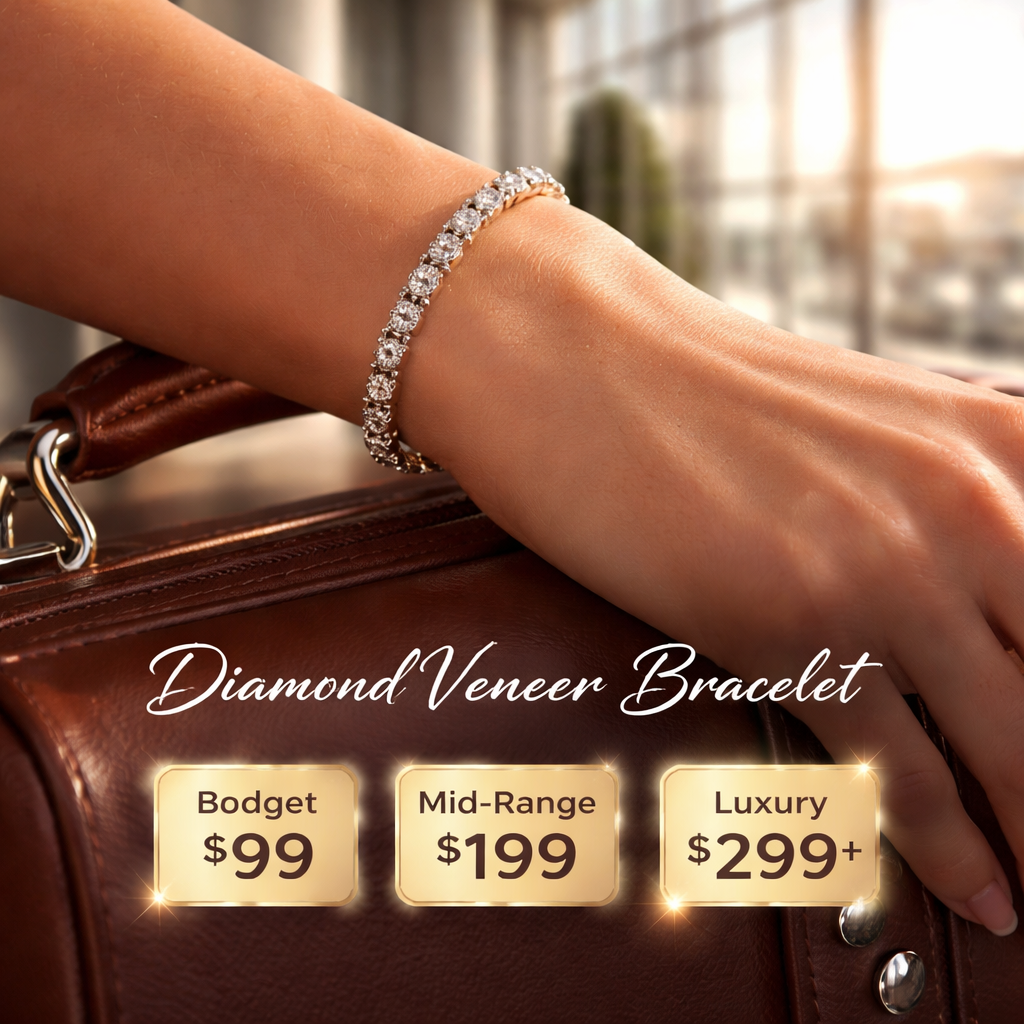
Step 2: Compare Materials, Carat Weight, and Craftsmanship
Materials: What’s Under the Sparkle?
First thing we look at is the metal that frames the coated stones. A rhodium‑plated silver setting feels feather‑light in your hand, perfect for jet‑setting from a Bali sunrise brunch to a Paris night‑cap. If you prefer a richer glow, 14K gold adds a warm halo but also nudges the diamond veneer bracelet price up by roughly $100‑$200.
Because our pieces are designed for travel‑savvy women, we often recommend a mixed‑metal blend – a thin gold accent on a silver band – so you get luxury without the extra heft.
Carat Weight: The Visual Punch
Carat weight on a diamond veneer piece works the same way it does on a natural diamond: more carats equal more surface area for the nano‑diamond coating, which means more brilliance and, yes, a higher price tag. A 4CT bracelet might sit comfortably around $800, while an 8CT version can climb to $1,300 or more, depending on metal and finish.
When you compare two bracelets side‑by‑side, ask yourself – does the extra sparkle justify the added cost for your wardrobe? Many of our globe‑trotting clients pick a mid‑range 6CT option because it offers that statement flash without weighing down a carry‑on.
Craftsmanship: The Hidden Value
Hand‑setting each stone isn’t just a marketing line; it’s a labor‑intensive process that directly influences the diamond veneer bracelet price. Our artisans spend minutes polishing the nano‑layer on each CZ, ensuring the fire mimics a real diamond from every angle.
If you notice a smooth, seamless transition between stones, that’s a sign of precision polishing – and that precision costs money. Brands that outsource setting to machines often shave $50‑$100 off the price, but you may lose that subtle, hand‑crafted sparkle that travelers notice in a crowded market.
Putting the Pieces Together
Here’s a quick checklist to help you compare options without getting lost in numbers:
- Metal: silver = baseline, gold = +$100‑$200, mixed‑metal = mid‑range.
- Carat: 4CT ≈ $800, 6CT ≈ $1,050, 8CT ≈ $1,300.
- Craftsmanship: hand‑set = premium feel, machine‑set = budget‑friendly.
Take a moment to line these up in a simple table on your phone. Seeing metal, weight, and labor side by side makes the diamond veneer bracelet price feel less like a mystery and more like a clear decision.
Real‑World Example
Imagine you’re packing for a two‑week Mediterranean cruise. You need a piece that looks luxe at a gala dinner but won’t set off the metal detector at the airport. You choose a 6CT bracelet with a rhodium‑plated silver band – it gives you that radiant sparkle, stays light, and lands around $1,050. If you swapped the metal for 14K gold, you’d add $150‑$200, pushing you closer to $1,250 – still doable, but now you have to weigh the extra cost against the added warmth of gold.
That same logic applies whether you’re browsing our collection or comparing a friend’s recommendation. The key is to match the three drivers – material, carat, craftsmanship – with your travel style and budget.
Actionable Tip
Next time you’re scrolling through our catalog, pause at each product description and ask: “What metal is this? How many carats? Is it hand‑set?” Jot down the answers, then compare them against your price ceiling. You’ll find the sweet spot where sparkle meets smart spending, and the diamond veneer bracelet price will finally make sense.
Step 3: Retail vs. Custom Pricing – What You Need to Know
When you walk into a boutique or scroll an online catalog, you’ll often see two price tags: a retail price and a custom‑order price. It can feel like a secret code, especially when you’re trying to keep your travel budget in check.
So, what’s the real difference? Retail pricing is the sticker you see on a ready‑made piece – everything from the metal to the carat weight has already been factored in. Custom pricing, on the other hand, is built around the exact choices you make, which can either raise or lower the final number.
Let’s break it down step by step, so you can decide which route gives you the best diamond veneer bracelet price for your style.
Retail Pricing: Predictable but Fixed
Retail pieces are designed for mass appeal. The manufacturer buys a set amount of metal, orders a standard CZ cut, and sets a price that covers labor, markup, and a safety net. Because the variables are locked, the price you see is what you pay – no surprises at checkout.
The upside? You know exactly what you’re spending. If you’re flying from New York to Tokyo and need a bracelet that fits in a carry‑on, you can pick a pre‑made 6CT rhodium‑plated silver piece that typically lands around $1,050. That number won’t jump after you add a gold accent.
Custom Pricing: Tailored Flexibility
Custom orders let you mix metal, adjust carat weight, or even add personal engravings. Because each element is priced separately, the final diamond veneer bracelet price is a sum of its parts. Think of it like building a travel itinerary: every extra flight or hotel night adds to the total.
For example, if you start with a 4CT base in sterling silver ($800) and decide to upgrade the metal to 14K gold (+$150) and add a few extra carats (+$200), you’ll end up around $1,150. That’s higher than the retail 6CT option, but you get exactly the metal and sparkle you crave.
In our experience, the most savvy travelers use custom pricing when they have a specific look in mind – say, a mixed‑metal bangle that matches both a daytime cashmere sweater and an evening silk dress. The ability to fine‑tune the piece often justifies the extra cost.
How to Choose Between Retail and Custom
Step 1: Sketch your must‑haves. Is metal the deal‑breaker? Do you need a certain carat weight to stand out on a gala night? Write those down.
Step 2: Compare the baseline retail price for a similar carat‑metal combo. Use the numbers we’ve shared – 4CT silver ~ $800, 6CT silver ~ $1,050, 8CT gold ~ $1,300.
Step 3: Add your custom upgrades one by one and watch the math. If each upgrade pushes you past your budget ceiling, consider dialing back that element instead of abandoning the piece entirely.
Step 4: Factor in travel considerations. A lighter metal like rhodium‑plated silver saves weight and reduces TSA hassles, which can be worth $100‑$200 in convenience alone.
Step 5: Make a decision. If the total custom cost is within $100‑$150 of the closest retail option, you’re probably getting a personalized value. If the gap widens, you might be better off choosing a ready‑made design that already hits your sweet spot.
Quick Checklist
- Identify metal preference (silver, gold, mixed).
- Set target carat range (4‑8CT typical).
- Note any engraving or special finish.
- Calculate retail baseline vs. custom total.
- Decide if extra cost matches desired uniqueness.
Give it a try on our site – start with the 6CT rhodium‑plated silver model and then play with upgrades until the numbers feel just right. When the price aligns with your travel style, you’ll know you’ve cracked the diamond veneer bracelet price puzzle.
Step 4: Pricing Comparison Table – Quick Reference
Alright, let’s cut through the numbers and give you a cheat‑sheet you can actually use while you’re sipping coffee at the airport lounge. Below is a quick‑look table that lines up the most common metal‑and‑carat combos we see day‑in, day‑out. Think of it as your boarding pass for price transparency.
What the table tells you
First, notice the jump between metal choices. A rhodium‑plated silver band stays feather‑light – perfect for those frantic security lines – and it only adds a modest premium over plain sterling. Switch to 14K gold and you’re looking at an extra $100‑$200, but you also get that warm glow that reads as “I’ve arrived.”
Second, carat weight is the biggest driver. Going from 4CT to 8CT can swing the price by $400‑$500, which aligns with the ranges we’ve documented in the broader market Gemone Diamond’s price guide. Use that as a sanity check when a seller throws a “custom” label at you.
Finally, keep an eye on craftsmanship fees. Hand‑set pieces from our own workshop usually land at the higher end of the range, but the polish and precision are worth the extra few dollars when you’re travelling light and want a piece that won’t catch a stray glint on the plane.
| Option | Metal | Carat Weight | Approx. Price (USD) |
|---|---|---|---|
| Basic Silver | Sterling Silver | 4CT | $800 |
| Travel‑Light Silver | Rhodium‑Plated Silver | 6CT | $1,050 |
| Luxe Gold | 14K Gold | 8CT | $1,300‑$1,450 |
| Custom Mix | Gold‑Accent Silver | 6CT + Engraving | $1,200‑$1,300 |
Notice the “Custom Mix” row – that’s the sweet spot many of our globe‑trotting clients land on. You get a hint of gold without the full weight, plus a personal engraving that doesn’t push you past a $150‑$200 budget buffer.
How to use this table on the fly
Step 1: Spot the metal you prefer. If you’re worried about extra baggage weight, mark the rhodium‑plated row.
Step 2: Decide your carat comfort zone. Remember, each extra carat is roughly $200‑$250 in our pricing model.
Step 3: Add any optional upgrades (engraving, extra gold accents). That’s where the “Custom Mix” line helps you see the final bump.
Step 4: Compare the total against the nearest retail baseline you noted in the earlier steps (4CT silver ≈ $800, 6CT silver ≈ $1,050, 8CT gold ≈ $1,300). If you’re within $100‑$150 of that baseline, you’re getting a genuine value add.
Does that feel doable? If you’re still on the fence, peek at the broader market snapshot on Diamond Factory Dallas. Their range shows everything from $300 entry pieces up to high‑end $5,000 designs – a helpful reality check that our custom options sit comfortably in the mid‑range, travel‑friendly tier.
Bottom line: use the table as your quick reference, then ask yourself – does the extra sparkle justify the extra cost for the trips you’ve got coming up? If the answer is a confident “yes,” you’ve nailed the perfect diamond veneer bracelet price point for your lifestyle.
Step 5: Evaluate Warranty, Return Policies, and After‑Care Costs
Alright, you’ve narrowed down the sparkle, the metal, and the carat weight. Before you hit “checkout,” let’s talk about the safety net that keeps your travel‑ready bracelet from turning into a regret.
Why the warranty matters for jet‑setters
Imagine you’re on a red‑eye flight to Tokyo and the clasp gives way mid‑air. A solid warranty means you won’t be stuck paying for a replacement out of pocket while you’re trying to navigate a foreign airport. It’s the peace‑of‑mind that lets you focus on the view from the window, not on a broken piece of jewelry.
Most reputable brands, including Diamond Veneer Travel Jewelry, offer a limited warranty that covers manufacturing defects for at least one year. That’s a good baseline, but you can push it higher if you know what to look for.
Step‑by‑step checklist for warranty evaluation
- Read the fine print: Does the warranty cover the metal finish, the diamond‑veneer coating, and the clasp mechanism?
- Check the duration: One year is common, but some brands extend to two or even three years for high‑net‑worth pieces.
- Ask about the claim process: Is it a simple online form, or do you need to ship the bracelet back? Faster turnaround is a must when you’re traveling.
- Look for exclusions: Accidental damage, loss, or normal wear‑and‑tear are often excluded. Knowing this early helps you decide if you need extra protection.
So, does the warranty feel solid enough for your itineraries? If you’re unsure, reach out to customer service – a quick chat can reveal whether the brand truly backs its promise.
Return policies: Flexibility when plans change
Travel plans are fluid. Maybe you discover a new destination and want a different style, or perhaps the bracelet just doesn’t feel right on your wrist after a few days. A generous return window (30 days or more) gives you wiggle room without penalty.
Key things to verify:
- Who pays for return shipping? Some luxury jewelers absorb the cost if the piece arrives in its original condition.
- Is there a restocking fee? Ideally, you want a zero‑fee return, especially if you’re ordering from overseas.
- How quickly are refunds processed? A turnaround of 5‑7 business days keeps your cash flow healthy for the next purchase.
Think of it like a travel insurance policy for your accessory – you pay a little extra for the flexibility, but you avoid a big headache later.
After‑care costs you shouldn’t overlook
Even the best‑crafted bracelet needs occasional TLC. The diamond‑veneer coating can lose its luster if you expose it to harsh chemicals, and the clasp may need a tiny adjustment after months of wear.
Typical after‑care expenses include:
- Professional cleaning: $30‑$50 per session. Many jewelers offer a discounted rate for repeat customers.
- Clasp adjustment or replacement: $20‑$40, depending on the metal.
- Re‑coating service: If the nano‑diamond layer dulls over time, a re‑coat can run $70‑$100.
Ask the seller whether they provide a maintenance plan or bundle cleaning services with the purchase. That can shave a few dollars off the long‑term cost and keep the bracelet looking runway‑ready on every layover.
Putting it all together: A quick decision matrix
Grab a notebook or your phone and run through this mini‑matrix before you finalize the order:
| Factor | What to Look For | Your Verdict |
|---|---|---|
| Warranty length | ≥ 1 year, covers coating & clasp | |
| Return window | ≥ 30 days, free return shipping | |
| After‑care pricing | Transparent cleaning & adjustment fees |
Fill in the “Your Verdict” column with “Yes,” “No,” or “Needs clarification.” If you end up with more “Yes” than “No,” you’ve likely found a bracelet whose total cost of ownership aligns with your travel budget.
One last tip: keep all receipts and warranty cards in a dedicated travel pouch. It’s the same habit you use for passports and boarding passes – you’ll thank yourself when you need to file a claim abroad.
By giving the warranty, return policy, and after‑care costs the same attention you give to carat weight and metal choice, you turn a beautiful accessory into a reliable travel companion. Ready to make that confident purchase?
Step 6: Make an Informed Purchase Decision and Get the Best Value
You've done the math, checked the carat, compared metals – now it's time to turn those notes into a confident purchase.
But how do you know the price you see is really the best value for a globe‑trotting lifestyle?
1️⃣ Verify the total cost of ownership
Start by adding up everything you’ll actually spend: the base diamond veneer bracelet price, any metal upgrade, taxes, and the shipping fee to your door or airport hub.
Next, layer in the after‑care costs we talked about earlier – cleaning, clasp adjustments, and the occasional re‑coat. A quick spreadsheet can turn those numbers into a clear “all‑in” figure.
2️⃣ Cross‑check comparable listings
Pull up a few similar pieces on reputable sites and note the price range. If a 6CT rhodium‑plated bracelet runs $1,050 on our catalog, you should see something in the $980‑$1,120 band elsewhere.
When the gap feels wide, ask the seller why. Sometimes a longer warranty or a handcrafted finish justifies a higher tag.
For a practical example of price benchmarking, see this guide on negotiating diamond prices that walks you through market research negotiating diamond pricing.
3️⃣ Leverage the warranty and return window
A solid warranty can save you $200‑$300 in future repairs. Make sure it covers both the diamond veneer coating and the clasp mechanism.
Look for at least a 30‑day free‑return policy – that gives you a safety net if the bracelet feels off after a few wear‑tests on the plane.
4️⃣ Ask about bundled services
Many of our clients discover that bundling a cleaning service with the purchase knocks $20‑$40 off the after‑care bill. It’s a tiny extra that pays off over a few trips.
Our own team can set up a maintenance plan that aligns with your travel calendar, so you never forget a cleaning before a big event.
5️⃣ Trust your gut, but back it with data
Picture yourself at the airport lounge, bracelet glinting under the soft lighting, and ask: does the sparkle feel worth every dollar?
If the answer is a hesitant “maybe,” run the numbers again. If it’s a confident “yes,” you’ve nailed the sweet spot.
Another resource that breaks down the buying process for bracelets, from budgeting to final checkout, can be found here buying a diamond bracelet guide.
6️⃣ Capture the paperwork
When the deal closes, scan the receipt, warranty card, and any certification. Store them in a travel pouch alongside your passport – you’ll thank yourself if you need a claim abroad.
And before you zip the box away, double‑check that the clasp locks securely. A quick tug test on the plane seat armrest can reveal a loose link you’d rather fix at home.
By treating the diamond veneer bracelet price like a travel itinerary – mapping every stop, budgeting for extras, and keeping a backup plan – you turn a luxury purchase into a reliable companion.
One last trick: set a price ceiling in your mind before you browse. If the bracelet you love nudges you $50 over, ask the seller if they can throw in a complimentary cleaning. Most will, because they know you’ve done the homework.
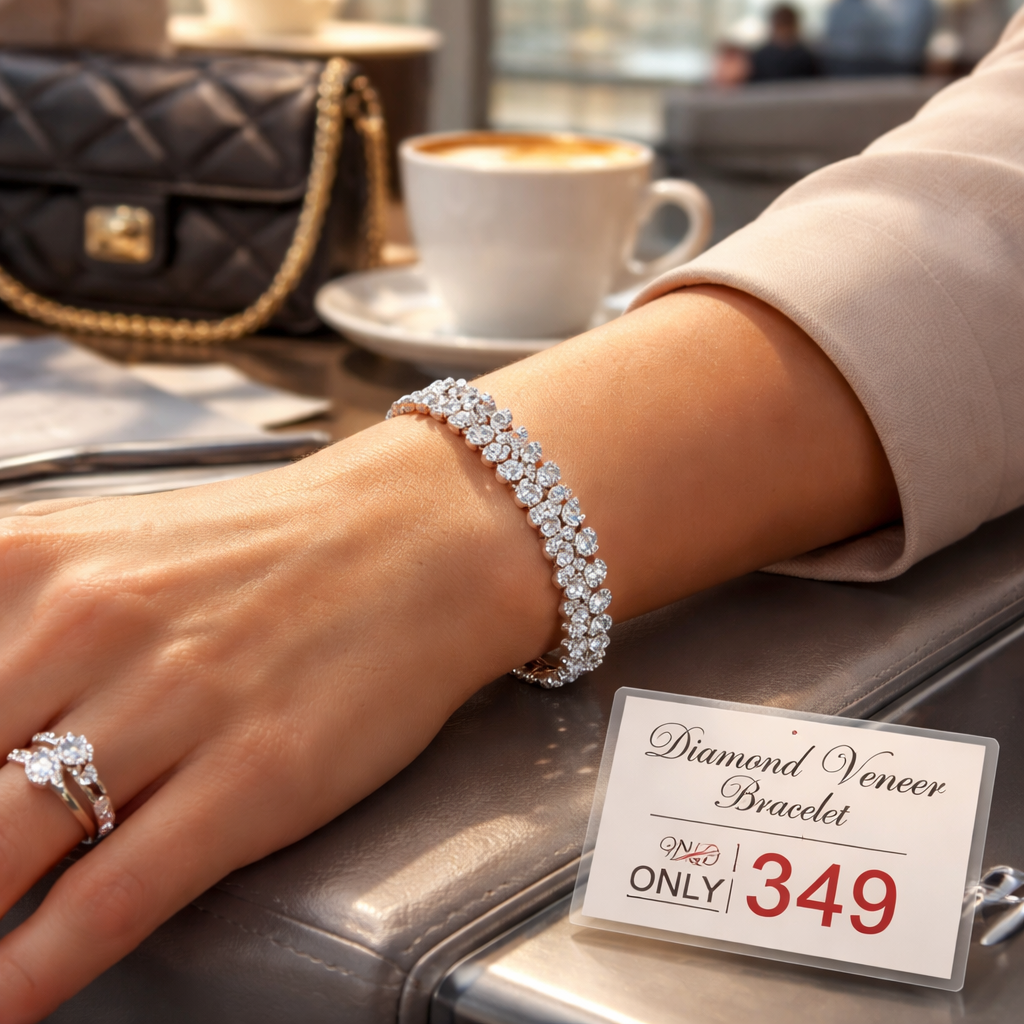
Ready to click “add to cart” with confidence? You’ve done the homework, you’ve weighed the costs, and you know exactly what value looks like for your jet‑set style.
FAQ
What factors most influence the diamond veneer bracelet price?
Think of the price like a travel itinerary – every stop adds a bit. The core CZ quality sets the baseline, then carat weight decides how much nano‑diamond coating you need. Metal choice (sterling, rhodium‑plated, 14K gold) adds a premium, and hand‑setting versus machine‑setting affects labor costs. Finally, where you buy it – direct from us or a reseller – can shift the final number by a hundred dollars or more.
How can I keep the price down without sacrificing sparkle?
Start with a modest carat count – a 4 CT piece still shines brilliantly when the CZ cut is top‑grade. Choose rhodium‑plated silver instead of full gold; it’s feather‑light for travel and usually only $100 extra. Look for seasonal promos on our site and bundle a matching pair of earrings – the combo discount can shave $50‑$80 off the bracelet alone. And always double‑check the warranty; a solid one saves you money later.
Is it worth paying more for gold‑plated metal versus silver?
Gold gives a warm glow that many jet‑setters love for evening events, and it can boost resale value slightly. However, the price jump is usually $100‑$200 for the same carat weight. If you travel light, rhodium‑plated silver offers comparable durability and a sleek look without the extra heft. In practice, most of our high‑net‑worth clients choose silver for daily wear and reserve gold for special occasions.
Do warranties and after‑care affect the overall cost?
Absolutely. A one‑year limited warranty typically comes included, but some brands charge extra for extensions. Those extensions can save you $150‑$250 in future repairs, especially for the delicate diamond‑veneer coating. After‑care services like professional cleaning ($30‑$50) or clasp adjustments ($20‑$40) are predictable expenses. When you add those to the sticker price, you get a realistic total cost of ownership rather than just the upfront tag.
Can I get a discount during seasonal sales?
Yes – we run flash sales around major travel holidays like spring break, summer solstice and holiday‑season returns. Those events often include a 10‑15 % discount on select bracelets and a free cleaning kit for orders over $1,000. Sign up for our newsletter or follow our Instagram Stories; the notification pops up a few hours before the sale goes live, giving you a head‑start before inventory sells out.
How do I know if I’m getting a fair price compared to other brands?
Start by creating a simple spreadsheet: list metal, carat weight, base price and any extra fees. Then pull a few comparable listings from reputable online boutiques – you’ll see that our 6 CT rhodium‑silver bracelet sits around $1,050, which is roughly $100‑$150 below the average market range for the same specs. If a competitor’s price is dramatically lower, check whether they’re cutting corners on coating quality or warranty.
What’s the best way to budget for a travel‑friendly bracelet?
First, set a clear ceiling – most of our clients aim for $800‑$1,300 depending on carat. Next, allocate 10 % of that amount for after‑care (cleaning, adjustments). Add any expected shipping or customs fees if you’re ordering abroad. Finally, use a “price‑vs‑value” checklist: metal, carat, warranty, and resale potential. When the total stays within your original ceiling, you’ve secured a bracelet that won’t break the bank or your itinerary.
Conclusion
We've walked through every piece of the diamond veneer bracelet price puzzle, from metal choices to after‑care costs.
So, what does that mean for you, the jet‑setting fashionista? It means you can finally match sparkle with your travel budget without guessing.
Remember the three shortcuts we kept pulling out: pick a rhodium‑plated silver base for feather‑light weight, target the 6CT sweet spot for that "wow" factor, and lock in a warranty that covers both coating and clasp.
And if a price feels a little high, ask yourself whether the added gold accent or extra carats truly serve the moments you’ll wear it for – a gala night in Milan or a sunrise brunch in Bali.
In our experience, the most confident purchases happen when the total cost of ownership, not just the sticker price, stays inside the ceiling you set. A quick spreadsheet can turn any doubt into a clear "yes."
Ready to turn the math into a bracelet that travels as smoothly as you do? Check our latest travel‑friendly designs and let the sparkle do the talking.
And don't forget the after‑care routine— a professional cleaning every six months keeps the veneer as bright as the first day, and a tiny $30 adjustment can prevent a loose clasp from ruining a boarding pass line.