
How to Choose Pendant Chain Thickness: A Practical Guide for Perfect Jewelry Balance
Ever slipped a pendant on in front of the mirror and thought, "Why does this look so heavy, like I'm wearing a tiny chain over a mountain?" That moment of mismatch is all too common for jet‑setting fashionistas who expect every detail to feel effortless.
Choosing the right pendant chain thickness is basically about balance – the chain should hug the pendant without overpowering it, and it should stay comfortable when you’re hopping on a flight or sipping coffee at a Paris café. Too thin, and a dazzling CZ pendant can look like it’s dangling from a thread; too chunky, and even the most delicate stone feels buried.
First, size up your pendant. A 10‑mm solitaire looks sleek on a fine 0.8‑mm cable, but a statement cocktail piece needs at least a 1.5‑mm or 2‑mm chain to keep the silhouette proportional. Next, consider the metal’s weight. Sterling silver feels lighter than 14K gold, so you can get away with a slightly thinner gauge in silver without sacrificing durability. Finally, think about your lifestyle – if you travel often, a sturdy, medium‑weight chain resists tangling and withstands the occasional bag‑crush.
Here’s a quick checklist you can run through before you click “add to cart”:
• Measure the pendant’s width and depth.
• Match the pendant’s visual weight to a chain gauge (0.8 mm for dainty, 1.5 mm for medium, 2 mm+ for bold).
• Pick a metal that aligns with your daily wear and travel routine.
• Test the feel – the chain should slide smoothly over your wrist but not feel like a rubber band.
In our experience, many of our travel‑savvy clients combine a medium‑weight 1.5‑mm chain with a 14K gold pendant for that perfect blend of luxe and practicality. If you’re unsure about length, our guide on how to choose pendant chain length walks you through measuring your neckline and picking the sweet spot for any outfit.
And because a pendant doesn’t exist in a vacuum, think about the rest of your look. Pairing a sleek chain with our autumn‑inspired accessories feels especially chic when you layer it over a cashmere sweater or a tailored trench. Need some seasonal inspiration? Check out fresh fall outfit ideas that show how the right chain thickness can elevate a layered look while keeping the pendant as the star of the ensemble.
TL;DR
Choosing the right pendant chain thickness is all about balancing visual weight with comfort, especially for jet‑setting fashionistas who need durability without bulk. Follow our quick guide to match gauge to pendant size, metal weight, and travel lifestyle, so every piece feels effortless, chic, and ready for any occasion on the go.
Step 1: Assess Pendant Size
First thing’s first – you need to know exactly what you’re working with. Pull the pendant out of the box, lay it on a flat surface, and take a good look. Does it feel like a delicate whisper or a bold statement piece? That gut feeling is the starting point, but we’ll back it up with real measurements so you don’t end up with a chain that looks either lost or overbearing.
Grab a ruler or, better yet, a tiny jeweler’s caliper. Measure the pendant’s widest point – that’s the width – and then the deepest part from front to back – that’s the depth. Write those numbers down. A 10 mm solitaire will usually pair nicely with a 0.8 mm‑1 mm chain, while a 20 mm cocktail stone often needs something in the 1.5 mm‑2 mm range. If you’re unsure, picture the pendant as the star of a movie; the chain is the supporting cast – it should never out‑shine the lead.
Now, think about the pendant’s visual weight. A sparkling CZ cluster feels heavier than a simple gold bar, even if they weigh the same on the scale. Hold the pendant in one hand and let a thin chain drape over your wrist. Does it feel like a feather or does it tug? That tactile test tells you whether you need a sturdier gauge.
Step‑by‑step checklist
- Measure width and depth with a caliper or ruler.
- Note the metal type – sterling silver, 14K gold, rose gold – because denser metals can handle thinner gauges.
- Assess visual weight: sparkle intensity, stone size, overall silhouette.
- Consider your lifestyle – frequent travelers often prefer a bit more heft to avoid tangles.
Once you have those numbers, you can translate them into a gauge range. Here’s a quick mental cheat sheet: 0.8‑1 mm for pendants under 12 mm, 1‑1.5 mm for pieces between 12‑18 mm, and 1.5 mm+ for anything larger or heavily embellished.
And remember, this isn’t a one‑size‑fits‑all rule. If you’re a jet‑setting fashionista who’s constantly on the move, a slightly heavier chain can be a lifesaver when your bag gets tossed around in overhead compartments.
Feeling a little overwhelmed? Watch the short video below – it walks you through measuring a pendant in real time, so you can see exactly where to place the calipers and how to read the numbers.
Now that you’ve got the size nailed down, the next step is matching that measurement to a chain thickness that feels balanced and looks intentional. Stay with us – we’ll break down the gauge options and why a 1.2 mm cable might be the perfect middle ground for a 15 mm pendant.
And while you’re planning your next look, you might want to peek at some fresh autumn inspiration to see how different chain gauges play off seasonal textures. A quick scroll through a style roundup can spark ideas you hadn’t considered.
Thinking about how all these pieces fit together feels a bit like packing a suitcase: you want everything to slot in perfectly without overstuffing. That’s why assessing pendant size is the foundation – it tells you exactly what “fit” looks like before you even pick a chain.
Ready to move from measurement to selection? Let’s dive into the next step, where we’ll pair your pendant dimensions with the ideal chain thickness, so you walk out of the airport feeling chic, confident, and ready for whatever the day throws at you.
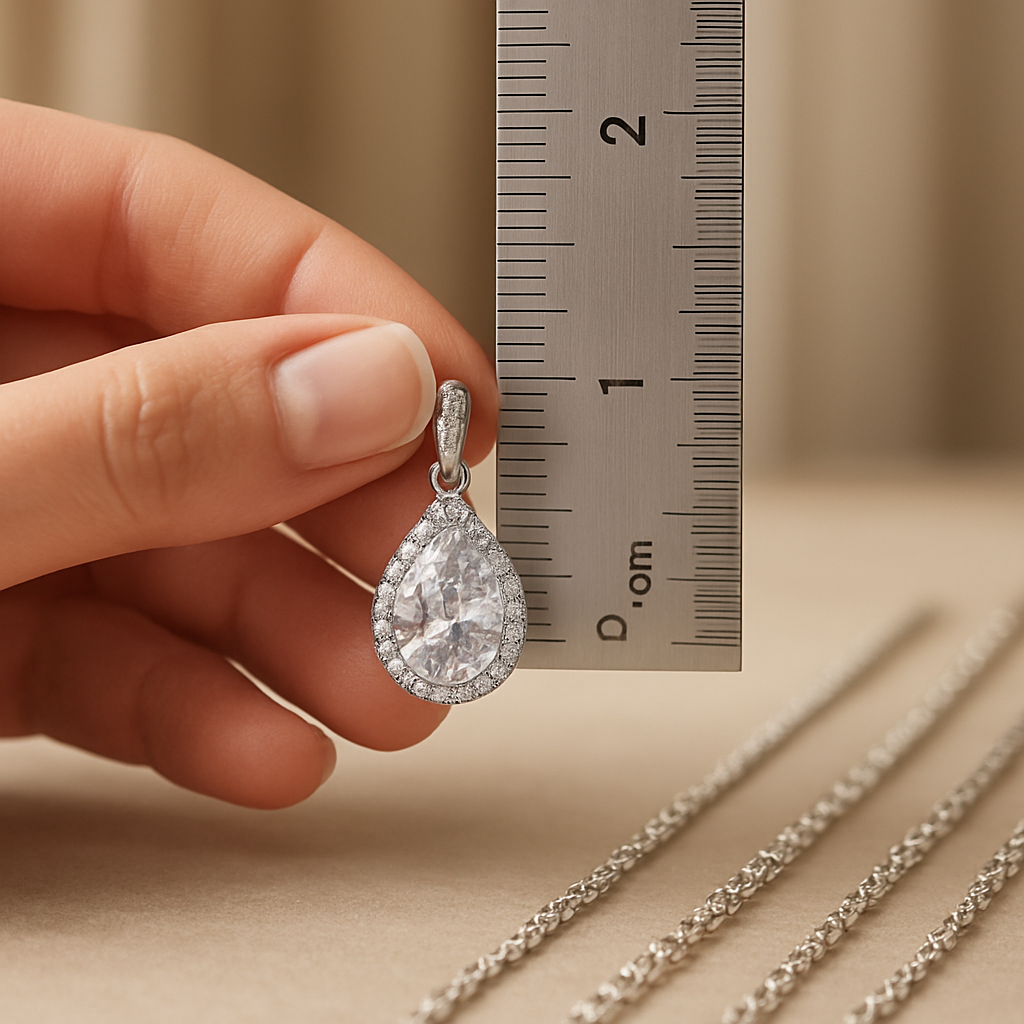
Step 2: Determine Desired Chain Proportion
Now that you’ve measured the pendant and confirmed the bail fits, it’s time to think about proportion. In other words, how thick should the chain be so the pendant looks like it belongs, not like an afterthought?
Start with the pendant’s visual weight
Take a quick glance at the piece. Does it sparkle like a cocktail‑hour showstopper, or is it a subtle, everyday charm? Heavy‑looking stones—think large faceted CZs or layered designs—need a sturdier backbone. A 1.5‑mm to 2‑mm gauge usually does the trick. For a dainty solitaire or a sleek bar, a 0.8‑mm to 1‑mm cable feels just right.
Imagine you’re boarding a private jet in Zurich. You want the pendant to sit comfortably against your neck while you sip espresso, not tug at your skin like a loose shoelace. The right proportion keeps the piece secure and lets you move with confidence.
Match metal weight to chain gauge
Gold feels heavier than sterling silver, even when the carats are the same. If you love a 14K gold pendant, give it a little extra support—bump the chain up by a millimetre. In our experience, high‑net travelers who favour gold often choose a 1.2‑mm to 1.5‑mm gauge for that buttery feel without sacrificing durability.
Silver lovers can get away with a finer chain because the metal itself is lighter. Still, don’t go too thin if the pendant has a chunky setting; you’ll end up with a sagging look that looks sloppy on a runway‑ready outfit.
Consider your lifestyle – travel, tangles, and comfort
Frequent flyers know the difference between a chain that slides off a suitcase zipper and one that stays put. A medium‑weight 1.5‑mm cable resists tangling, holds up to the occasional bag‑crush, and still feels sleek on a silk blouse. If you spend most of your time on the go, err on the side of a slightly thicker gauge.
On the other hand, if you’re mainly dressing for low‑key brunches in Paris, a delicate 0.8‑mm cable can add that whisper‑of‑luxury without weighing down your look.
Use a quick visual test
Grab the chain you’re eyeing and hold it next to the pendant’s bail. Does the chain sit flush, or does it look like a mismatched puzzle piece? A good rule of thumb: the chain should fill roughly 60‑70% of the bail’s inner diameter. Anything less feels loose; anything more looks cramped.
Slide the chain through the bail with a gentle nudge. If it moves smoothly and sits flat against the pendant, you’ve nailed the proportion. If you feel resistance or the pendant wobbles, step up a size.
External reference for deeper dive
For a broader look at how thickness, length, and material all play together, check out this guide to choosing the right chain thickness. It breaks down the same principles we’ve covered, plus adds a few style‑specific suggestions.
Quick checklist before you click “add to cart”
- Is the pendant visually heavy? Aim for 1.5‑mm + gauge.
- Is the metal gold? Add a millimetre to the gauge you’d use for silver.
- Do you travel often? Choose a medium‑weight chain (1.2‑mm‑1.5‑mm) for durability.
- Does the chain fill 60‑70% of the bail’s inner diameter? If yes, you’re good.
When you’ve ticked those boxes, you’ll feel confident that the chain will carry the pendant gracefully, whether you’re strolling through Milan’s fashion district or hopping on a night flight to Tokyo. Remember, the goal isn’t just to avoid a broken chain—it’s to make the pendant feel like a natural extension of your style, a quiet statement that says, “I’ve got this.”
Step 3: Choose Metal Weight & Strength
Now that you’ve nailed the bail size and visual proportion, the next question is: how heavy should the metal be, and how strong does the chain need to be to keep your pendant safe on a jet‑set day?
Why metal weight matters
Gold feels denser than silver, even at the same carat. A 14K gold pendant can add a couple of grams that you’ll notice when you’re reaching for your passport at the airport security line. If the chain is too feather‑light, that extra heft creates tension at the bail and can eventually pull the links apart.
In our experience at Diamond Veneer Travel Jewelry, a medium‑weight 1.2‑mm‑1.5‑mm chain works beautifully with 14K pieces, while the same look in sterling silver can often get away with a 0.9‑mm‑1.1‑mm gauge.
Choose a chain style built for strength
Not all chains are created equal. The link design dictates how stress is distributed. Here are the top three styles we recommend for travel‑savvy women who need both durability and elegance:
- Cable chain: Rounded links that interlock evenly; classic look, easy to repair.
- Box chain: Square links that sit tightly together; resists stretching, perfect for heavier pendants.
- Cuban link (or curb): Flat, tightly‑woven links that lay flat and are notoriously tough.
These options are highlighted in a guide that explains how thicker links and solid metal reduce the risk of breakage — see chain strength considerations for pendant weight.
Match metal weight to chain gauge
Think of the chain as a bridge. The heavier the pendant, the wider the bridge needs to be. A quick rule of thumb: for every gram of pendant weight, add roughly 0.1 mm to the chain gauge. So a 5‑gram gold charm pairs nicely with a 1.5‑mm cable, while a 12‑gram cocktail‑style piece benefits from a 2‑mm box or Cuban link.
If you’re unsure, do the “hand test.” Hold the chain in one hand, attach the pendant, and gently pull upward. If the links flex noticeably or the bail pinches, step up a size.
Don’t forget the clasp and bail
Even the sturdiest chain can fail at the weak points: the clasp and the bail. Lobster clasps and barrel clasps give the most secure closure for travel pieces that get tossed in a suitcase. A spring‑ring or magnetic clasp might feel convenient, but they’re more likely to pop open under the weight of a dense pendant.
The bail should slide over the chain without squeezing. If you feel resistance, either enlarge the bail (a jeweler can do this quickly) or choose a slightly thicker chain.
Quick durability checklist
- Is your pendant gold or a heavier alloy? Add 0.5‑1 mm to the chain gauge you’d use for silver.
- Do you wear the piece daily or travel often? Opt for cable, box, or Cuban link styles with solid links.
- Test the clasp: a lobster clasp should stay closed with a light tug.
- Feel the bail: it should glide over the chain without binding.
- When in doubt, choose a chain at least 1.5 mm for medium pendants and 2 mm+ for bold pieces.
By pairing the right metal weight with a strong, well‑chosen chain style, you’ll avoid that heart‑stopping moment when a pendant snaps loose mid‑flight. And because you’re a savvy traveler, you deserve a necklace that feels as confident as your itinerary.
Take a moment now to compare the chains in your jewelry box against this checklist. Once you’ve found the perfect match, you’ll know your pendant will stay exactly where you want it—gliding gently against your skin, no matter how many time zones you cross.
Step 4: Match Style & Neckline
Now that you’ve nailed the gauge and material, it’s time to think about the silhouette you’re dressing. The way a pendant sits against your neck can completely change the vibe of a look, especially when you’re jet‑setting from a Milan runway to a Tokyo rooftop bar.
First, ask yourself what neckline you’ll be wearing. A V‑neck or scoop naturally creates a deeper dip, so a longer chain that falls just below the bust line adds elegance without competing with the cut. Conversely, a crew‑neck or turtleneck frames the pendant high on the chest, making a shorter, tighter‑fitting chain look most polished.
Second, think about the fabric weight. A light silk blouse drapes, so a delicate 0.8‑mm cable can float like a whisper. A heavy wool coat, on the other hand, gives the pendant a sturdier backdrop – bump the chain up to 1.5‑mm and you’ll avoid a tug‑of‑war with the fabric.
Third, match the chain style to the occasion. For a cocktail‑hour dinner, a box chain with flat, tightly‑woven links sits sleek against a deep‑V dress and won’t snag on sequins. For daytime travel, a classic cable or Cuban link is forgiving on luggage handles and easy to slide on and off at security.
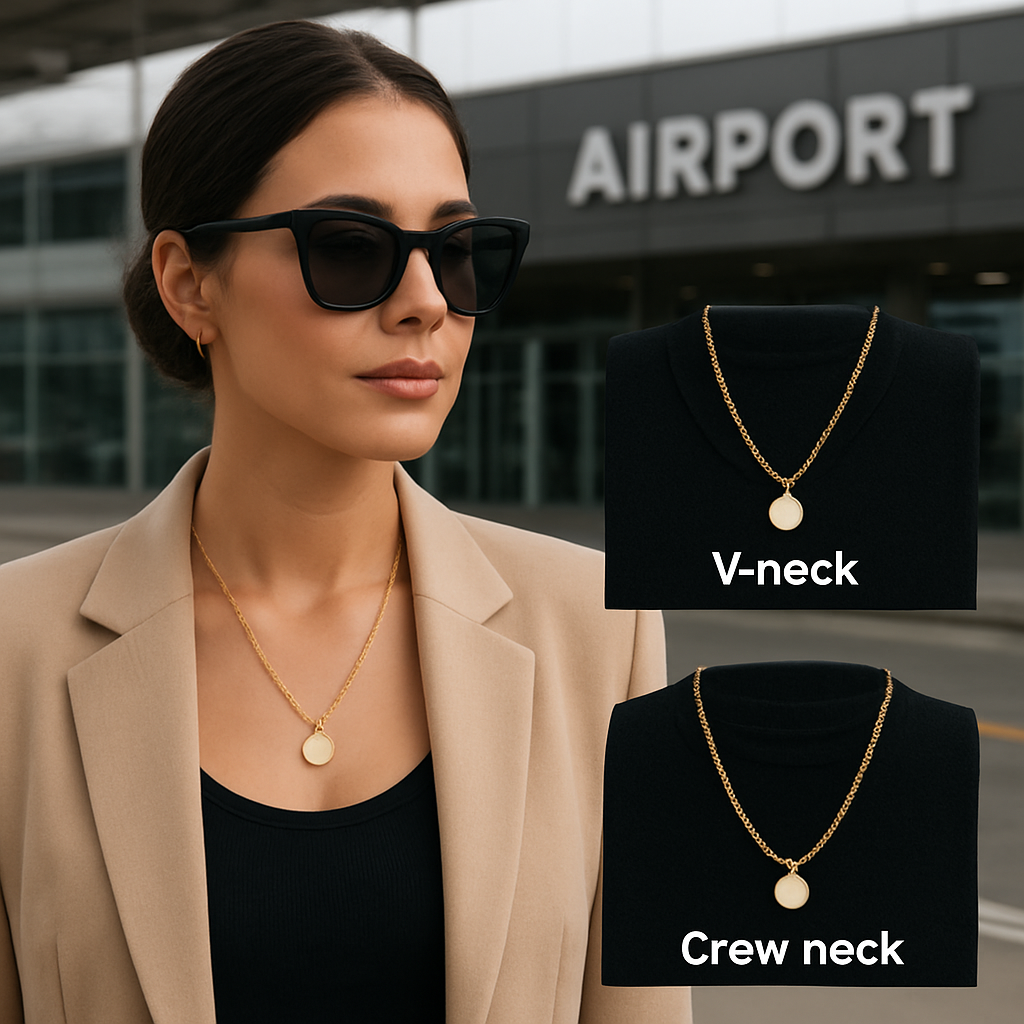
If you love layering, think of the chain as the base layer of a jewelry outfit. A thinner chain works well under a statement collar, while a thicker piece can serve as the focal point when you’re wearing a simple shirt. By aligning the chain thickness with the overall silhouette, you avoid looking like you’re wearing two necklaces at once.
So how do you pull it all together? Grab the necklace you’ve chosen and hold it up to the neckline you plan to wear. If the chain ends just above the edge of a V‑neck, you’ve hit the sweet spot – the pendant will sit in the dip, drawing the eye. If it falls too low, the piece can look lost, especially with a high‑neck blouse.
A quick visual test works wonders when you’re in a fitting room. Slip the chain through the bail, then tilt your head as if you’re checking a mirror. The pendant should rest comfortably against your skin, not swing wildly or press hard against your throat. If it feels too tight, step up a gauge by 0.2‑0.3 mm; if it feels floppy, drop a millimetre.
Don’t forget the clasp. A lobster clasp that sits flush against a high‑neck sweater keeps the chain from sliding down, while a spring‑ring can pop open when you reach for your passport. For frequent flyers, we always recommend a solid‑link clasp – it’s a tiny detail that saves a lot of hassle at the gate.
On a long‑haul flight, the right chain length also prevents the pendant from catching on your seatbelt or the airplane tray. Choose a length that rests comfortably on your collarbone – typically 18‑20 inches for a V‑neck and 16‑18 inches for a crew‑neck – and you’ll stay comfortable from take‑off to landing.
Here’s a handy checklist before you finalize your purchase:
- Identify neckline – V, crew, turtleneck, etc.
- Pick chain length that ends just above or at the neckline’s edge.
- Choose chain gauge that complements pendant weight and fabric weight.
- Select chain style (box, cable, Cuban) that suits occasion and travel durability.
- Test clasp security and bail fit before buying.
With these steps, you’ll walk through any terminal or soirée feeling confident that your pendant looks intentional, stays secure, and enhances your outfit’s story. Remember, the right style‑and‑neckline match is the final piece of the puzzle when you’re figuring out how to choose pendant chain thickness.
Step 5: Compare Thickness Options
Okay, you’ve measured, you’ve thought about proportion, and you’ve picked a metal. Now the fun part: actually lining up the different thickness choices side‑by‑side so you can see which one feels right for you.
Why a quick side‑by‑side look matters
Imagine you’re in a Paris boutique, juggling a few chains on the counter. It’s easy to get lost in the sparkle and forget how each gauge will sit on your skin during a 12‑hour flight. A quick visual comparison stops that brain‑fog before you pull the trigger on a purchase.
Does a 0.8‑mm cable feel too flimsy for your 12‑mm cocktail pendant? Or does a 2‑mm box chain look a bit heavyweight for a delicate 6‑mm solitaire? Answering those questions with a simple table saves you a return shipment and a wardrobe mishap.
What to compare
When you line up options, focus on three things: visual weight, comfort on the go, and how the thickness talks to your outfit’s silhouette. Here’s a quick cheat sheet you can copy onto a phone note.
Notice how the “Travel‑Friendly Rating” isn’t just about weight. A thicker link resists the occasional suitcase crush, while a super‑thin cable can snag on luggage zippers.
Step‑by‑step comparison exercise
1. Pull out the chains you’re considering. Lay them flat on a clean surface – a marble countertop works great because it shows the true gauge.
2. Hold each chain up to the pendant’s bail. Does the chain fill about two‑thirds of the bail’s inner opening? Anything less feels loose; anything more looks cramped.
3. Slip the chain onto your wrist (or better yet, a travel‑size mannequin arm). Does a 0.8‑mm feel like a whisper? Does a 2‑mm feel like a weight‑lifting belt? Trust that gut feeling – it’s the same one that told you the lobster clasp was a must‑have.
4. Walk around the room, or better, sit in a chair and lean forward. If the chain slides up your collarbone or twists when you move, you’ve picked the wrong gauge for that neckline.
5. Jot down a quick rating for each: visual harmony, comfort on the move, and overall durability. The chain that scores highest across the board is your sweet spot.
Real‑world scenarios
Picture this: you’re jet‑setting from Milan to Tokyo, wearing a sleek 14K gold pendant that’s 10 mm wide. You need a chain that won’t scream “I’m fragile” when the overhead bin closes. In our experience, a 1.5‑mm Cuban link hits the sweet spot – it’s thick enough to protect the pendant, but thin enough to drape gracefully over a silk blouse.
Now picture a weekend brunch in a breezy Paris café, paired with a 5‑mm diamond solitaire. Here, a 0.8‑mm cable feels airy, and the pendant stays the star of the show. Even if the chain gets a little tangled with your tote, it’s easy to untangle and won’t add noticeable weight.
Quick checklist before you decide
- Does the chain fill 60‑70% of the bail’s inner diameter?
- Can you comfortably wear it for 8+ hours without the chain digging into your neck?
- Will the thickness survive a typical travel routine (suitcase, security checks, on‑the‑go changes)?
- Does the look match the outfit’s silhouette you plan to wear?
If you can answer “yes” to most of those, you’ve got a winner. If not, step up or down a millimetre and try again.
Bottom line: comparing thickness options isn’t a chore; it’s a short, tactile test that turns guesswork into confidence. By the time you finish this quick exercise, you’ll know exactly which gauge will keep your pendant looking intentional, feeling comfortable, and staying safe through every runway, terminal, and cocktail hour.
Conclusion
So you've measured, matched the bail, and run the side‑by‑side test – now it's time to trust your gut. The right pendant chain thickness feels like an invisible extension of your style, not a clunky accessory you keep adjusting.
Remember the quick rule: the chain should fill about 60‑70% of the bail’s inner diameter, stay comfortable for eight hours or more, and survive a suitcase‑crush without tangling. If those boxes are checked, you’ve nailed the perfect gauge.
For jet‑setting fashionistas, a 1.5‑mm Cuban link is often the sweet spot – sturdy enough for travel, sleek enough for a silk blouse. If you lean toward delicate pieces, a 0.8‑mm cable keeps things airy without sacrificing security.
What’s the next step? Grab the chain you think fits, slip it on, and walk around your living room or airport lounge. Does it sit flat against your skin? Does the pendant stay centered? If anything feels off, move up or down a millimetre and try again.
At Diamond Veneer Travel Jewelry we love watching women turn these tiny decisions into confidence‑boosting moments. Keep this checklist handy, and let your pendant shine, wherever the runway or the runway‑turf leads you. Enjoy the journey and wear it with pride.
FAQ
What is the best way to know how to choose pendant chain thickness for a delicate pendant?
Start by measuring the bail’s inner diameter and then aim for a chain that fills about 60‑70% of that space. For a tiny solitaire, a 0.8‑mm cable usually does the trick – it’s light enough to glide on a silk blouse yet sturdy enough for a long‑haul flight. If the chain feels loose or wobbly, step up a millimetre and test again.
Does metal type affect the gauge I should pick when I’m traveling?
Absolutely. Gold feels denser than sterling silver, so a 14K gold pendant often needs a gauge that's a millimetre thicker than the same‑size silver piece. When you’re hopping between airports, a slightly heavier gauge resists stretching and won’t snag on suitcase zippers. In our experience, a 1.2‑mm‑1.5‑mm chain pairs nicely with most gold pendants for jet‑set comfort.
How can I tell if a chain will survive the pressure of a suitcase crush?
Look for solid‑link styles like Cuban, box, or classic cable – they distribute stress evenly. Give the chain a gentle bend; if the links flex but snap back without permanent deformation, you’ve got durability. A quick “hand test” works: hold the pendant, pull upward, and feel the links. If they flex noticeably, go a size up; a sturdier gauge will keep the pendant secure during travel.
Should I consider chain length when I’m focused on thickness?
Length and thickness work together. A longer chain (18‑20 inches) on a V‑neck drapes beautifully, but if the gauge is too thin it can flop and tangle. For a medium‑length chain, a 1.5‑mm Cuban link offers the right balance of hang and heft, keeping the pendant centered even when you lean forward in an airport seat.
Is there a quick visual test I can do at home before buying?
Yes – line the chain up next to the bail on a clean surface. The chain should occupy roughly two‑thirds of the bail’s opening. Then slide the chain through; it should glide with a gentle nudge, not scrape or jam. Finally, wear it for a few minutes and move your neck. If the pendant stays level and the chain doesn’t dig, you’ve hit the sweet spot.
What gauge works best for bold, statement pendants on a busy travel schedule?
For anything larger than 12 mm or heavily set with stones, aim for 2 mm or thicker. A 2‑mm box or Cuban link provides the structural support you need while still looking sleek under a blazer. The extra metal also absorbs the occasional tug from luggage handles, so you won’t end up with a broken link mid‑flight.
Can I mix different chain styles for the same pendant, or should I stick to one gauge?
You can experiment, but keep the gauge consistent with the pendant’s weight. Swapping a delicate cable for a chunkier Cuban link will change the look dramatically – it can either elevate a simple bar or overwhelm a tiny charm. If you love variety, keep a 1.5‑mm cable for everyday wear and a 2‑mm box link for special occasions, always matching the bail’s size.