

How to Protect Jewelry from Humidity While Traveling
Humidity can turn a glittery trip into a dull disaster. One careless bag can make silver turn black or gold lose its shine before you even reach your hotel.
In this guide you’ll get step‑by‑step actions that stop moisture from hurting your pieces, whether you’re hopping on a plane, riding a train, or cruising a tropical island. Let’s keep every sparkle safe.
Step 1: Pack Jewelry in Moisture‑Proof Bags
First thing you do is move every item into a bag that says it blocks water. Look for zip‑top pouches that have a waterproof lining or a seal that clicks tight. The zip lock stops air from slipping in, and the lining stops any droplet that sneaks past the zipper from reaching metal.
Why does this matter? Cabin air can hold up to 80 % relative humidity on a rainy day. That humidity settles on cold metal and starts a tiny chemical reaction that makes tarnish appear. A sealed bag cuts that reaction short.
Pick a bag size that fits your whole collection. A 1‑liter zip pouch can hold dozens of earrings, rings, and a few thin chains. If you own bigger pieces, use a second pouch or a small travel case inside the bag.
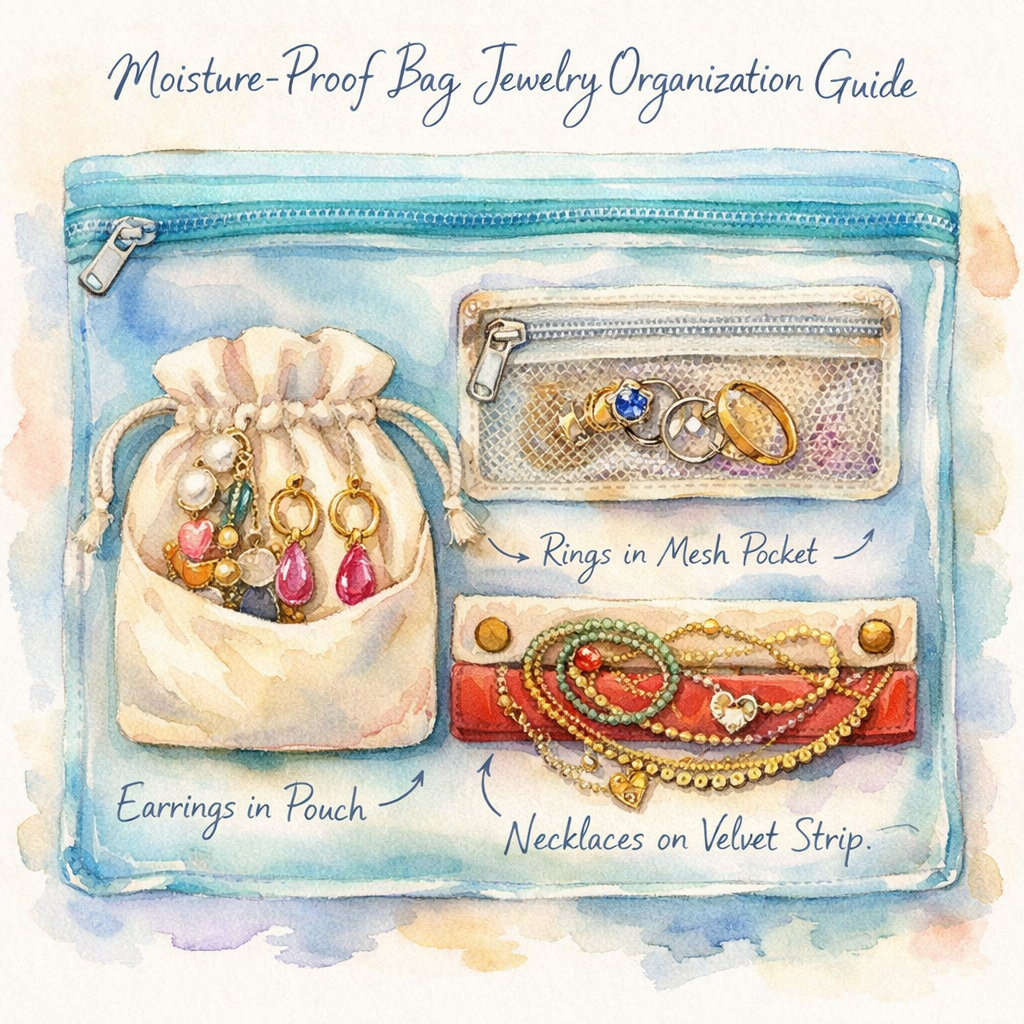
Now, pack the bag smart. Separate pieces by type. Put earrings in one corner, rings in another, and necklaces in a rolled‑up soft pouch. This keeps them from rubbing together and scratching.
When you close the zip, give it a firm press. You should hear a soft click that means the seal is engaged. If the bag feels loose, double‑check the zipper teeth for any snag.
And remember to keep the bag away from heavy items like shoes or laptops. Pressure can push the zip open or crush delicate pieces.
Here’s a quick visual of how the layout might look inside a moisture‑proof bag:
Once your bag is sealed, you’ve created the first barrier against humidity. The next step adds an active absorber.
Travel Jewelry Case Buying Guide: Features, Materials, and Packing Tips explains why a well‑chosen case works best when it’s already inside a moisture‑proof bag.
Bottom line:Seal each piece in a moisture‑proof zip bag and organize by type to stop humidity from touching metal.
Step 2: Add Silica Gel Packets to Your Luggage
Silica gel is a tiny, cheap crystal that sucks up water vapor. You’ll see them in shoe boxes or new bags. They’re perfect for travel because they work without electricity.
Grab two to three packets for a short trip, or four to six for a long cruise. Toss them in the same compartment where you keep your moisture‑proof bag. The packets will pull any stray humidity out of the air before it can settle on metal.
Make sure the packets stay dry. If they get wet, they stop working. Keep them in a small zip pocket away from direct spills.
Check the packets after each leg of travel. If they look pink (some have a moisture‑indicating bead), it means they’ve absorbed their limit. Swap them for fresh ones.
And if you don’t have fresh packets, you can reactivate them. Place the packets in a low‑heat oven (around 120 °F) for an hour. The heat drives the water out, and the crystals are ready again.
Why silica gel matters: Studies show that a single gram of silica can absorb up to 0.3 g of water vapor at 25 °C. That’s enough to keep a small suitcase’s air dry.
Here’s a short video that walks you through re‑charging silica packets and placing them in luggage.
Besides silica, there are other desiccants like clay or calcium chloride. They work, but silica is the lightest and safest for jewelry.
According to Wikipedia’s humidity overview, high relative humidity speeds up oxidation on metals. That’s why a dry pocket matters.
Place the packets where they’re not crushed. A side pocket of a suitcase or a small zip pouch in a carry‑on works well.
When you land, give the packets a quick shake. If they’re still dry, you can keep them for the next leg.
Bottom line:Add reusable silica packets to your luggage and reactivate them as needed to trap moisture before it reaches your pieces.
Step 3: Choose the Right Travel Case and Use a Quick‑Check Table
Not every case blocks moisture. A study of 15 travel jewelry products found only six listed a specific humidity‑protection feature. The Atolea travel jewelry case was the sole one with built‑in moisture‑resistant seals and a price under $100.
When you shop, look for these three features:
- Water‑resistant zipper or seal.
- Interior lining made of microfiber, velvet, or silicone.
- Separate compartments that keep pieces from rubbing.
Here’s a quick‑check table you can print out. Tick each box before you buy.
Pick a case that meets at least two of the three core features. The more you get, the less you’ll need extra steps later.
Diamond Veneer’s travel jewelry line uses rhodium‑finished sterling silver and waterproof‑coated gold pieces. Pair those with a case that has a moisture‑resistant seal for the strongest protection.
According to the National Institute of Standards and Technology, a sealed environment can reduce corrosion rates on copper alloys by up to 90 % compared with open air. That math works for silver and gold too.
Remember to test the case before a big trip. Pack a few cheap pieces, zip it, and shake it for a minute. If you hear rattling, add more padding or a tighter zip.
Bottom line:The right travel case adds a physical barrier; use the table to confirm it has moisture‑blocking features.
Step 4: Manage Climate During Transit and Arrival
Even with a sealed bag and a good case, the climate inside an airplane or a train can still affect jewelry. Cabins often stay humid after a rainy landing, and hotel bathrooms can be steamy.
Keep your sealed bag in the top layer of your suitcase, not at the bottom where it can get squashed by heavy boots. The top layer stays drier because warm air rises.
If you travel with a carry‑on, slip the bag into an interior zip pocket of your bag. That keeps it away from the metal frame of the luggage that can get cold and cause condensation.
When you reach your hotel, avoid the bathroom for storage. Store the bag on a nightstand or in a closet where the air is less moist. If the room feels steamy, place a fresh silica packet next to the bag.
On long trips, consider a portable mini‑dehumidifier. Small electric models plug into USB and pull moisture from a confined space. They’re handy for cruise cabins where humidity stays high for days.
And don’t forget to wipe your pieces after each day of wear. A quick lint‑free cloth removes sweat and humidity that can settle on metal.
If you notice any dark spots on silver, it’s a sign of early tarnish. Lightly polish with a soft cloth and a dab of jewelry polish. Then reseal the bag.
Finally, when you pack to go home, repeat the whole process. Fresh silica packets, sealed bags, and a dry spot in your suitcase keep the pieces safe on the return leg.
Bottom line:Control the climate around your bag during transit and at your stop‑over to keep humidity away from your jewelry.
FAQ
Can I use regular Ziploc bags instead of moisture‑proof bags?
Regular Ziploc bags seal out liquid spills, but they often lack a waterproof lining. That means water vapor can still pass through the thin plastic. For short trips in dry climates it may work, but for humid flights or tropical destinations a dedicated moisture‑proof bag with a built‑in barrier is safer. Pair a regular Ziploc with a silica packet if you must use it, and check the seal before you close.
How many silica packets should I bring for a week‑long cruise?
For a week‑long cruise, four to six packets give you enough capacity to absorb the high humidity that ships generate. Place two packets inside the sealed jewelry bag and two in the suitcase’s interior zip pocket. Check them every two days; if they turn pink, swap them for fresh ones. Re‑activate used packets in a low‑heat oven before your next trip.
What if my travel case doesn’t have a moisture‑resistant seal?
If the case lacks a seal, add a small zip‑lock pouch inside the case. Slip your jewelry into the pouch, then add a silica packet. The double layer, case plus sealed pouch, creates a barrier similar to a built‑in seal. You can also line the case’s interior with a thin anti‑tarnish cloth for extra protection.
Should I remove my jewelry before going through airport security?
Most airports let you wear jewelry through the scanner, but metal detectors can set off alarms on large pieces. If you have a bulky necklace or a metal‑heavy bracelet, place it in your sealed bag before security. That keeps it safe from the humidity in the scanner room and speeds up the line.
Is there a risk of damage from the silica packets themselves?
Silica packets are inert and safe for jewelry. The only risk is if a packet tears and the granules spill onto a delicate stone. Keep the packets in a zip‑lock pocket or a small cloth pouch inside the bag to avoid direct contact.
How often should I clean the travel case itself?
Wipe the exterior of the case with a dry microfiber cloth after each trip. If the case is leather, use a leather‑specific cleaner once a month. For fabric cases, a damp cloth with mild soap works; rinse and let it air‑dry fully before storing jewelry again. Regular cleaning stops dust from scratching pieces.
Conclusion
Humidity is a silent enemy for jewelry travelers, but with the right steps you can beat it. Pack each piece in a zip‑top moisture‑proof bag, add reusable silica packets, choose a case that actually seals, and control where you store the bag during travel. Follow the quick‑check table, use the pro tips, and you’ll keep every sparkle intact from departure to return.
Diamond Veneer’s travel‑ready pieces already use moisture‑resistant finishes, and when you pair them with a sealed bag and silica, you’ve built a double shield. Ready for your next adventure? Pack smart, stay dry, and let your jewelry shine wherever you go.