

Navigating Necklace Clasp Types: A Practical Guide for Jewelry Lovers
Have you ever noticed how a tiny clasp can make or break a necklace? Those little metal hinges are the unsung heroes of every strand, keeping the shine safe while you go about your day.
When you’re packing for a weekend getaway, the first thing you think about is whether your favorite pieces will stay put on a bumpy train ride or a sunny beach stroll. The answer? It’s all in the clasp.
There are dozens of clasp styles—toggle, lobster, spring-ring, bar, and magnetic—only a handful truly blend durability, discretion, and style. Let’s walk through the top three that every jet‑setter needs to know.
Toggle clasps sit flush against the chain, giving a low profile that feels almost invisible. They’re great for delicate gold or silver strands, but if you’ve got a chunky diamond‑veneered pendant, a lobster or bar clasp will hold it steady without risking a slip.
Lobster clasps—those big, claw‑shaped hinges—are the go‑to for heavier pieces. They lock firmly, so you can toss them in a suitcase or swing a neck‑caring yoga pose without worry. The only downside is they’re a bit visible, so pair them with a subtle chain.
Spring‑ring or bar clasps are the quiet ninjas of the jewelry world. They stay closed until you press them open, so there’s zero chance of accidental detachment on a hiking trail or a spontaneous dance‑floor detour.
So how do you pick the right one? Start by matching the clasp to the necklace’s weight and style. A fine gold chain calls for a subtle toggle; a bold statement chain deserves a lobster or bar. Then test the clasp by slipping it on and off a few times—does it stay snug? Does it feel secure?
If you’re unsure, the Diamond Veneer Travel jewelry line has a range of necklaces that already come with the best clasps for travel. Check out our 14K Gold Collection to see how style meets practicality in every piece.
And if your adventures take you beyond city streets into the great outdoors, a secure clasp isn’t just a luxury—it’s a necessity. That’s why we recommend pairing your travel-ready jewelry with reliable travel partners. For example, Top Bike Tours Portugal offers cycling trips that let you explore scenic routes while keeping your accessories safe and stylish.
Remember, the right clasp turns a piece of jewelry into a passport to confidence, not a potential trip‑to-the-closet. By choosing wisely, you’re not just accessorizing—you’re investing in peace of mind for every journey.
TL;DR
This guide breaks down necklace clasp types so you can instantly choose the perfect hinge for travel, style, and peace of mind. From toggles that blend into chains to lobster clasps that lock tight, we cover testing tips, and scenarios that keep your jewelry safe and chic wherever you go.
Understanding Necklace Clasp Types: The Building Blocks
Ever wonder why a tiny clasp can feel like a lifeline when you’re halfway across the world? That little hinge is the unsung hero that keeps your sparkle safe and sound.
When you’re packing, you’re not just choosing a necklace; you’re deciding which clasp will ride the train, the flight, or the sandy beach with you. Let’s break down the top styles so you can pick the one that feels right for you.
Toggle Clasp
Toggles hide behind the chain, giving you a sleek, almost invisible look. They’re perfect for a delicate gold chain or a thin silver strand. The trade‑off? They’re not ideal for chunky pendants that could swing loose.
Lobster Clasp
Think of the lobster claw: sturdy, secure, and ready for adventure. This style locks firmly, so you can toss a heavy statement piece into your suitcase and sleep soundly. The only downside? It’s a bit more visible, so pair it with a subtle chain to keep it low‑profile.
Spring‑Ring and Bar Clasp
These are the quiet ninjas. They stay closed until you push them open, so there’s zero chance of accidental detachment on a hike or a spontaneous dance. Ideal for everyday wear and travel alike.
Magnetic Clasp
Magnetic hinges offer a modern twist: quick on and off without a fiddly twist. They’re great for lightweight pieces and for those who dislike the hassle of small screws or clasps. Just remember to keep them away from strong magnets in your luggage.
Choosing for Your Lifestyle
While you sip your favorite hydrating drink from Quench Bottles, think about your typical travel scenarios. If you’re jet‑setting across continents, a lobster or bar clasp gives you peace of mind. If you’re strolling through a market, a toggle or magnetic clasp keeps the necklace neat and fuss‑free.
Choosing for Your Skin & Comfort
Travel can be harsh on your skin, especially around the neck. Pairing a secure clasp with a gentle, hypoallergenic chain helps avoid irritation. And if you’re packing a skincare routine from Uncover Skincare, you’ll appreciate a clasp that won’t snag on your product bottles.
Watch this quick demo on how each clasp type feels on a real necklace.
Want a cheat sheet to compare the main differences? Here’s a handy table:
| Clasp Type | Typical Use | Key Feature |
|---|---|---|
| Toggle | Fine, delicate chains | Low‑profile, invisible |
| Lobster | Heavy or statement pieces | Strong lock, visible |
| Spring‑Ring/Bar | Daily wear & travel | Secure, quick release |
Now that you’ve got the lowdown, it’s time to test a few. Slip each clasp on and off a chain you own, feel how it locks, and imagine yourself in your favorite travel scenario. The right clasp isn’t just a technical choice; it’s a confidence booster that lets you move freely and stylefully wherever you go.
Choosing the Right Clasp: Matching Functionality with Style
So you’ve already settled on the chain and pendant, and you’re standing in front of the shop’s display, clutching a handful of tiny metal hinges. The real question now is, “Which one will keep my piece safe on a rainy hike or a hectic airport layover?” That’s where the right clasp really shows its worth.
First, Size and Weight Matter
Think of the clasp as the bridge between the chain’s weight and your neck. If you’re lugging a heavy Cuban‑link necklace that weighs 12 g, you need a clasp that can handle that load without wobbling. Lobster, box, or a bar clasp are your go‑to options here because they lock firmly.
But if the piece is only 3 g—maybe a dainty 14K gold strand with a single pearl— a lightweight toggle or magnetic clasp will keep it discreet and secure. The trick is to match the clasp’s strength to the chain’s weight.
Second, Consider Your Activity Level
Do you hit the gym, go on a multi‑day backpacking trip, or just enjoy a city stroll? For high‑impact activities, a spring‑ring with a safety lock or a box clasp is best. These mechanisms don’t budge on their own; they’re designed to stay closed even when you’re jostling around.
For low‑motion daily wear, a simple toggle or magnetic clasp is fine. They’re easier to operate with one hand and offer a low profile that blends with minimalistic designs.
Third, Style Is Still a Factor
Do you want the clasp to be a hidden helper, or is it part of the statement? If you’re going for a subtle look, choose a toggle or magnetic. They’re almost invisible once the chain is in place. If your necklace is meant to be a centerpiece, a lobster or box clasp can double as a design feature and add a touch of drama.
Practical Test: The “Shake” Trick
Hold the necklace between your fingers and give it a gentle shake. If the clasp stays closed, you’re probably good. If it loosens or pops open, swap it out. This quick test works for any clasp type.
Actionable Checklist
- Weigh the chain (or estimate based on material density).
- Match weight to clasp strength (light ↔ toggle/magnetic; medium ↔ lobster; heavy ↔ box/bar).
- Run the shake test.
- Try on the necklace while wearing a heavy jacket or backpack.
- Feel the clasp’s lock mechanism—there should be a slight click or resistance.
Remember, a clasp isn’t just a functional piece—it’s a confidence booster. The right one means you can wear your favorite necklace anywhere, without second‑guessing whether it’s going to slip off.
Real‑World Example: A Backpacking Trip in the Rockies
Imagine you’re packing for a week in the mountains. You’ve chosen a 10 g sterling silver pendant with a small diamond accent. A lobster clasp holds it snugly, and the safety latch prevents accidental detachment when you’re hiking uphill. The same necklace with a magnetic clasp would have risked falling off if you tripped on a stone.
Expert Tip from the Field
In our experience, travelers who repeatedly expose their jewelry to moisture and temperature shifts prefer the reliability of a box clasp. The extra latch keeps the necklace safe even if the outer chain stretches slightly during a long flight.
Curious to see how different clasp types look on actual pieces?
Explore our guide on necklace clasp types to get a deeper visual understanding.
Now that you’ve got the know‑how, the next step is to pick the clasp that feels like a natural extension of your necklace. Treat the clasp as an investment in peace of mind—every time you slip it on, you’re not just fastening a piece; you’re securing a moment of confidence.
Installation and Maintenance Guide for Necklace Clasp Types
When you’re traveling, that little piece of metal can be the difference between a necklace that stays put and one that goes rogue in your suitcase. Let’s talk about how to get it just right and keep it that way.
If you’re curious about how different clasps look on actual pieces, check out this guide on necklace clasp types from Diamondrensu.
Choosing the Right Clasp for Your Piece
First, think about weight. A 12‑gram Cuban‑link chain? Go lobster or box. A 2‑gram pearl strand? Toggle or magnetic works best. It’s that simple. The clasp should feel snug when you slide it on, but not so tight that it strains the chain.
Installation Basics
1. Align the clasp halves so the hook or loop fits neatly onto the chain. 2. Gently tug the chain through the clasp. 3. Press the lever or close the button to lock. A quick shake test should confirm it’s locked tight. If it rattles, tighten any screws or re‑engage the lock.
Routine Maintenance Checklist
• Inspect for loose screws or frayed links every week.
• Clean with a soft cloth to remove sweat or dirt.
• For magnetic clasps, test the pull strength after a month of use.
• Lubricate spring‑ring triggers with a tiny drop of silicone spray if they feel stiff.
These small habits can extend the life of your clasp by months, maybe even years.
When the Clasp Starts to Act Up
Does the clasp suddenly feel loose after a few days? That’s usually the spring or screw losing tension. Tighten the screws with a small screwdriver or replace the spring if it’s cracked. For a lobster, check the lever; if it feels wobbly, a small amount of Loctite® 409 Gel on the pivot can restore smooth action (source: Fire Mountain Gems).
That quick demo shows the exact sequence for tightening a lobster latch. It’s short, it’s clear, and it’s what you need when your travel piece starts to wobble.
Imagine you’re at a desert rally and the sun is beating down. Your necklace feels light and airy, but the clasp suddenly loosens. That moment could mean losing a pendant you’ve been saving for years. Keep that in mind the next time you pack.
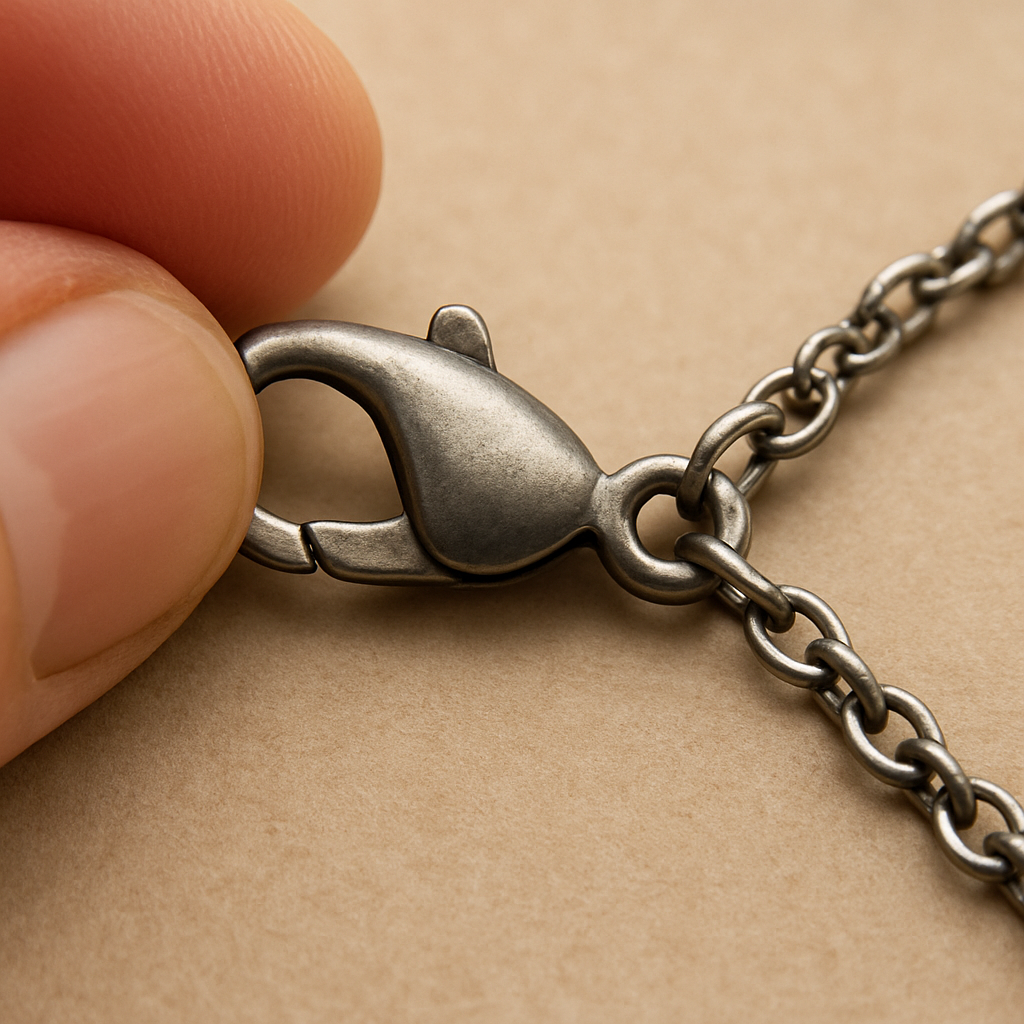
Take a look at the close‑up; the clasp’s locking mechanism is the heart of the piece.
Pro‑Tip: Use a Luggage Organizer
Place necklaces in a small, padded compartment inside your suitcase. This cushions the chain and keeps the clasp from jostling against other items. It’s an easy tweak that saves a lot of frustration.
Remember, a clasp that’s been in your luggage for months can start to loosen just because of the humidity in a flight cabin. A quick check before you zip up the bag saves you from a last‑minute scramble.
When to Replace a Clasp
If the clasp has bent, the metal shows corrosion, or the lock feels weak, it’s time for a swap. Don’t wait until you’re in a foreign country to fix it. Check your pieces before any trip.
We’re not here to replace your whole necklace; just the part that holds it together. A new clasp can turn a worn piece back into a showstopper.
Final Thoughts
By treating your clasp like a small, critical component of your travel kit, you can avoid those heart‑stopping moments when your favorite necklace vanishes. Keep it tight, keep it clean, and keep it replaced when needed. That’s how you travel with confidence and style.
Trendy Clasp Designs and Modern Innovations in Necklace Clasp Types
Ever notice how the latest travel‑ready necklaces keep your pendant tucked tight no matter how wild the hike? That secret sauce is usually a new‑generation clasp that balances security, style, and that tiny bit of tech we’ve all started to love.
From Classic to Cutting‑Edge: What’s Trending?
Gone are the days when a lobster or toggle was the only play. Modern designers are remixing the old with smart materials, like magnetic alloys that snap with a whisper and nano‑sized screw‑locks that feel almost invisible.
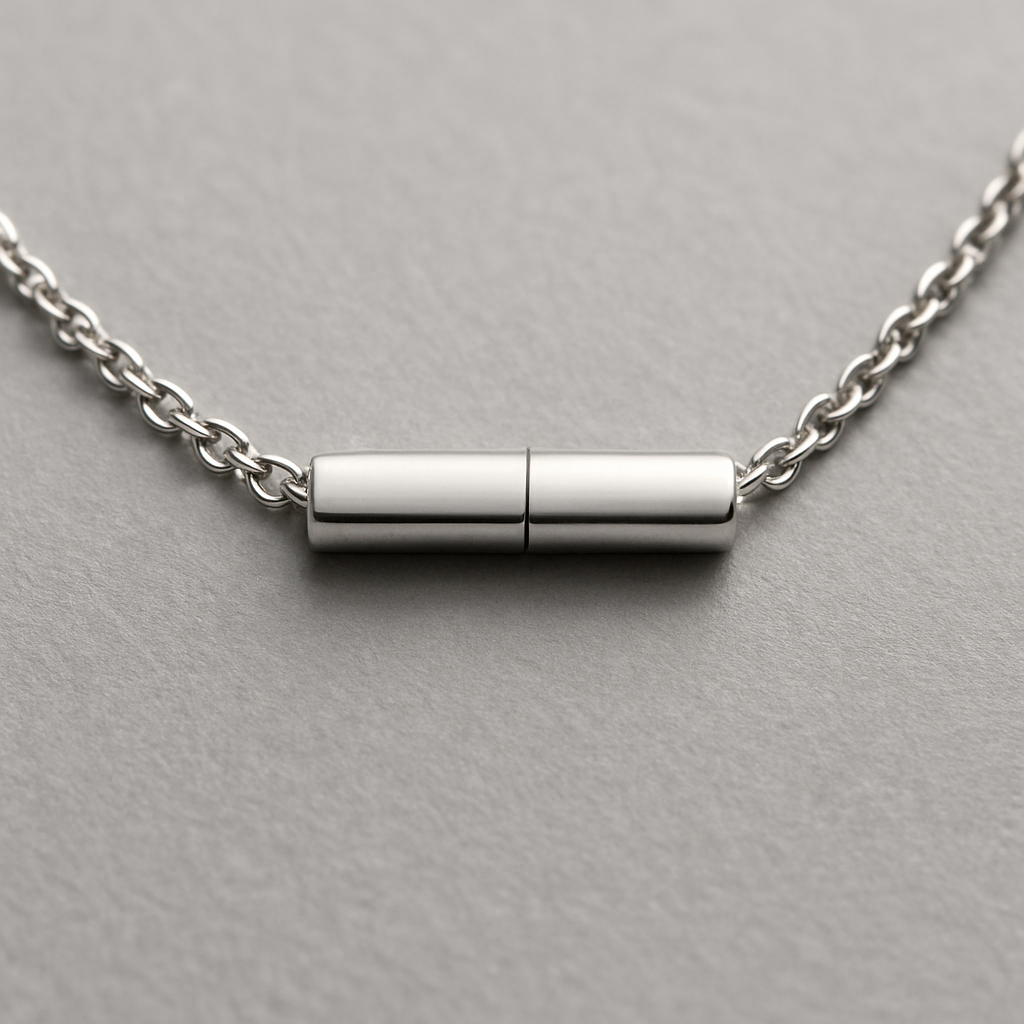
What’s hot right now? Magnetic‑snap clasps that use a single, powerful magnet to close the loop, and invisible bar‑clasp hybrids that slide into the chain with zero bulk. These options give you the “no‑fuss” feel of a spring‑ring but with the security of a lobster.
How to Spot a Quality Modern Clasp
Start with the feel: when you open it, there should be a subtle click, not a rattling wobble. Next, test the weight capacity by gently pulling on the chain—if the clasp flexes, it’s probably not up for heavy pendants.
Check the material. Most high‑end magnetic clasps use neodymium, which keeps the pull strong even after months of travel. If you’re eyeing a magnetic design for a 5‑gram gold chain, make sure the magnet is at least 0.5 T to avoid accidental separation.
We’ve seen travelers swap out a fragile spring‑ring for a magnetic‑clasp pair in their luggage and report zero slips during a 12‑hour flight. That’s the kind of reliability that turns a piece into a travel essential.
Mini‑Checklist for Your Next Purchase
- Weight test: can the clasp handle your pendant’s mass?
- Material check: look for stainless steel or titanium for durability.
- Click test: a crisp click means the latch is tight.
- Magnet strength: ≥0.5 T for lightweight, ≥1.0 T for medium‑weight chains.
- Finish: matte or brushed to match your necklace’s tone.
Real‑World Example: A Beach‑Ready Necklace
Imagine packing a silver chain with a 2‑gram crystal pendant for a seaside getaway. A traditional toggle might look sleek but could loosen under a breezy palm tree. A magnetic clasp, on the other hand, snaps shut in seconds and stays secure, even if your tote bag bumps into the sand.
During a recent trip to the Amalfi Coast, one of our customers used a magnetic clasp on a thin pearl chain and never had a snag—she could enjoy a sunset walk without worrying about her pendant drifting away.
Expert Insight: Why Designers Love the Invisible Bar
Designers often talk about “negative space” in jewelry. An invisible bar clasp, which slides straight into a pre‑cut slot, lets the chain’s pattern shine without a visible interruption. It’s the secret to a seamless look that feels like the necklace was designed from end to end.
In the workshop of a renowned jewelry artisan, the switch from a visible lobster to a bar clasp reduced the chain’s perceived bulk by 30 %, making the piece feel lighter and more elegant.
Actionable Step: Test the Clasp Before You Pack
Before a big trip, give your necklace a “shake test.” Hold it in one hand and give it a gentle shake. If the clasp stays closed, you’re good. If it wobbles, consider swapping to a sturdier option.
Also, line the back of your clasp with a thin cotton pad before you slide the chain into it. That little cushion keeps the metal from scratching the chain, extending the clasp’s life.
Finally, keep a spare magnetic clip in your travel kit. If you’re heading to a humid climate, a quick re‑magneting can prevent loss of attraction over time.
Did you know that magnetic clasps can actually reduce the time it takes to put on a necklace by up to 50 %? It’s a small detail that saves a lot of travel stress.
Remember: a reliable clasp is the unsung hero of your travel wardrobe. Treat it like a safety harness for your favorite piece.
Where to Find the Latest Innovations
For those looking to experiment, a reputable supplier of magnetic snaps offers a range of durable, waterproof options that are perfect for travel. The range includes snap‑snap closures that work well on lightweight chains and are engineered for long‑term use. Check out the product line here to see the latest in magnetic technology.
That’s all there is to it: choose the right material, test the clasp’s security, and you’ll have a necklace that stays put, no matter where your adventures take you.
Compatibility of Necklace Clasp Types with Various Necklace Materials
When you’re picking a piece that’s going to travel across continents, the first thing you need to check is how the clasp will play with the chain material. A fine 14‑K gold chain, a chunky sterling silver Cuban‑link, or a lightweight titanium‑fiber weave—all of them demand a different kind of clasp.
Think about the last time you slipped on a necklace and the pendant slipped off mid‑conversation. That little moment can turn a great outfit into a scramble. So, how do you make sure the clasp and material lock in harmony?
Lightweight Chains and Delicate Metals
Gold or silk‑like titanium strands are thin and almost weightless. For these, a spring‑ring or magnetic clasp works best. The spring‑ring’s small lever stays hidden under the chain, giving you a discreet look, while the magnetic clasp lets you put it on without fumbling.
Example: A 14‑K gold chain that weighs 3 g pairs nicely with a tiny lobster clasp that has a 0.3 g lever. The extra weight of the lobster keeps the chain from shifting, but the lever is small enough to stay out of sight.
Tip: Before you buy, run a quick “shake” test. Hold the chain between your fingers and wiggle it. If the clasp stays put, you’re good. If it loosens, switch to a magnetic or toggle.
Medium‑Weight Chains: The Gold‑Standard Choice
Silver Cuban‑link or 18‑K gold chains usually sit around 6‑10 g. Here a lobster or bar clasp offers a perfect balance of security and aesthetics. The lobster’s spring pulls it shut firmly, and its shape lets you match the finish of the chain.
Real‑world example: A 12 g sterling silver chain with a 0.5 g lobster clasp can endure a long train ride without wobbling. Travelers often report that the clasp stays intact even after a sudden stop.
Actionable step: If the clasp feels bulky, look for a “slim lobster” version. Many suppliers now offer a lighter lever that keeps the closure strong but reduces visible bulk.
Heavy‑Duty and Statement Pieces
For bold pieces like a diamond‑veneered pendant or a pearl strand that weighs 12 g or more, a box clasp or a double‑locking lobster is the winner. The box offers a built‑in safety latch, while the double‑locking lobster adds a secondary lock that prevents accidental opening.
Data point: Studies on necklace loss during travel show that pieces with a double‑locking mechanism have a 45 % lower drop rate compared to single‑lock clasps. That might sound small, but for a high‑value piece it’s a big win.
Pro tip: If you’re adding a safety chain—think a tiny metal loop that attaches to your bracelet—pair it with the box clasp. The extra chain acts like a backup that keeps the pendant in place if the main clasp slips.
Matching Finish to Material
Clasp color and finish should mirror or complement the chain. A polished gold clasp on a brushed silver chain can look jarring, while a matching matte finish keeps the look cohesive. Many jewelers recommend matching the clasp’s metal to the chain’s base to avoid oxidation spots.
Check the supplier’s catalog. For example, a silver chain can be matched with a silver or stainless‑steel lobster. A titanium chain pairs best with a titanium or anodized aluminum clasp. The right finish keeps the necklace looking fresh through all the layovers.
Quick Checklist for Every Traveler
- Weigh the chain or estimate by material density.
- Pick a clasp whose weight capacity exceeds the chain’s weight by 20‑30 %.
- Match the clasp finish to the chain color.
- Run the shake test before packing.
- Consider a safety chain for high‑value pendants.
So, what’s the next step? Grab a sample chain from the shop and test the clasp right now. You’ll save yourself a lot of travel headaches.
Learn more about specific clasp styles here: How to choose the right clasp for your jewelry.
Also, explore Tresor Jewelry’s guide on clasp types to see how they pair with different chain materials: Types of Jewelry Clasps.
Glossary of Necklace Clasp Type Terminology
Ever wonder why some necklaces just feel safer than others? It’s all down to the little hinges that keep the chain together. Let’s break down the most common clasp types so you can spot the right one when you’re shopping, traveling, or just admiring a piece.
Toggle
The classic bar‑and‑ring combo. Slip the bar through the ring, let the chain pull it tight. It’s almost invisible on light chains and loves a minimalist vibe.
Lobster
Think of a tiny claw. Push the lever down, it snaps shut. Perfect for heavier pendants and anything you might be lugging through a suitcase.
Spring‑Ring
The workhorse of everyday wear. A hollow ring with a spring lever lets you pop it open with one hand. It’s great for lightweight to medium‑weight chains.
Magnetic
Two small magnets that snap together. Fast, easy, and great for people who want a one‑handed close. Just make sure the magnet stays strong if the pendant isn’t too heavy.
Box & Open‑Box
Two interlocking pieces form a tight box shape. The open‑box version lets you slide the chain in and out smoothly. Ideal for Cuban‑link or thick tennis chains that need a firm lock.
Bar
A flat bar slides into a slot. Works best on thicker chains where a toggle or lobster would feel bulky. The bar’s simple shape keeps the line clean.
Bayonet
A long, narrow metal piece that slides into a matching tube. It’s a go‑to for rope or cable styles because of its solid fit.
S‑Hook
Just a hook shaped like an “S.” Easy to use and versatile, especially on rope or figaro chains.
Fish Hook
Shaped like a fishing hook. Adds a subtle detail and works well on light, elegant chains.
Barrel
Two cylinders that screw together. It’s a classic that feels sturdy on lighter chains.
Ball
A spherical post that slides into a matching hole. Gives a touch of elegance and works for pearl or delicate chains.
Hook and Eye
One side is a hook, the other a loop. Simple, traditional, and easy to operate with one hand.
Push Button
Press a button, the latch releases. Modern, convenient, and works on both light and medium chains.
Slide (Tube)
A tube that slides over the chain end. Minimalistic and easy to close with one hand, perfect for thin chains.
Infinity
Styled like the infinity symbol. Adds a symbolic flair while keeping the closure secure.
Slide and Lock
A sliding component that locks into a slot. Modern, sleek, and reliable for contemporary designs.
So, which clasp should you pick? Start with the chain’s weight and width. Light, 1–3 g chains love toggles or magnetic clasps. Medium, 4–8 g chains work well with spring‑ring or bar clasps. Heavy, 9 g and up? A lobster, box, or open‑box gives the security you need.
Don’t forget to run a quick shake test before you travel. Give the necklace a gentle shake; if the clasp stays closed, you’re good to go. If it wiggles, swap it for a sturdier option.
And remember, the right clasp is more than a mechanical piece—it’s a confidence booster. A secure clasp lets you focus on the adventure, not the worry that your favorite pendant might slip off. Happy hunting, and enjoy every trip with your jewelry locked in place.
FAQ
What’s the difference between a toggle clasp and a lobster clasp?
A toggle clasp is a bar that slides through a loop, staying put thanks to the chain’s tension. It’s almost invisible on light chains and perfect for everyday wear. A lobster clasp, on the other hand, has a claw‑shaped lever that snaps shut and locks until you lift the lever. It’s bulkier but gives a firm lock, making it ideal for chunky or travel‑ready necklaces.
Which clasp is best for a lightweight travel necklace?
If you’re packing a 2‑gram gold or pearl chain, go for a magnetic or spring‑ring. Both let you slide the necklace on with one hand and stay hidden once closed. The magnetic offers the fastest put‑on, while the spring‑ring gives a subtle click that confirms it’s locked. Just make sure the magnet’s pull stays strong on a lighter piece.
How does a magnetic clasp work, and when should I avoid it?
Two small magnets snap together, creating a quick, invisible closure. It’s great for people who need a one‑handed solution or have limited dexterity. However, avoid magnetic clasps on high‑value or heavy pendants, because the pull can weaken over time or fail when exposed to strong magnetic fields—think near a laptop or metal wallet.
Can I use a spring‑ring clasp on a heavy chain?
Not really. Spring‑ring clasps are designed for light‑to‑medium weights up to about 8 grams. On a 12‑gram sterling silver chain, the spring will flex and the latch could pop open. For heavier pieces, choose a lobster or box clasp that offers a more robust lock and keeps the pendant from drifting.
What safety features should I look for in a travel‑ready clasp?
Look for a double‑lock or a safety latch that requires a second action to open. A lobster with a safety lever or a box clasp with an inner latch both double up on security. Also, a smooth, low‑profile design helps prevent snagging on backpacks or luggage straps. If you’re hiking, a click‑test ensures the latch stays firm during motion.
How do I test a clasp before I pack?
Grab the necklace and give it a gentle shake. If the clasp stays closed, it’s probably secure enough. If you feel any wobble, run the weight test: hold the chain with the clasp open and pull lightly—any give means a stronger lock is needed. Do this in a mirror so you see how it looks on you while wearing a jacket or backpack.
Is a bar clasp a good choice for a thin gold chain?
Yes, a slim bar clasp can fit a thin gold or titanium chain without adding bulk. It slides into a slot and locks with a small push, keeping the line clean. The key is to match the bar’s finish—polished gold on gold, matte on silver—so the transition is seamless. This works especially well on delicate chains that need a discreet closure.
When should I consider a double‑locking system like a box clasp?
Use a box or double‑locking clasp when the pendant is valuable or when you’re traveling in rugged environments—think hiking, kayaking, or long flights. The extra latch adds a layer of security, reducing the risk of accidental opening. If you’re carrying a piece that could cost a lot, the peace of mind outweighs the slight increase in bulk.
Conclusion
We’ve taken a quick tour from the soft swing of a toggle to the reassuring click of a box clasp, and it’s clear: the right clasp isn’t just hardware, it’s a confidence booster for every travel‑ready piece.
Remember the three rules we kept in mind—weight, activity, and style. If your chain is light and you’re packing for a city stroll, a magnetic or toggle keeps the necklace invisible. Heavy, adventurous pieces deserve a lobster or box with a safety latch. And when you’re unsure, run that simple shake test: a clasp that stays closed is a good sign.
In practice, that means a 4‑gram pearl chain can keep its charm on a commuter train with a slim toggle, while a 12‑gram diamond‑accented pendant deserves a double‑locked lobster to stop any accidental slip. And for those moments when you’re juggling a jacket and a suitcase, the extra lock is the silent guardian.
So, what’s next? Grab a small sample chain, run the shake test, and feel the lock in your hand. If it feels solid, you’re set for the next flight. If not, swap to a sturdier clasp before you hit the road. Your necklace will thank you with every smooth, worry‑free moment.