

Top Tarnish Resistant Travel Jewelry Storage Tips 2026
Traveling with jewelry can feel risky. A single slip in a bag can leave your favorite pieces dull or broken. This guide gives you proven tarnish resistant travel jewelry storage tips so you keep every sparkle intact, no matter the destination.
You’ll learn how to pick the right lining, organize each piece, control moisture, clean before you zip up, and decide whether to roll or case your gems. Follow each step and you’ll walk off any airport feeling confident and glitter‑ready.
Step 1: Choose Anti‑Tarnish Materials
First, understand what “anti‑tarnish” really means. Most travel cases claim they have a special lining, but the research shows seven out of eight cases rely on soft suede, microsuede or a fabric called LusterLoc. Those fabrics are treated with chemicals that trap sulfur and other gases that cause silver and copper to darken.
When you shop, look for a lining that mentions a treated fabric or a brand name like “anti‑tarnish microsuede.” A plain velvet or regular cloth won’t stop the chemical reaction.
Good Housekeeping’s lab tests note that faux‑suede linings feel plush but still provide the needed barrier. The same review says a full grain leather case with a microsuede interior performed well in long trips.
Here’s a quick way to test a case at home. Fill a zip‑top bag with a few silver earrings, add a small piece of charcoal, and seal it for 24 hours. If the earrings stay bright, the case’s lining is likely doing its job.
“A treated fabric lining is the first line of defense against tarnish.”
Why does the treatment matter? The chemicals in the fabric act like a sponge, soaking up sulfur compounds before they reach the metal. Over time the fabric’s capacity fades, so replace the lining or the whole case after a few years of heavy travel.
For a deeper dive on how treated fabrics work, on corrosion. It explains the chemistry behind sulfur‑induced darkening.
When you compare options, weigh three factors: material type, treatment durability, and ease of replacement. A simple decision grid helps:
Choose the option that fits your travel frequency. If you jet set weekly, a replaceable microsuede sleeve is worth the extra cost.
Bottom line:The right anti‑tarnish material stops the chemistry that makes jewelry dull.
Step 2: Use Individual Compartments or Pill Organizers
Once you have the right case, think about how each piece lives inside it. A single pouch can turn a necklace into a knot, and rings can scrape each other.
One proven method is to use pill‑organizer style trays. The HomePekite travel organizer comes with 60 small anti‑tarnish bags that slot into a clear acrylic box. Each bag holds a single earring, a ring or a short chain. This system keeps every item separated and protected from scratches.
Another easy hack is to repurpose a weekly pill box. The compartments are just the right size for tiny studs and delicate charms. Because the box is hard‑plastic, it also adds a barrier against impact.
Here’s how to set it up step by step:
- Lay out all the jewelry you plan to take.
- Group items by type , rings, earrings, necklaces.
- Place each group in its own pocket or bag.
- Seal the organizer and tuck it inside your travel case.
When you open the case at your destination, you’ll see a tidy grid instead of a tangled mess.
Even if a case’s claim is vague, the compartment system adds real protection. The more isolated each piece, the less chance of metal‑on‑metal contact that can cause scratches.
For more product details, check the Amazon listing for the HomePekite organizer here. It notes the anti‑oxidation, waterproof and dustproof qualities that complement the anti‑tarnish lining.
Remember to keep the organizer’s lid snug. A loose lid lets air in, which can bring in moisture.
By separating each item, you also make inventory easier. A quick visual check shows if anything is missing before you board.
Bottom line:Use pill‑style organizers or custom compartments to keep every piece apart.
Step 3: Control Humidity with Silica Gel Packets
Even the best lining can’t stop moisture from sneaking in. Humidity is the hidden enemy that speeds up tarnish, especially on silver.
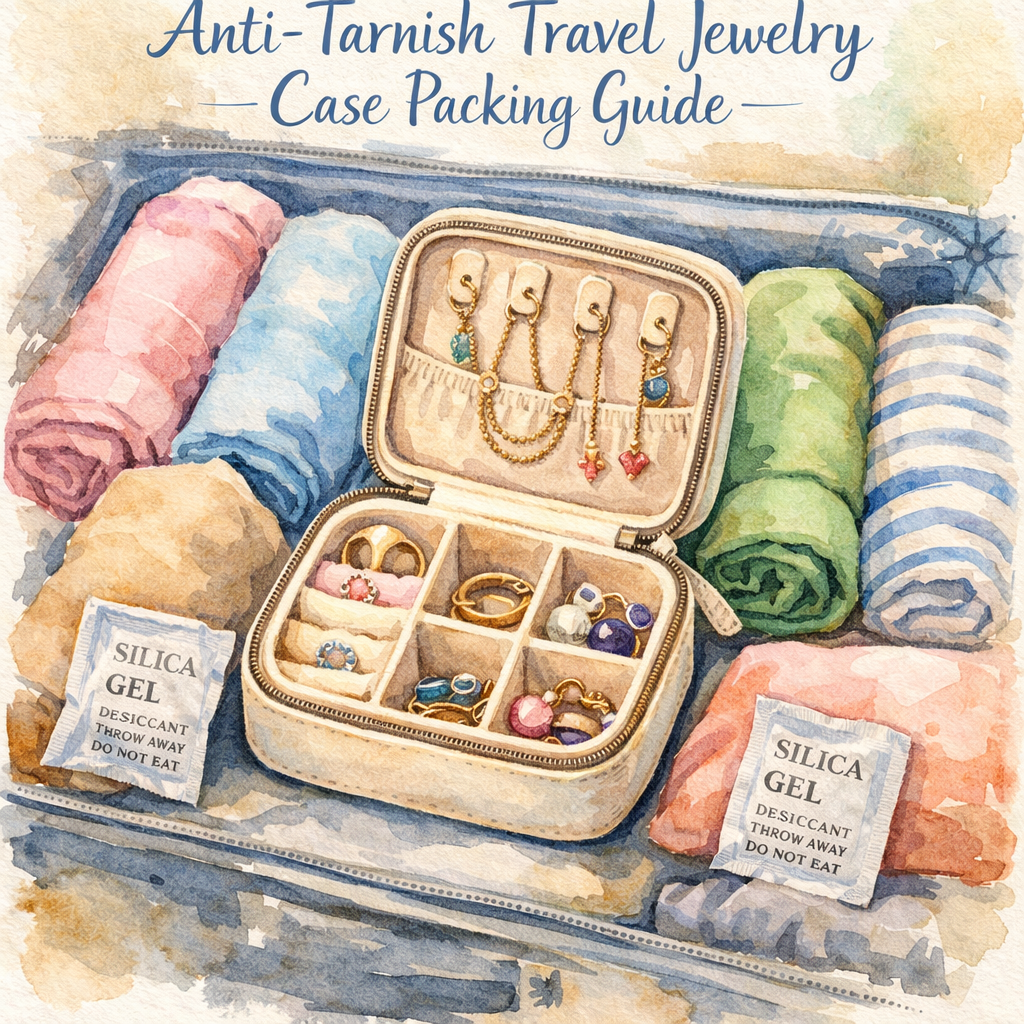
A simple solution is to add silica gel packets to your case. The packets absorb excess water vapor and keep the interior dry.
Here’s how to use them:
- Place two to three packets at opposite corners of the case.
- Close the case and shake gently to distribute the dry air.
- Check the packets after each trip; if they turn pink, they’re saturated and need to be re‑charged or replaced.
Many travelers reuse the same packets by heating them in a low oven for 15 minutes. This drives out the moisture and restores their capacity.
The Atolea blog explains that airtight bags with silica gel are essential for summer trips where humidity spikes. It also notes that metal‑rich environments like coastal ports can increase sulfur exposure.
For the science behind silica gel, see the Wikipedia entry Silica gel. It describes how the porous beads trap water molecules.
Combine silica gel with a tightly sealed zippered pouch. A zip that sticks well adds an extra layer of protection against accidental opening.
When you arrive at a humid destination, give the case a quick shake. If you hear a soft rattle, the packets are still active.
Bottom line:Control humidity with silica gel to keep metal from reacting with water.
Step 4: Clean and Dry Jewelry Before Storing
Before you tuck anything away, give each piece a quick clean. Dirt, oils and sweat act like a catalyst for tarnish.
The easiest method is a soft microfiber cloth. Gently rub each item to remove fingerprints. For stubborn spots, dip a cloth in warm soapy water, wipe, then dry with a lint‑free towel.
Jacqueline Kim from DEH Jewelry Solutions explains that oxygen and sulfur in the air cause metals like silver to form sulfides, which look like dark spots. Removing oils reduces the surface area where these reactions start.
After cleaning, make sure each piece is completely dry. Even a tiny droplet can create a micro‑environment that speeds up corrosion.
For delicate stones such as pearls or opals, avoid water altogether. A dry brush or a cotton swab with a bit of alcohol‑free cleaner works best.
Once clean, store each item in its own anti‑tarnish pouch or compartment. This double layer, clean surface plus separate pocket, gives the best protection.
For more cleaning tips, see the Condé Nast Traveler article here. It covers the best practices for gold, silver and gemstone pieces.
Understanding the chemistry helps you see why cleaning matters. The Wikipedia page on tarnish describes the oxidation process that your cleaning routine interrupts.
Bottom line:A clean, dry piece is less likely to tarnish during travel.
Step 5: Pack Smart , Roll vs. Case
How you arrange the case inside your suitcase matters as much as the case itself. Two common methods are rolling the case inside a soft bag or placing it in a hard‑shell travel case.
Rolling works well with fabric cases. You can wrap the case in a thin layer of clothing, then roll the bundle. This saves space and cushions the case against bumps.
Hard‑shell cases, like polycarbonate boxes, give a rigid shield. They keep the interior from shifting when the suitcase is tossed in the overhead bin.
Which is best for you? If you travel light and pack a carry‑on, a rolled fabric case fits nicely in a small compartment. If you have a checked bag and carry heirloom pieces, a hard‑shell case prevents crushing.
Here’s a quick comparison:
The Eastcolor guide notes that jewelry boxes offer solid protection but can be bulky, while bags are lightweight but may allow movement. It recommends a hybrid approach: use a hard‑shell inner case for fragile items and wrap the whole thing in a soft roll for extra padding.
To test your packing method, place the case in your suitcase, sit on it for a minute, then open it. If nothing moves, you’ve got a good fit.
Don’t forget the visual cue: a sleek, water‑resistant exterior keeps moisture out, and a secure zip stops accidental openings.
Bottom line:Pack your anti‑tarnish case in a way that limits movement and shields against impact.
Frequently Asked Questions
Can I use regular cotton pouches instead of anti‑tarnish bags?
Regular cotton pouches protect against scratches but they don’t trap sulfur gases. For tarnish resistant travel jewelry storage tips, you’ll want a pouch that mentions a treated lining or a built‑in anti‑tarnish layer. Using cotton alone can still let the metal react with air, especially in humid climates.
How many silica gel packets should I pack for a week‑long trip?
Two to three packets are enough for a standard travel case. Place one packet near the zip and the others at opposite corners. If you notice the packets turning pink before you return, swap them out mid‑trip. This keeps the interior dry and slows the tarnish process.
What if my case doesn’t have a zip that stays closed?
Consider adding a small travel lock or a reusable rubber band around the zip pull. A secure closure stops air and moisture from entering, which is a core part of tarnish resistant travel jewelry storage tips. You can also line the opening with a piece of tape for a quick fix.
Is it safe to wear jewelry while going through airport security?
Yes, you can wear most pieces, but be aware that metal detectors may trigger a beep. Remove large items or those with delicate stones, place them in your case, and walk through the scanner. This reduces the chance of a sudden impact that could damage the piece.
Do I need to re‑condition the anti‑tarnish lining over time?
Most treated fabrics lose their effectiveness after several trips. If you notice a slight darkening after a few uses, replace the liner or the whole case. Some brands sell replacement sleeves that slide in without tools.
How do I keep my jewelry from tangling while traveling?
Use individual compartments or pill organizers, as described in the steps. Wrap each necklace around a dedicated hook or a straw, and store earrings in separate pouches. This method is a key part of tarnish resistant travel jewelry storage tips because it also prevents metal‑on‑metal contact that can cause scratches.
Can I pack a watch in the same case as my necklaces?
A watch should sit in its own padded slot or a small watch roll. Mixing it with necklaces can cause the watch crystal to get scratched. A dedicated watch compartment keeps the watch safe and keeps the anti‑tarnish environment consistent for the other pieces.
What should I do if my jewelry gets wet during a flight?
Pat the piece dry with a microfiber cloth immediately, then place it in a silica gel packet‑filled pouch. Allow it to air‑dry completely before sealing the case. This quick action prevents moisture from triggering tarnish.
Conclusion
Keeping your sparkle safe while you travel is not magic; it’s a set of simple habits. Choose a case with a treated anti‑tarnish lining, separate each piece with pockets or pill trays, add silica gel to control humidity, clean and dry every item before you pack, and pick the roll or hard‑shell method that matches your bag size. Diamond Veneer Travel Jewelry builds its cases with plush velvet interiors and magnetic zips, making them a top pick for savvy jet‑setters who want both style and protection.
Try the steps on your next trip. A quick shake test, a couple of silica packets and a well‑organized case will give you confidence that your jewelry will arrive as brilliant as when you left home. Safe travels, and let every destination see your shine.