

Travel Jewelry Care Guide for Beach Vacations
Sun, sand, and sea make a perfect beach day, but they also threaten your favorite jewelry. Salt can tarnish silver, sand can scratch gemstones, and heat can weaken clasps. If you’ve ever watched a delicate chain disappear in the surf, you know the panic.
This travel jewelry care guide for beach vacations shows you exactly how to keep your pieces sparkling from the moment you zip them up to the moment you unpack them at home. We’ll walk through storage, pre‑trip prep, packing tricks, on‑beach upkeep, and post‑trip cleaning.
Step 1: Choose the Right Travel Jewelry Storage
Picking a case is the first line of defense. A good travel jewelry case does three things: it protects against scratches, keeps pieces separate, and stays lightweight enough for carry‑on luggage.
Start by making a quick inventory of the items you plan to bring. Write down each necklace, ring, and pair of earrings. Knowing exactly what you have helps you match the case size to the pieces.
Look for soft‑lined compartments. Velvet or microfiber pockets cushion delicate stones while preventing metal‑on‑metal contact. Zip‑up sections keep dust out, and a secure latch stops accidental openings during a bumpy flight.
Consider a case with a built‑in silica‑gel packet. Moisture is a hidden enemy, silica‑gel absorbs humidity that would otherwise cause silver to tarnish overnight.
Hard‑shell options add extra protection if you travel with heavier items like bangles. They resist crushing in the overhead bin, but they can be bulkier. If you only need a few pieces, a soft‑pouch that folds flat fits nicely in a side pocket.
When you shop, compare interior dimensions to the longest necklace and widest bracelet you own. A case that’s a few centimeters larger than your biggest piece ensures nothing gets bent.
Our own Travel Jewelry Case Buying Guide walks through the exact measurements you should take before you buy.
Bottom line:Pick a lightweight, soft‑lined case with a zip and silica‑gel to keep your jewels safe in the carry‑on.
Step 2: Pre‑Trip Cleaning and Protective Coating
Before you head to the shore, give every piece a gentle clean. Dirt, sunscreen, and body oils attract sand, so a fresh start helps prevent grime from bonding to metal.
Use a soft, lint‑free cloth to wipe each item. For deeper cleaning, dip the cloth in warm water with a drop of mild soap, then dab the surface. Avoid abrasive pads, they can scratch a stone’s surface.
Once clean, let each piece air‑dry completely. Moisture trapped under a clasp can cause corrosion when you hit the salty air.
If you want extra protection, apply a thin layer of an anti‑tarnish spray. Remember, research shows only three of fourteen beach‑jewelry steps warn that sprays don’t fully protect against salt and chlorine, so treat sprays as a boost, not a shield.
For sterling silver, a quick polish with a silver‑specific cloth adds a protective oxide layer. Gold‑filled pieces benefit from a light coating of jewelry wax; it repels water and keeps the finish glossy.
Store the cleaned pieces in the case’s soft pockets right away. This prevents any stray sand from settling on a still‑wet surface.
For a deeper dive into proper cleaning methods, see Wikipedia’s jewellery cleaning guide. It outlines safe soaps, cloth types, and why harsh chemicals can damage settings.
Bottom line:A gentle clean and a thin protective coating give your jewelry the best chance against beach wear.
Step 3: Packing Tips to Avoid Sand and Scratches
Packing smart stops sand from getting inside your case and keeps chains from knotting. The goal is to separate each type of jewelry.
First, sort items by category: necklaces, bracelets, rings, earrings. Use separate zip‑pouches or the compartments inside your travel case. If you don’t have a case, small pill boxes work well for rings, and drinking straws keep necklaces from tangling.
Wrap each necklace around a straw, then slide the straw into a zip‑lock bag. This simple hack prevents knots without a fancy organizer.
For earrings, pop each pair into a tiny fabric pouch. If you only have one pouch, place a small button between the posts to keep them from slipping apart.
Rings should sit in a soft cloth or a dedicated ring roll. If you’re using a pill box, each compartment holds one ring, so they don’t scratch each other.
When you place the packed pouches into your suitcase, keep them on top of your clothing. This reduces pressure from heavy items and makes it easy to grab the case at security.
Carry‑on is the safest spot for valuable jewelry. TSA lets you keep your case in the bin, but you should place it in a clear zip‑pouch so agents can see it quickly.
Finally, label each pouch with a small tag or color‑coded sticker. This helps you locate the right piece without rummaging through a pile.
According to the National Institute of Standards and Technology, keeping moisture low inside storage containers preserves metal integrity over time.
Bottom line:Organized packing with individual pouches and protective layers keeps your jewelry sand‑free and knot‑free.
Step 4: On‑Beach Care , Quick Maintenance
Even with the best case, you’ll probably take a piece or two on the sand. Quick on‑site care can save a lot of grief later.
First, remove any jewelry before you dive into the water. Saltwater and chlorine both corrode metals. If you must wear a ring, use a silicone ring guard to keep it snug.
After a swim, rinse the piece with fresh water as soon as possible. A quick splash removes salt crystals that would otherwise etch the metal.
If you can’t get to fresh water, dab the piece with a damp microfiber cloth. This lifts most of the residue.
For sunglasses or watches, a tiny dab of mild soap followed by a fresh‑water rinse works well. Avoid harsh chemicals like sunscreen or perfume on the metal; they can leave oily films that attract sand.
Store the rinsed piece in a zip‑locked bag or a soft pouch until you return to your hotel. This prevents sand from settling on the surface.
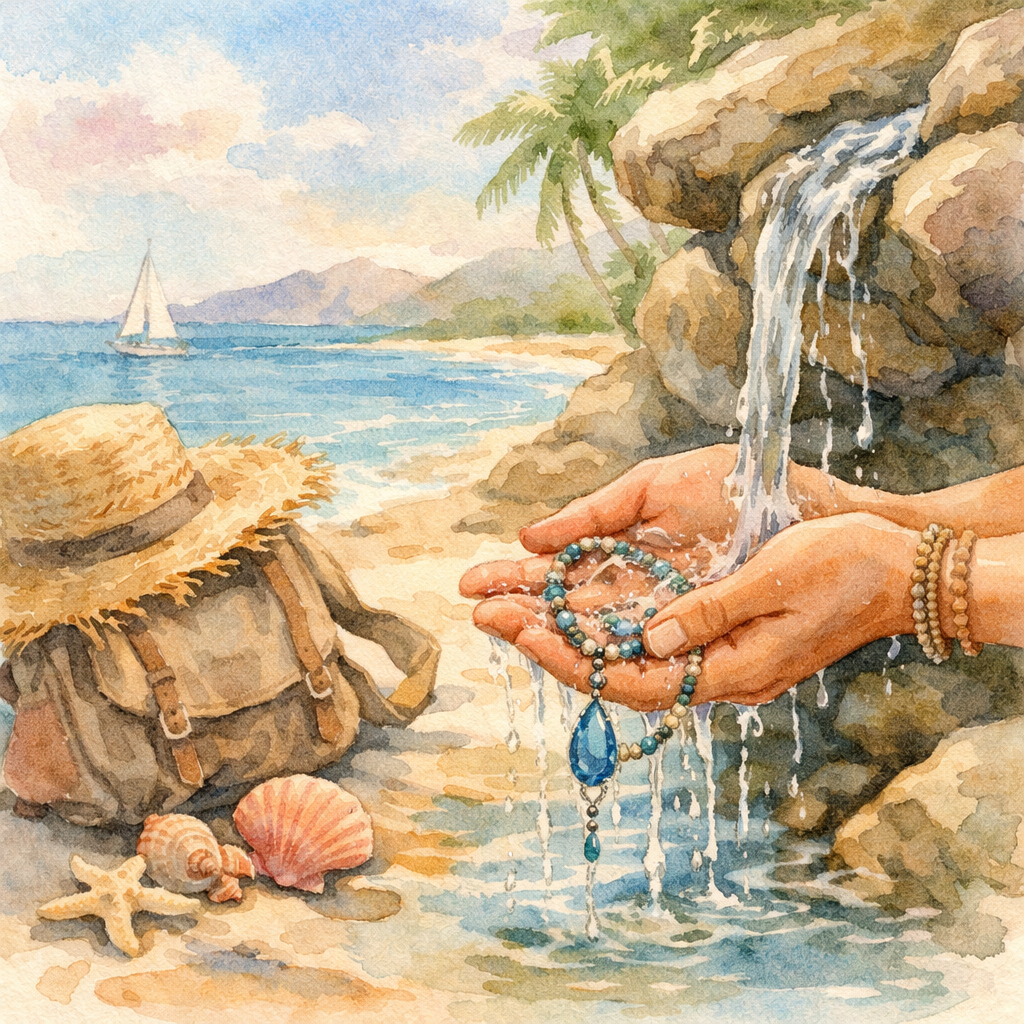
The Gem Lab notes that chlorine can dull gold and weaken settings, so a fast rinse is the single most effective action for on‑beach care.
If you notice a spot of sand stuck in a setting, use a soft brush (like a baby‑hair brush) to sweep it out gently. Never poke at the stone with a sharp object.
Bottom line:Immediate rinsing and safe storage on the beach keep your jewelry from salt and sand damage.
Step 5: Post‑Trip Deep Clean and Storage
When you get home, give every piece a thorough clean. The sand you brushed off at the beach can still hide in crevices.
Fill a bowl with warm water and a few drops of mild dish soap. Submerge each item for a minute, then use a soft brush to loosen any grit.
Rinse each piece under running water. If you’re worried about losing a tiny earring, place a mesh strainer in the sink first.
Dry with a lint‑free cloth, then let the pieces sit on a clean towel for a few minutes to ensure all moisture evaporates.
After they’re dry, give each piece a final polish with a dedicated jewelry polishing cloth. This removes any lingering dullness.
Store the cleaned jewelry back in your travel case, but this time add a fresh silica‑gel packet. If you have anti‑tarnish strips, tuck them into the case’s zip‑pouch.
For long‑term storage, keep the case in a cool, dry drawer away from direct sunlight. UV light can fade certain coatings over months.
The Smithsonian Institution recommends storing precious metals in a low‑humidity environment to slow oxidation. Their guidelines echo the need for a dry spot.
Bottom line:Post‑trip cleaning restores sparkle and protects against future tarnish.
FAQ
Can I wear my diamond veneer earrings on the beach?
Yes, but only if you rinse them with fresh water right after exposure and store them in a soft pouch. The carbon‑diamond coating resists moisture, yet a quick rinse prevents salt from settling on the metal. Avoid applying perfume or sunscreen before you put them on, as those chemicals can leave a film that’s hard to clean later.
What type of case is best for a carry‑on?
A soft‑lined case with zip compartments and a built‑in silica‑gel packet works best. It’s lightweight, fits easily in an overhead bin, and protects against both scratches and humidity. If you travel with heavier items like bangles, choose a case with a padded interior or a hard shell that still folds flat.
How often should I clean my jewelry during a long beach vacation?
Give each piece a quick wipe with a lint‑free cloth after any water activity. If you notice salt or sand buildup, rinse with fresh water and dry immediately. A brief polish once a day keeps the shine up and stops grime from building.
Is anti‑tarnish spray enough to protect my pieces?
It helps, but research shows only three of fourteen steps warn that sprays don’t fully protect against salt and chlorine. Use the spray as a supplemental layer, not a replacement for rinsing and proper storage.
What should I do if a ring slips off in the sand?
Stop and search the area right away; sand can hide the ring. Bring a small flashlight and gently sift the sand. If you can’t find it, contact the resort’s lost‑and‑found and file a report. For future trips, use a silicone ring guard to keep the band snug.
How can I tell if my jewelry has been damaged by chlorine?
Look for a duller metal surface, especially on gold or silver. Chlorine can also loosen settings, so gently tug on stones; they should not wiggle. If you spot any change, have a jeweler inspect the piece before wearing it again.
Conclusion
Beach vacations don’t have to mean jewelry nightmares. By choosing the right case, cleaning before you leave, packing with care, rinsing on the sand, and giving your pieces a deep clean after you return, you protect sparkle and save money.
Diamond Veneer Travel Jewelry builds on these steps with elegant, lightweight designs that travel well. Pair their pieces with a quality travel case, and you’ll feel confident strolling the boardwalk, sipping a cocktail, or dancing at sunset without worrying about lost or tarnished gems.
Ready for your next sun‑soaked getaway? Pack smart, rinse fast, and let your jewelry shine as bright as the ocean horizon.