

Diamond Veneer Travel Jewelry for Island Getaways
Island trips call for sparkle, but heavy gems and loose pieces can make packing harder than it needs to be. Diamond veneer travel jewelry for tropical island getaway plans gives you shine with less worry, if you choose each piece for the day's setting. Use the steps below to build a small jewelry capsule that works by the water, at dinner, and on the trip home.
Step 1: Match Your Jewelry Capsule to the Island Itinerary
Start with your schedule, not the jewelry case. A good capsule for a tropical island getaway should fit the places you'll actually go.
Write down each main setting for the trip. Mark it as casual, active, polished, or formal. A morning walk needs a very different piece than a sunset meal. This quick map keeps you from packing five versions of the same look.
- Beach or pool: Choose simple pieces that sit close to the body. Small hoops, short pendants, and one slim bangle are easier to watch than long drops.
- Excursion day: Pick jewelry with secure closures. Keep dangling pieces out of the plan if you expect wind, sport, or frequent movement.
- Resort lunch: Add one polished detail, such as pearl drop earrings or an open bangle.
- Sunset dinner: Pack one statement item. A chandelier earring or tennis-style bracelet can change a plain dress without another outfit.
Think in outfit links. One pair of earrings should work with at least two looks. One bracelet should pair with swim cover-up fabric as well as evening cloth. Diamond Veneer Travel Jewelry is aimed at women who want fashion pieces that can move between these settings without filling a full case.
For airport days, keep your most valuable pieces in your personal bag. Screening officers can still inspect belongings.
By now you should have a short list: one daytime base, one evening statement piece, and a backup pair of earrings. That is enough for many island plans.
Step 2: Choose Diamond-Veneer Sparkle by Look, Weight, and Value
Now compare each piece by its visual role, physical feel, and stated price. Diamond veneer jewelry often uses cubic zirconia to give a diamond-like look at a lower cost than fine diamond jewelry, but the materials and care needs still vary by item.
Begin with weight. The catalog describes the Italy-Style Satin Finish Open Cubic Zirconia Bangle as 4 oz and travel-ready. The Gold Open Cubic Zirconia Bangle is also listed as 4 oz. That gives you a clear reference when a bracelet must stay comfortable through a long day.
Next, choose the level of shine. A satin finish gives a softer look for daytime. A tennis-style line catches more light at dinner. Small earrings add movement without requiring a large necklace. You don't need every effect in one outfit.
Use the listed prices as a planning range, not a promise that every piece costs the same. Examples in the catalog include a $19.99 delicate sterling silver link chain, along with earrings, bangles, and necklaces at varied prices. Higher-priced pieces include the radiant diamond veneer cubic zirconia 14K gold ring, with pricing available on request.
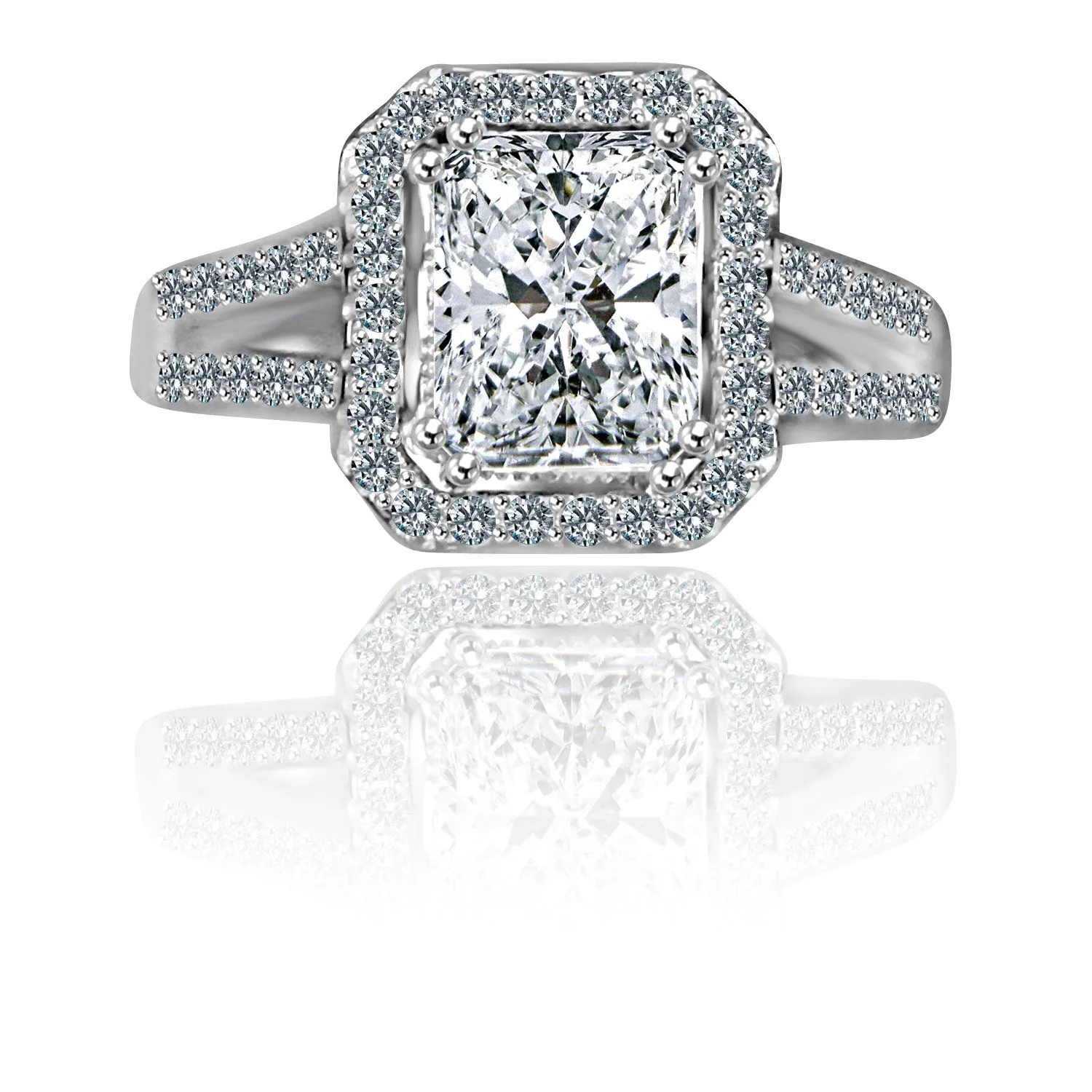
That range helps you split your case into two groups. Use lower-cost pieces for casual outfit changes. Reserve high-value pieces for moments where you'll keep them on and can store them right after.
When describing cubic zirconia or metal content in a purchase plan, check the product details rather than guessing from the photo.
Diamond Veneer Travel Jewelry gives travelers room to build this mix around their own style. The smart choice is the piece that fits your wardrobe and your risk level, not the one with the most stones.
Step 3: Build Beach-Ready and Sunset-Ready Jewelry Combinations
Build two versions of each look: a low-profile daytime set and a stronger evening set. This makes diamond-veneer travel jewelry easier to wear across a tropical itinerary.
Make the daytime set quiet
Start with one focal point. Try a short pendant with small hoops, or use a single open bangle with bare shoulders. Keep the shapes clean when your outfit already has print, fringe, or bright color.
A simple earring can work well with a linen shirt or a simple cover-up. If you choose a long drop, skip the necklace. That keeps the face area clear and reduces tangles when you move.
For active mornings, remove anything that can catch on a towel or bag strap. A slim bangle may be easier than a chain bracelet. A small hoop may be safer than a long chandelier.
Turn the same base into evening wear
Keep the base piece and change one item before dinner. Replace small hoops with chandelier drops. Add a polished bangle. Or switch a modest pendant for a larger geometric medallion.
Use contrast. Gold-tone pieces can warm a white or cream outfit. Clear cubic zirconia can sharpen a dark dress. Pearl details soften a bright resort color. Pick one direction, then stop.
Matching couples sets can work when both people share one detail rather than wearing identical pieces. A matching metal tone or repeated stone shape is enough. For a group trip, set aside one consistent accent color so photos look planned without looking staged.
Try the full look in a mirror before you pack it. Raise your arms, sit down, and turn your head. A clasp that feels fine while still may pinch or catch once you move. That small test can save you from leaving a piece in the room all week.
For more outfit ideas, the related outfit guide can help you think through a full look rather than a single item.
Step 4: Check Water, Salt, Sunscreen, and Heat Exposure Before Wearing
Assume beach jewelry needs protection from water and products unless the product care notes say otherwise. Diamond veneer travel jewelry for a tropical island getaway may look beach-ready, but appearance alone doesn't prove that a piece is safe for salt water or a pool.
Make a wear rule before departure. Take jewelry off before swimming, snorkeling, showering, or entering a hot tub. Salt, chlorine, soap, and heat can affect finishes, settings, clasps, or any components that the product page does not rate for water use.
Sunscreen needs the same care. Apply lotion first. Let it settle. Put jewelry on afterward. Sunscreen residue can sit in small spaces and leave a film that hides the stone's sparkle.
Keep jewelry away from direct heat when you can. Don't leave a case on a hot dashboard or a balcony chair in full sun. Heat can make some materials expand or soften, while a sharp change in temperature can stress certain finishes.
Salt water creates a second risk: loss. A ring can slide from a wet finger. A clasp can open while you're in the surf. Sand can also make a small closure hard to see when a piece falls. The safest beach plan is to wear only the piece you can keep in sight, then remove it before entering the water.
After exposure, use clean lukewarm water only if the product care instructions allow it. Pat the piece dry with a soft lint-free cloth. Don't scrub with a rough towel, and don't reach for a household cleaner without checking the material first.
The decision rule is simple: if you can't confirm water care, keep the piece dry. A sunset photo is worth more than a lost setting.
Step 5: Pack Each Piece So It Arrives Ready to Wear
Pack jewelry as a set of small, protected parts. A soft pouch alone won't stop chains from twisting or earrings from pressing into one another.
Use a travel case with separate sections. Look for these features:
- A zip pocket for rings and small earrings.
- Hooks or slots for necklaces.
- A firm center panel that keeps pieces apart.
- A soft lining without loose fibers that can catch clasps.
- A flat shape that fits inside your personal bag.
Close every clasp before packing. Thread each necklace through a straw or a narrow paper tube if the chain is long. Leave the clasp outside, then close it again. This keeps the chain from knotting while the bag moves.
For earrings, push each post through a small piece of clean card stock or a spare button. Cover the back with its earring stop. Rings can sit in individual slots. Don't place a ring beside a loose chain just because both are small.
Use a soft cloth between larger pieces. A brooch or statement pendant should have its own space. Place the heaviest item near the case edge only if the case has firm protection. Otherwise, it can press into lighter pieces.
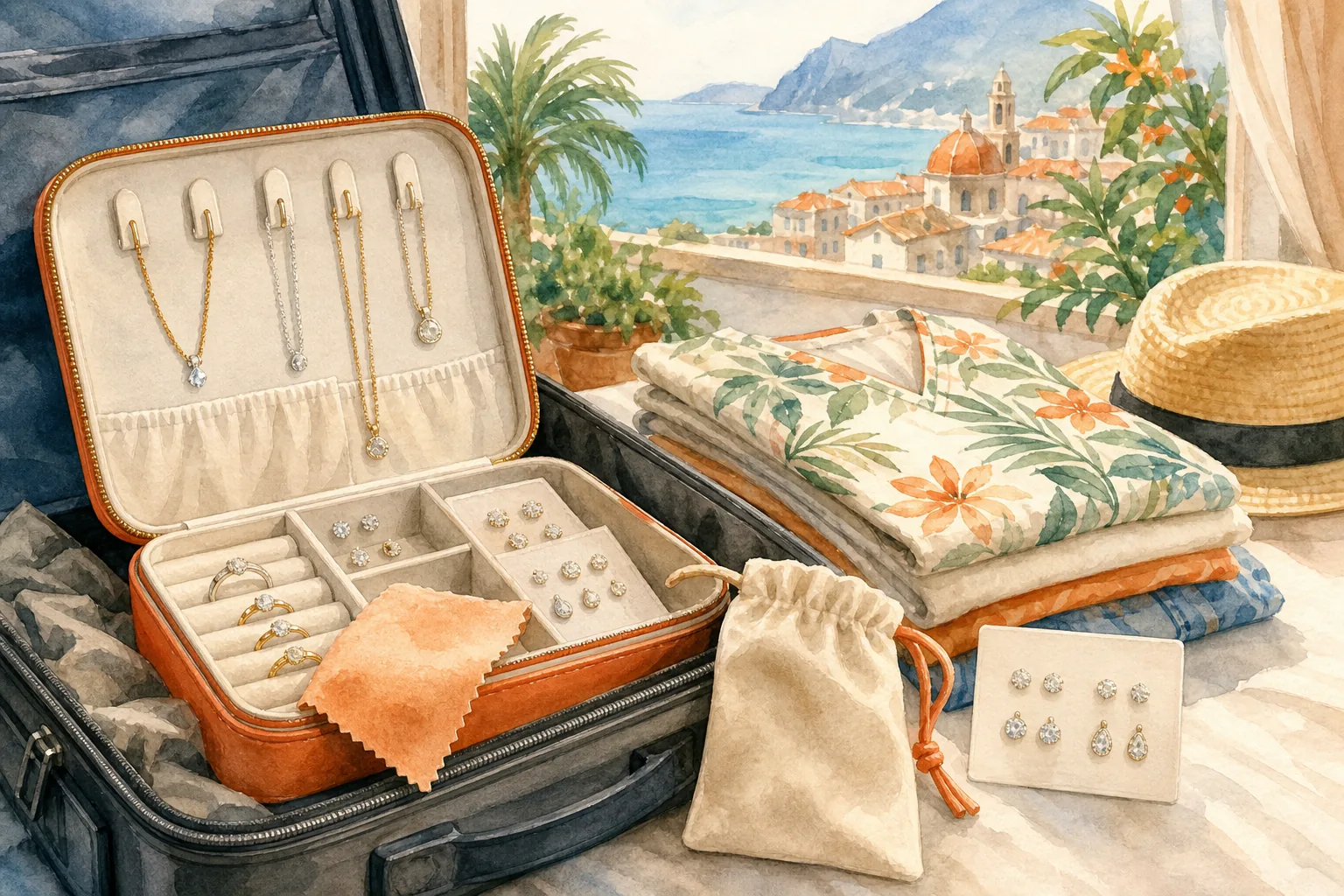
Keep the case in your personal bag, not checked luggage. Put it in an inside pocket when possible. At a hotel, use the room safe when one is available, but don't leave pieces spread across a bathroom counter where they can be knocked into a drain.
Take one photo of each packed set before you leave. The photo helps you check the case after a day out. It also gives you a basic record for a claim if a valuable piece goes missing.
By now you should have one case, one slot per item, and a plan for where the case stays during transit.
Step 6: Clean, Store, Insure, and Evaluate Your Jewelry Responsibly
Care starts with a light hand. Clean diamond-veneer travel jewelry after sunscreen, salt spray, or sweat reaches it, but follow the item's own care notes before using any liquid.
For pieces approved for gentle cleaning, use lukewarm water with a small amount of mild soap. Rinse well. Pat dry with a soft cloth. Use a clean, dry brush only if the product directions allow it and the setting has no loose parts.
Never use bleach, abrasive paste, or an unknown dip on a piece you haven't identified. A cleaner made for one metal can harm another finish. If a stone moves, a clasp feels loose, or a post bends, stop wearing the item until it has been checked.
Store each item dry. Don't leave necklaces in a damp pouch after a beach day. Let the pouch and the jewelry dry fully before you close the case for the night. This is a small habit, but it keeps moisture from sitting against the finish.
Set a sensible protection plan
For higher-value jewelry, review your travel insurance before departure. Check whether the policy covers jewelry away from home. Look for limits, deductibles, proof-of-purchase rules, and exclusions for unattended items.
Save receipts, product pages, and clear photos in a secure cloud folder. Record the item name, purchase date, and price in your own notes. Don't assume a general baggage limit will cover a costly ring or necklace.
For a lower-cost vacation capsule, the main protection may be simple storage and careful wear. For a ring or a $284.99 moissanite tennis necklace, a policy review deserves more attention.
Consider material questions too. Ask what the product listing says about the stone, metal, plating, and care. If sustainability matters to you, ask what the seller can verify. Don't treat the phrase "diamond veneer" as proof of a mining or labor standard. The product details must carry that claim.
Diamond Veneer Travel Jewelry also lists One Tree Planted among its available brands. If you choose a product tied to a giving program, read the exact terms before treating it as part of your own sustainability plan.
Step 7: Finalize a Personal, Group, or Wholesale Island Jewelry Order
Finish with a written order plan. This matters when you're buying for yourself, a couple, a travel group, or a retail shop.
For one traveler
List each outfit and assign one piece to it. Remove duplicates. Check the product name, material details, size, closure, listed price, and return terms before checkout. Keep a copy of the order confirmation with your travel records.
For couples or groups
Choose a shared detail first. It could be a metal tone, a stone shape, or a matching bracelet style. Then let each person pick a different piece within that theme. This gives the group a link without forcing the same look on everyone.
Ask each buyer to confirm fit and allergies before the order is placed. A group order is harder to fix when one person needs a different size or material. Set one person to track delivery, but give every buyer their own item list.
For wholesale buying
Retailers should test a small mix before placing a larger order. Track which categories suit the shop's customers. Earrings may need different display space than bracelets, while higher-priced necklaces may need stronger security in the case.
Request the current wholesale terms directly from Diamond Veneer Travel Jewelry. Ask about minimum quantities, case packs, lead times, shipping, returns, and any bulk-order discounts. Don't assume a retail price can be multiplied into a wholesale margin.
Build a simple order sheet with these columns:
- Exact product name and item code.
- Category and intended customer.
- Unit cost or listed price.
- Requested quantity.
- Expected delivery date.
- Care notes and display needs.
Review the sheet once before payment. A clear handoff prevents a retailer from receiving three statement styles while missing the lower-cost pieces that bring shoppers into the display.
For a personal trip, order early enough to inspect each piece at home. For a shop, leave time to check the full shipment before putting it on sale. Diamond Veneer Travel Jewelry can be the starting point, but the final order should match your use case, budget, and care plan.
FAQ
Is diamond veneer jewelry good for a tropical vacation?
Diamond veneer jewelry can suit a tropical vacation when you treat it as fashion jewelry and protect it from water, salt, chlorine, sunscreen, and heat. Choose light pieces for daytime wear, then save statement items for dry settings. Check each product's care details before packing it, since no general material label proves that a piece is safe for swimming.
Can I wear diamond veneer jewelry in the ocean?
You should avoid wearing diamond veneer travel jewelry in the ocean unless the product care instructions clearly approve it. Salt water can affect finishes and makes loss more likely because wet fingers and open clasps are hard to manage. Remove the piece before swimming, place it in a dry pouch, then clean and dry it according to the product directions.
What jewelry should I pack for an island getaway?
Pack one small daytime pair of earrings, one versatile bracelet or bangle, one pendant, and one evening statement piece. Add a ring only if you'll store it safely. This mix covers casual hours and dinner without filling your bag. Diamond Veneer Travel Jewelry has options across earrings, bangles, pendants, rings, and necklaces.
How do I keep travel jewelry from tangling?
Keep travel jewelry from tangling by closing each clasp and separating every chain inside a case with necklace hooks or slots. You can thread a long chain through a narrow paper tube before closing the clasp. Store earrings on card stock and place rings in individual slots. Keep the organizer flat inside your personal bag.
Is cubic zirconia cheaper than a diamond?
Cubic zirconia is generally a lower-cost alternative to a mined diamond, but the final price still depends on the setting, metal, design, and seller. Compare the full product details rather than judging by stone size alone. For a trip, the lower replacement cost may also make a fashion piece easier to carry than a valuable heirloom.
What should retailers ask before placing a wholesale jewelry order?
Retailers should ask about minimum quantities, unit pricing, bulk discounts, lead times, shipping, returns, item codes, and care details before ordering. They should also test a small product mix first. Diamond Veneer Travel Jewelry can discuss the order needs, but the retailer should keep a written margin plan and inspect the shipment before display.
Choose a small capsule that matches your itinerary, keep it dry around the water, and carry it in your personal bag. Start by comparing a few Diamond Veneer Travel Jewelry pieces, then place the order only after you've checked fit, care notes, and storage space.