

Diamond Veneer Travel Jewelry for Yacht Cruise
Yacht nights call for sparkle, but salt spray, sun, and rushed shore stops can be hard on jewelry. Diamond Veneer Travel Jewelry gives you a polished look without packing a full fine-jewelry case. Use these steps to match each piece to your plans, check what you're buying, and keep it safe through the trip.
Step 1: Match Your Jewelry to the Yacht Cruise Itinerary
Start with the itinerary, not the jewelry case. Diamond veneer travel jewelry for yacht cruise wear should fit the setting, the weather, and how much time you'll spend in the water.
Read the daily plan before you shop. A formal dinner needs a different piece than a tender ride, a beach stop, or a long walk through a port town. Mark each day with one of three use cases:
- Day wear: Choose a small pendant, slim bangle, or simple drop earring.
- Shore wear: Pick a secure piece that won't snag on a bag or loose cover-up.
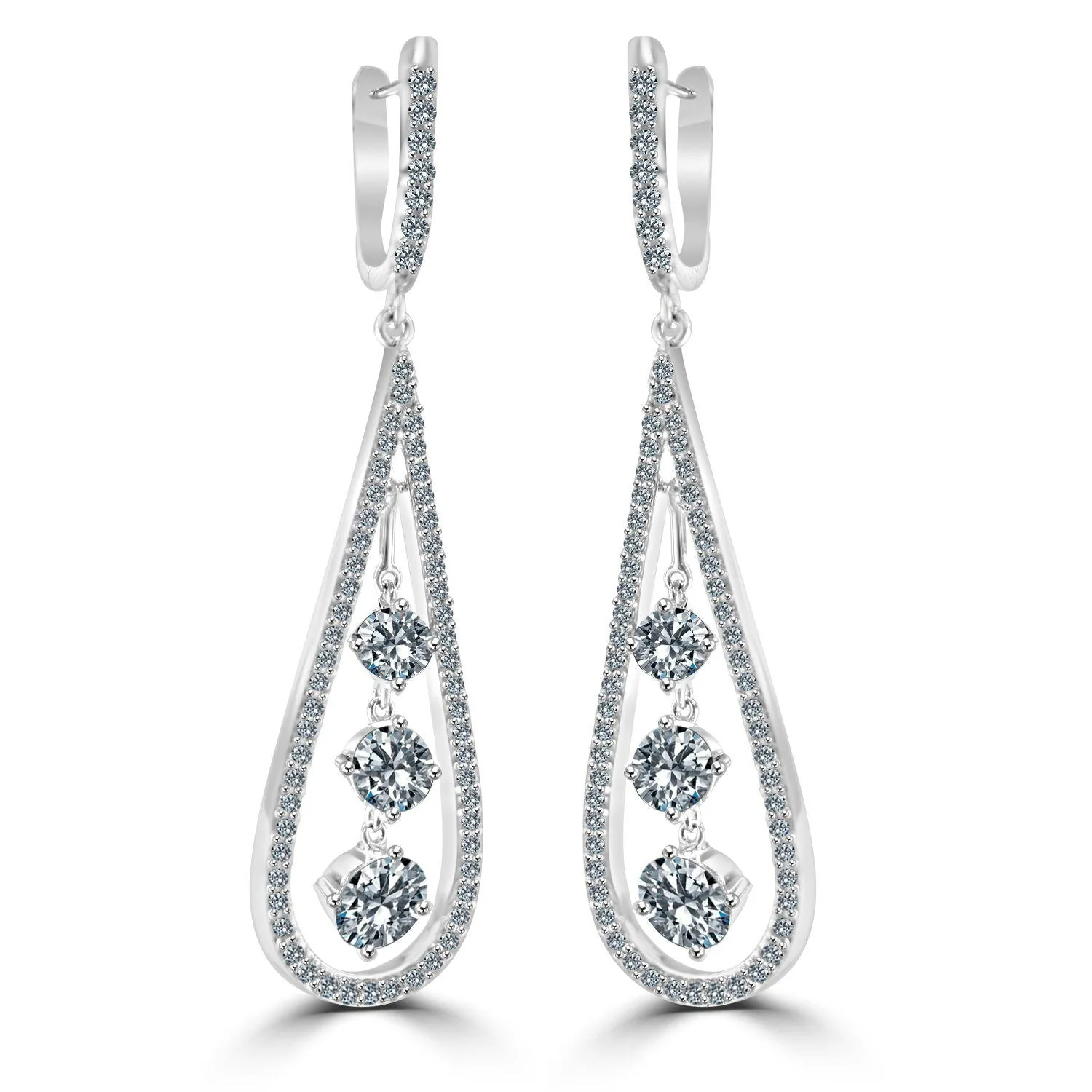
- Evening wear: Save chandelier earrings, a tennis-style bangle, or a statement pendant for dry indoor settings.
For a short trip, pack one focal piece per evening. A single pair of pearl drop earrings can work with a dress at dinner and a neat blouse the next day. A gold open bangle can add shine without taking much room in your case.
Diamond Veneer Travel Jewelry is a useful starting point for women who want a dressed-up look with a lighter travel plan. Its catalog includes cubic zirconia earrings, bangles, pendants, rings, and necklaces. The goal is a small mix that covers your plans, rather than a separate piece for every outfit.
Think about movement, too. Long earrings can catch in hair when the wind rises on deck. Large rings can feel awkward during a shore excursion. A close-fitting bangle is often easier for dinner, while a brooch can add interest to a wrap without sitting on your hands.
Travel jewelry guidance commonly recommends keeping pieces organized and limiting what you bring. That approach also helps you notice a missing item before you leave the ship.
Milestone: By now, you should have a short list with one daytime piece, one shore-safe choice, and one evening piece for each major event.
Step 2: Verify Materials, Finish, and Authenticity Before Buying
Before you buy diamond veneer travel jewelry for yacht cruise wear, read the material details line by line. “Diamond veneer” can describe a diamond-look style, but it does not automatically mean mined diamonds or solid gold.
Look for four details in the listing:
- The stone type, such as cubic zirconia, moissanite, or diamond.
- The base metal, such as sterling silver or gold.
- The surface finish, such as rhodium or another plated finish.
- The care, return, and final-sale terms.
Cubic zirconia is a lab-made diamond simulant. It can give a bright look at a lower listed price, but it is not a diamond.
That difference matters when you compare value. A product page that says “cubic zirconia” should not be read as a claim of natural diamond content. Ask the seller to clarify any phrase that sounds vague. If the listing does not state the metal or stone, pause before checkout.
Check the product name against the description. A title may use “gold” to describe color or style, while the details explain that the item has another metal base. A clear listing should help you tell the difference between a gold-tone look, a gold-plated surface, and solid gold.
Diamond Veneer Travel Jewelry lists pieces such as the Vertical CZ Sterling Silver Pearl Drop Earrings Zirconite at USD 39.99 and the 3CT Cushion Diamond Veneer Cubic Zirconia Pendant at USD 69.99. Those descriptions identify cubic zirconia rather than natural diamond. Treat the listed material as the basis for your decision.
Watch for warning signs when buying at a port or onboard boutique:
- The seller rushes you with a “today only” claim.
- The paperwork does not match the item.
- The seller avoids clear answers about the metal or stone.
- The return address exists only onboard or in a port you won't revisit.
- The receipt leaves out the item description.
Take a photo of the listing, receipt, and any certificate before you leave the shop. Keep those records with your travel documents, not in the jewelry pouch. They can help with a return, repair request, or insurance question later.
Don't rely on sparkle as proof. Bright ship lighting can make stones look cleaner and larger than they do in normal daylight. Material words and matching paperwork carry more weight than a sales pitch.
Milestone: You should now know the stone type, base metal, finish, listed price, and support terms for every piece you might buy.
Step 3: Compare Online, Onboard, and Port-of-Call Buying Options
Where you buy diamond veneer travel jewelry for yacht cruise wear changes how much time you have to check the piece. Online shopping gives you time before departure. Onboard and port shopping add convenience, but they can also add pressure.
| Buying route | Best use | Check before paying | Main risk |
|---|---|---|---|
| Online before the trip | Planned outfits and known materials | Product details, delivery time, returns | Buying before seeing scale in person |
| Onboard boutique | Last-minute evening style | Receipt, return terms, after-care contact | Holiday pressure and limited comparison time |
| Port-of-call shop | A planned local purchase | Metal details, paperwork, business location | Harder follow-up after leaving port |
Online buying is usually the calmest route. You can compare measurements and plan how each piece works with your clothes. Diamond Veneer Travel Jewelry lists packable options such as pearl drop earrings, open bangles, pendants, and tennis-style bracelets. Check the page on the day you buy because stock and terms can change.
If you want a focused shortlist for formal nights and shore days, the cruise-ready diamond veneer jewelry selection can help you compare styles before packing. Use it as a planning aid, then confirm each item's current details on its product page.
Onboard seminars can be useful for learning basic terms, but treat them as sales events too. Cruise jewelry staff may discuss stones, settings, or port shops. Listen, take notes, and leave time before making a choice.
Free charms, raffles, and limited-time offers can bring more people into a ship boutique. That does not prove that a piece is a good value. A crowd is not an appraisal. A countdown clock is not a material grade.
For a port purchase, ask whether the ship's shopping staff has a written relationship with the store. Get the store's full name, receipt details, and after-care process. If a bracelet needs sizing, confirm who will hold it and how you will receive it.
Set a spending cap before the cruise. Include room for taxes, sizing, repairs, or shipping. If the seller says the offer ends while you stand there, walk away for ten minutes. Good pieces should still make sense after the rush fades.
Decision rule: Buy online when you want time to check details. Buy onboard or in port only when the paperwork and follow-up plan are clear.
Step 4: Pack and Protect Jewelry for Life at Sea
Pack diamond veneer travel jewelry for yacht cruise days in your carry-on, never in checked luggage. Keep the case with you during flights, transfers, embarkation, and shore travel.
Use a case with separate sections. Small zip pockets work for earrings and rings. A soft sleeve helps protect a pendant from scratches. For chains, thread each one through a drinking straw or a narrow card slot, then fasten the clasp. This keeps links from forming one tight knot.
Pack each category in its own place:
- Put earrings in a small paired compartment.
- Keep pendants flat, with chains fastened.
- Place bangles in a wider sleeve so they don't press on stones.
- Store rings in a ring roll or a soft slot.
Don't fill the case until it bulges. Pressure can bend a thin piece or stress a clasp. A case that closes flat is safer than one packed for every possible outfit.
For higher-value jewelry, ask your insurer about travel coverage before departure. Check worldwide coverage, deductibles, valuation records, and policy limits before taking jewelry abroad.
That review matters even when a piece is not fine jewelry. Your policy may treat loss, theft, and mysterious disappearance in different ways. Keep receipts and current photos in a secure cloud folder. A photo should show the whole piece and a close view of its clasp, setting, or back.
Use the cabin safe for storage when the piece is not on you, but don't leave jewelry in an open pouch on a desk or bathroom counter. On a yacht, the same rule applies to a cabin, suite, or charter room. Lock the case when possible and keep the key or code private.
Salt water and sunscreen create another risk. Even if a piece looks fine after a swim, residue can sit in joints and under settings. The safest choice is simple: remove jewelry before swimming, hot-tub use, showering, or water sports.
Milestone: Your jewelry should now be in a compact carry-on case with a record of what you packed and proof of purchase stored apart from the pieces.
Step 5: Create a Wear-and-Remove Routine for Deck, Water, and Shore
A wear-and-remove routine keeps yacht cruise jewelry from becoming an afterthought. Put it on after sunscreen and hair products have dried. Take it off before the activity changes.
Use this sequence each day:
- Apply sunscreen, lotion, fragrance, and hair products.
- Wait until your skin and hair feel dry.
- Put on the planned jewelry in your cabin.
- Remove it before swimming, showering, exercise, or water play.
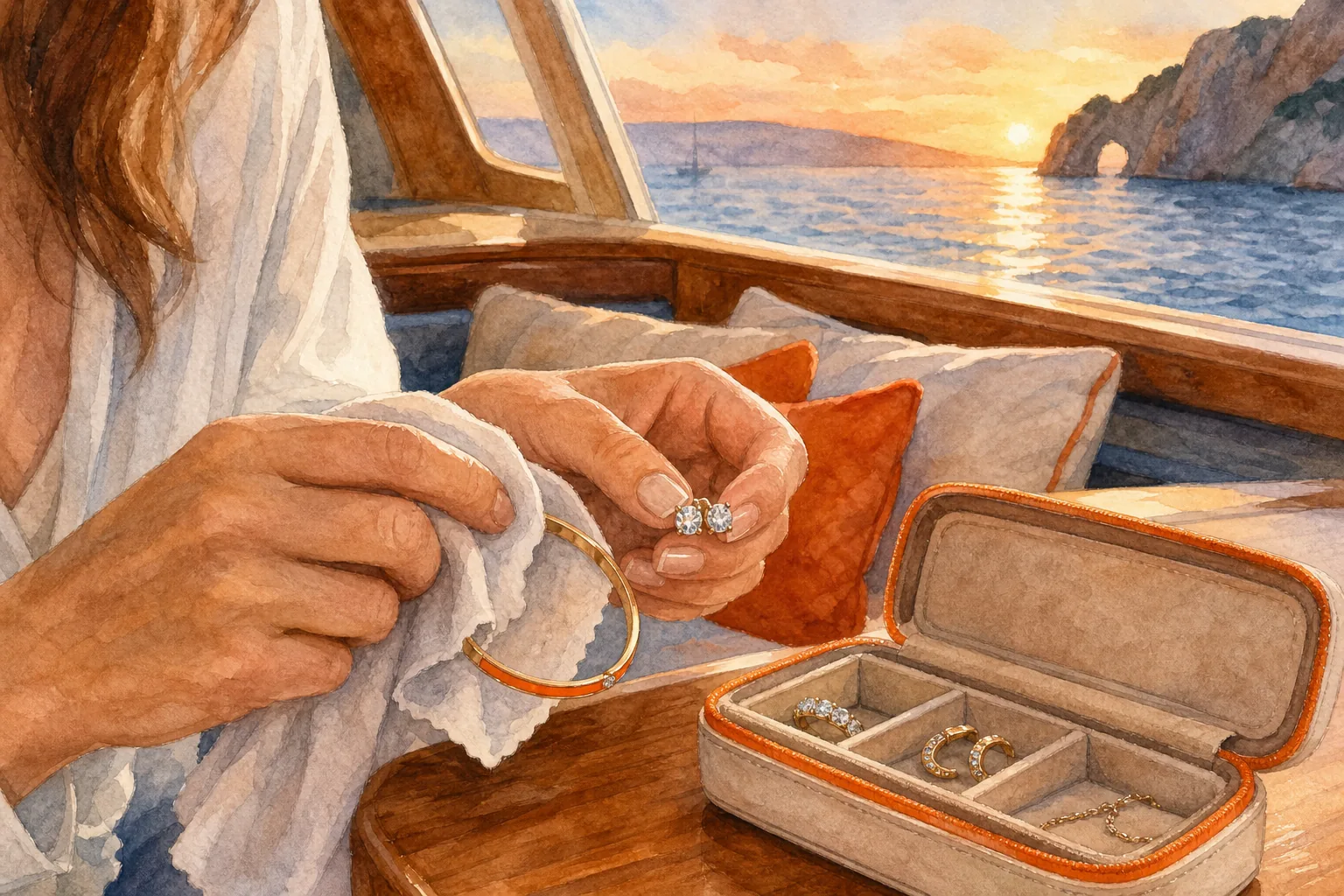
- Wipe it with a dry, soft cloth.
- Return it to its assigned pouch before leaving the room.
Keep one pouch near the door. That small habit catches the moment when you switch from dinner to a late deck walk. It also stops pieces from being left on a sink or wrapped in a towel.
For daytime deck wear, choose a low-profile piece. An open bangle is easy to remove, but check that it cannot slide off during a rail-side photo or a windy walk. Small drop earrings are less likely to catch than long chandelier styles.
For shore days, think about your hands. A large ring may get bumped while you carry a bag or climb steps. A pendant can catch on a strap. If your plan includes water, mud, or rough ground, leave the statement piece in the safe.
Diamond Veneer Travel Jewelry has options for different levels of dress. A simple pendant can handle lunch. A pair of vertical pearl drop earrings can frame an evening look. A tennis-style bangle can act as the main accent when the rest of the outfit stays plain.
Don't wear every piece at once. One strong detail often looks more polished than several competing points of shine. It also makes the item you do wear easier to watch.
If you buy a piece during the trip, give it the same routine as the pieces you brought. New does not mean tested. Check the clasp before you leave the cabin and after you return.
Decision rule: If you can't explain when the piece comes off, don't wear it for that activity.
Step 6: Clean, Inspect, and Store Pieces After Each Cruise Day
Clean diamond veneer travel jewelry for yacht cruise use at the end of each day, even when it looks bright. A quick check can catch a loose stone or weak clasp before the next dinner.
Start with a dry, soft cloth. Wipe the front and back of each piece. Pay close attention to the area near the clasp, the underside of a pendant, and the links of a bracelet.
For a deeper clean, follow the seller's care directions first. If no instructions are available, avoid harsh cleaners, abrasive cloths, steam, and an ultrasonic cleaner. Simulated stones and surface finishes can react differently to heat and chemicals.
Use a barely damp cloth only when the care directions allow it. Then dry the piece fully before storage. Never seal damp jewelry in a small pouch. Moisture trapped in the pouch can affect the finish or leave residue behind.
Inspect each piece under normal room light. Look for:
- A clasp that feels loose or fails to close.
- A stone that moves when touched gently.
- A bent post or earring back.
- A scratched or changing surface finish.
- A chain link that no longer lies flat.
Don't pull at a loose stone. Put the piece in its own pouch and mark it as “hold” in your travel notes. Ask the seller about repair once you're home. A quick fix can become a lost stone if you keep wearing it.
Keep pieces apart while they rest. Hard edges can scratch nearby surfaces. Store earrings as pairs, but don't force them into one small slot. Let long chains lie flat or hang from a built-in hook.
Diamond Veneer Travel Jewelry includes many cubic zirconia pieces with listed prices such as USD 49.99 for several earrings and bangle styles. The lower price does not remove the need for care. It simply makes it easier to build a small travel wardrobe without bringing your most valuable heirlooms.
Take a final inventory before checkout. Compare the pieces in your case with the photos you made before departure. Check the cabin safe, bathroom, bedside table, and luggage pockets.
Step 7: Apply a Responsible Buying and Post-Trip Checklist
Finish your diamond veneer travel jewelry for yacht cruise plan with a simple buying and return-home checklist. Responsible shopping starts with knowing what the piece is and ends with caring for it after the trip.
Before buying, ask:
- Is the stone clearly named?
- Is the base metal stated?
- Is the finish described?
- Is the price shown in USD?
- Can you return or repair the piece?
- Will you have support after leaving the ship or port?
For Diamond Veneer Travel Jewelry, compare the product description with the exact item you receive. Keep the receipt and product page. If the package includes material notes or care instructions, save those too.
Think about the environmental side without making claims the seller has not documented. Ask where the metal and stones come from, how the piece is made, and what packaging can be reused. If a seller cannot answer, don't turn a vague promise into a fact.
The catalog also includes a One Tree Planted item. If you choose it, read its own terms and understand what the purchase represents. A sustainability label should explain the action tied to the sale, not rely on a broad green phrase.
After the cruise, clean every piece before long-term storage. Update your inventory with any new purchase. Add photos and receipts to your records. If you bought a higher-value item, ask your insurer whether the new piece needs to be added to your policy.
Store travel jewelry away from direct sun, steam, and loose household items. Keep it in a dry place with each piece separated. Don't leave a necklace in a beach bag until the next trip.
Review what you actually wore. If one pendant handled three dinners and a shore lunch, it earned space. If a large pair stayed in the case because it caught on your hair, leave it home next time. Your next packing list should reflect use, not wishful planning.
Finally, write down any issue while you still remember it. Note a clasp that felt weak, a finish that changed, or a piece that needed a better pouch. Small notes make the next yacht trip easier to plan.
Final check: Keep the pieces that fit your itinerary, your care habits, and your budget. Return or repair anything that fails one of those tests.
FAQ
What is diamond veneer travel jewelry for a yacht cruise?
Diamond veneer travel jewelry for a yacht cruise usually means jewelry designed to give a diamond-like look with materials such as cubic zirconia. It does not automatically mean natural diamonds or solid gold. Read the product description for the stone, base metal, finish, care rules, and return terms before buying.
Can I wear cubic zirconia jewelry in the ocean?
You should remove cubic zirconia travel jewelry before swimming in the ocean. Salt water, sunscreen, and movement can leave residue or stress clasps and settings. Wipe the piece with a soft cloth after wear, then store it dry. Follow the seller's care directions if they give more specific advice.
What jewelry is best for a yacht cruise?
The best yacht cruise jewelry is light, easy to secure, and suited to the day's activity. Small drops work well for daytime. A pendant or open bangle can suit lunch or a shore stop. Save large chandelier earrings and statement pieces for dry, calm evening settings where you can keep track of them.
How do I check if diamond veneer jewelry is authentic?
Check whether the listing clearly names the stone and base metal, then compare those details with the receipt and item. Look for vague claims about “gold” or “diamonds.” Ask for written material details and after-care terms. A bright appearance alone cannot prove that a piece contains natural diamonds or solid gold.
Should I buy jewelry onboard a cruise ship?
You can buy jewelry onboard, but take time to check the paperwork and support terms first. Cruise seminars and specials may help you learn what is available, yet they can also create pressure to act fast. Compare the material details with online listings, set a spending limit, and confirm how returns or repairs work after the cruise.
How should I pack jewelry for a yacht trip?
Pack yacht trip jewelry in a divided case inside your carry-on. Use separate slots for earrings, rings, bangles, and pendants. Fasten chains before storing them so they don't tangle. Keep receipts and photos in a separate secure place. Remove pieces before swimming, showering, or applying sunscreen.
Choose a small set from Diamond Veneer Travel Jewelry that matches your actual itinerary, then verify each material before checkout. Your next action is simple: make the day-by-day packing list and assign every piece a pouch before you leave.