

Guide: Diamond Veneer Travel Jewelry Organizer with TSA Lock
Traveling with precious pieces can feel risky, especially when you’ve spent a fortune on sparkle. This guide walks you through every move you need to keep your diamonds safe, from picking the right size to locking it down at the checkpoint.
Step 1: Choose the Right Organizer Size
Start by making an inventory of the pieces you plan to wear. List necklaces, bracelets, rings, and earrings separately. Knowing exactly what you’ll carry helps you avoid a case that’s either too cramped or wastefully big.
Measure the longest necklace chain and the widest bracelet. Most travel organizers list interior dimensions in inches. Aim for a case that gives you at least a half‑inch of breathing room for each item. That buffer stops jewelry from rubbing together and keeps clasps from snagging.
Diamond Veneer Travel Jewelry offers a sleek, padded case that hits the sweet spot for most short trips. It has dedicated slots for necklaces, shallow cups for earrings, and deeper pockets for rings. The interior is lined with microfiber to guard against scratches.
For a broader view of sizing options, check out our Travel Jewelry Case Buying Guide. It walks you through how to match case dimensions to your collection, and why modular dividers matter.
When you’ve measured your pieces, compare those numbers to the case specs. If the case feels snug but not tight, you’ve found a good fit. If it looks like a shoe box for a single necklace, look for a smaller model.
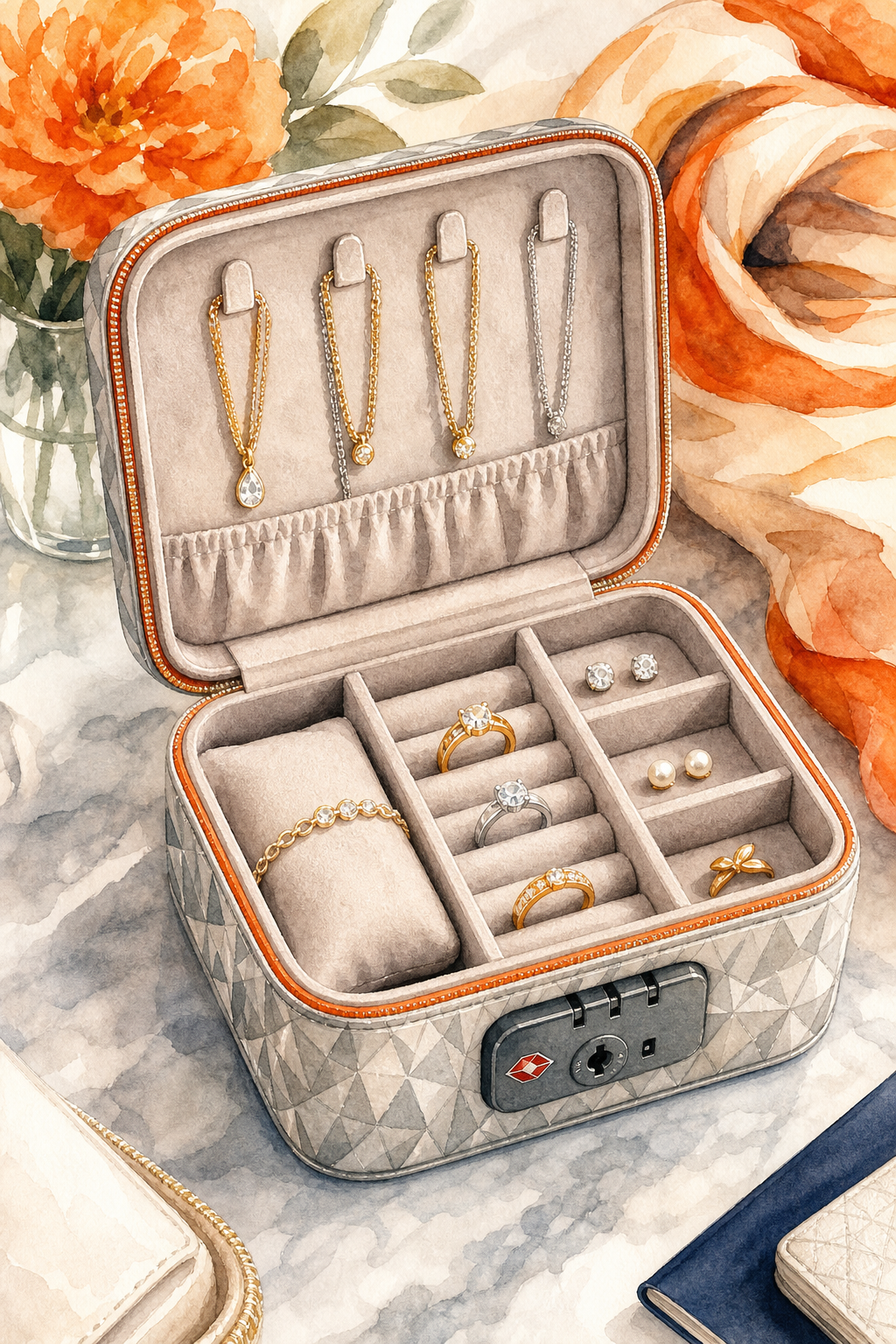
Pro tip: Choose a case with a removable divider system. It lets you reconfigure the interior for a weekend getaway or a longer vacation without buying a new case each time.
Step 2: Pack Your Jewelry Securely
First, sort each piece into its own soft pouch. Velvet or microfiber pouches keep stones from scratching each other. Slip each pouch into a zip‑locked bag , the seal blocks moisture and dust.
Next, arrange the zip‑bag inside your travel organizer. Place the heaviest items, like bangles, at the bottom. Lighter necklaces go on top so they don’t get crushed.
Give the organizer a gentle shake. If nothing rattles, you’ve packed tightly enough to avoid shifting during turbulence.
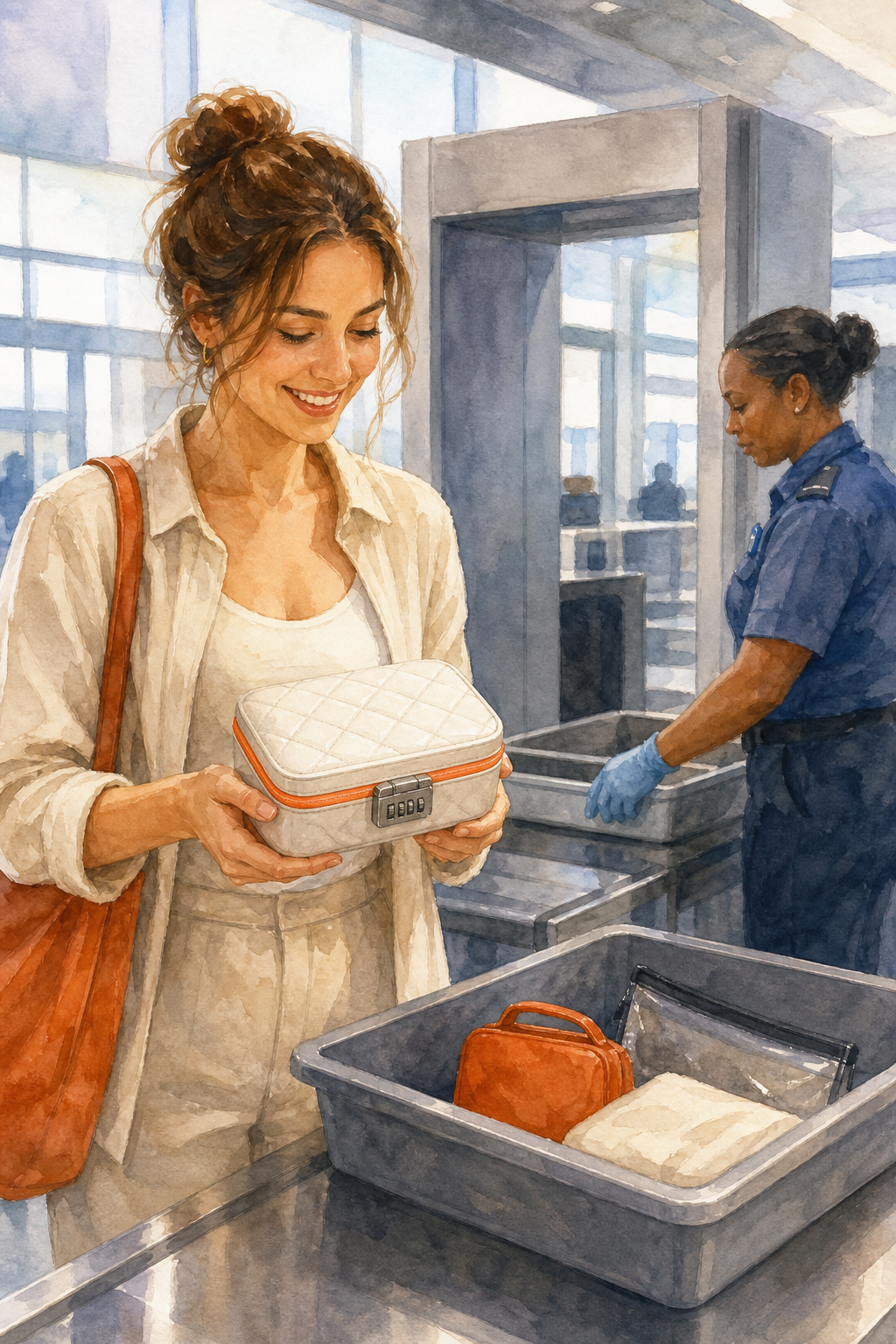
When you reach the security line, keep the organizer in an easy‑to‑access pocket. You may need to remove it for a quick X‑ray scan. Having it at hand speeds the process and prevents you from forgetting it in the bin.
A small, TSA‑approved lock on the case’s zipper adds an extra layer of deterrence. The lock won’t slow down the screening; agents are used to seeing them.
Research shows that keeping jewelry in carry‑on luggage reduces loss risk dramatically compared to checked bags. TSA.gov explains why TSA‑approved locks are accepted at checkpoints and how they’re inspected.
Step 3: Set and Verify the TSA Lock
Locate the lock’s combination dial. Most TSA locks use a three‑digit code. The default is often 0‑0‑0, but check the manufacturer’s instructions to confirm.
Rotate the dial to your chosen code, then pull the shackle to open the lock. If the lock resists opening, you’ve set it correctly. Test the lock a couple of times to make sure the mechanism catches.
Before you head to the airport, run a quick visual check. The lock should sit flush against the zipper pull, and the teeth should align neatly. A misaligned lock can snag on other luggage.
If you’re traveling internationally, be aware that some countries use different lock standards. A quick lookup on the destination’s airport website can save you a surprise at the gate.
Here’s a common mistake: resetting the lock without writing down the new code. Keep the combination in a secure place, like a password manager note, so you don’t lock yourself out.
Pro tip: Add a small silicone pad inside the lock housing. It cushions the lock and prevents wear on the zipper over multiple trips.
Step 4: Optimize for Travel Convenience
Think about where the organizer will live in your bag. The laptop compartment is an ideal spot , it’s padded and less likely to be crushed.
Place a silica‑gel packet near the jewelry to absorb humidity. This simple step keeps metal from tarnishing on humid flights.
When you arrive at your destination, keep the case in your personal item rather than the main carry‑on. That way you maintain control and reduce the chance of accidental opening.
Consider adding a tiny mirror to your bag. After security, a quick glance lets you ensure clasps are still tight and stones are clean.
For a full travel prep, you might also want to think about grooming. A recent guide on best numbing creams for waxing in 2026 recommends packing a travel‑size cream to stay comfortable before a long flight.
Finally, remember to document your pieces. Take a photo of each item before you travel. If something goes missing, you’ll have proof for insurance claims.
According to Wikipedia’s travel accessory overview, organized packing not only protects items but also speeds up security checks because agents can see everything at a glance.
FAQ
Can I use a regular padlock instead of a TSA‑approved lock?
No, a regular padlock won’t be opened by TSA agents if they need to inspect the bag, which can cause delays or force them to cut the lock.
Is it safe to put my jewelry in checked luggage?
It’s not recommended; checked bags are more likely to be opened, mishandled, or stolen, and you lose control over the contents.
How many pieces should I pack for a week‑long trip?
Aim for 2, 3 necklaces, a few versatile earrings, and one or two bracelets. That gives you outfit variety without over‑packing.
Do TSA locks need to be removed at security?
No, TSA agents can open a TSA‑approved lock with a master key, so you can leave it on while the bag goes through the scanner.
What if my lock breaks mid‑flight?
Carry a small spare lock or a zip‑lock bag as a backup. You can transfer the organizer into the zip‑lock bag and keep it sealed.
Can I travel with high‑value diamond veneer pieces?
Yes, as long as they’re stored in a lockable, padded case and you keep the case in your personal item, you’ll minimize risk.
Conclusion
Pick a Diamond Veneer travel jewelry organizer, set a TSA‑approved lock, and follow the packing steps above for worry‑free jet‑setting. Your next move? Grab your organizer, lock it, and slip it into your carry‑on , you’re ready for a stylish, secure flight.