

How to Choose and Care for a Diamond Veneer Bracelet
Ever opened your suitcase, slipped on a bracelet, and felt that instant sparkle that makes the whole trip feel like a celebration? You’re not alone—most of our savvy, well‑to‑do women say a beautiful wrist piece can turn a mundane layover into a runway moment. In this intro I’ll walk you through why a diamond veneer bracelet is the travel‑friendly secret weapon you’ve been missing.
A diamond veneer bracelet looks just like a genuine diamond piece, but it’s built on a high‑grade cubic zirconia core that’s been coated with a real carbon‑diamond veneer. That extra layer gives you fire‑level brilliance without the security‑check headache of a multi‑carat stone, and it stays scratch‑resistant even when you’re hopping between airport lounges and rooftop bars.
Picture this: you’re strolling through the marble streets of Paris, coffee in hand, and a passerby compliments your wrist. She asks where you got it, and you point to your bracelet—your answer? “It’s from Diamond Veneer Travel Jewelry, the brand that lets jet‑setters sparkle without breaking the bank.” That instant connection isn’t just vanity; it’s social capital that opens doors at cocktail parties and business lunches alike.
Of course, brilliance fades if you don’t treat it right. A quick rinse with mild soap, a soft cloth, and storing it in a breathable pouch keeps the veneer gleaming. If you need a deeper dive, check out this guide on how to clean gemstone beads—the same principles apply to your bracelet.
When you’re picking a bracelet for travel, think about versatility. A classic 3 mm hinge‑linked bangle slides on over a flight‑size watch, while a tennis‑style piece adds drama for evening events. Our curated zircon bracelet collection offers both minimalist and statement options, so you can pack light without sacrificing sparkle.
Here are three quick steps to make sure your diamond veneer bracelet stays runway‑ready wherever you go: 1️⃣ Measure your wrist before you buy – our “how to measure wrist size” guide walks you through a fool‑proof method. 2️⃣ Choose a secure clasp – double‑lock or safety chain designs prevent accidental loss on the move. 3️⃣ Pack it separately in a soft pouch, not tangled with other accessories, to avoid scratches.
TL;DR
A diamond veneer bracelet gives savvy travelers the luxe sparkle today of real diamonds while staying lightweight, scratch‑resistant, and TSA‑friendly for any jet‑set adventure.
Quickly measure your wrist, pick a secure clasp, and pack it in a breathable pouch to keep the fire‑level shine flawless on every runway‑ready layover effortlessly.
Step 1: Determine Your Style Preferences
Let's be real for a moment: the right diamond veneer bracelet isn't just about sparkle. It's about how you feel wearing it on a long-haul flight, a rooftop soirée, or a business lunch in a new city. Start by naming your vibe—do you lean minimalist, or do you crave a little more drama on your wrist?
Your style isn't vanity—it's strategy. When you travel, you want jewelry that complements multiple outfits, holds up to travel wear, and doesn't shout for attention. So first, map out your day-to-day rhythm: are your trips fast-paced with lots of airport transitions, or do you linger in couture lounges and dinner reservations?
Think of the occasions you’ll wear the bracelet. A classic 3mm hinge‑linked bangle is a quiet, versatile companion. A tennis-style piece screams evening glamour. The trick is to pick something that can go from airport lounge to champagne toast without swapping out accessories.
In our experience, the best travel jewelry is adaptable and durable. We see savvy travelers pairing a refined diamond veneer bracelet with everything from a crisp blazer to a silk slip dress. It’s not just about looking luxe; it’s about feeling confident and unencumbered as you orbit the globe.
Three quick checks to define your vibe
- Polish level: do you want a matte, understated shine or a high-gloss blaze that catches the eye in photos?
- Metal tone: would you prefer silver/rhodium for a cool, modern edge or a warm gold/rose tone for rich, fashion-forward warmth?
- Clasp and security: is a double-lock or a safety chain non-negotiable for you, given the crowds and carry-on security checkpoints?
Here's how that translates into an everyday pick. If you want effortless versatility with no fuss, a mid-width tennis-inspired piece plus a hinge option gives you both elegance and practicality. If your trips skew more formal, a sleek square-cut or princess-cut silhouette with a secure clasp can be your signature “I woke up like this” touch. And if you crave subtle drama, layer two lighter pieces for a refined, fashionista edge—yet still travel-friendly.
So, what’s next? Take a moment to jot down two or three outfits you’ll wear most on your trips this season. Then picture how a diamond veneer bracelet would harmonize with those looks. This simple exercise ensures you’re choosing a piece that meshes with your real travel life—not just a runway fantasy.
If you're a visual learner, that quick clip can reinforce what your wrist wants to tell you. It helps you see scale, proportion, and how a diamond veneer bracelet behaves with different necklines and fabrics.

With clarity in mind, you can confidently pick a piece that travels as well as you do—light, brilliant, and ready for the next city to sparkle. And yes, at Diamond Veneer Travel Jewelry, we’ve seen how the right bracelet shifts a trip from routine to memorable. Use this framework to guide your choice, and you’ll land the perfect sparkle for every itinerary.
To make this even more practical, think of it as a wardrobe decision, not a jewelry decision. The goal is harmony between your outfits and the bracelet, so you never feel like your wrist is screaming for attention. When you find that sweet spot, you’ll reach for the same piece again and again—whether you’re hopping between elegant airport lounges or sealing a dinner with a client in a chic hotel bar.
Storage and care matter too. A breathable pouch protects the veneer coating and prevents tangling, while a quick rinse with mild soap keeps grime at bay after a day of travel. If you want a hands-on recommendation, our team loves helping missy travelers curate a small, versatile set that travels as gracefully as they do.
Step 2: Choose the Right Diamond Veneer Material
Alright, you’ve got your style cheat sheet, you’ve watched the bracelet video, and now you’re staring at a sea of options. The next big decision? Picking the material that will feel as good on the runway of an airport lounge as it does on a rooftop soirée.
Why the metal matters more than you think
Imagine you’re hopping between a business meeting in London and a sunset dinner in Santorini. You need a metal that can keep up with the jet‑lag, the humidity, and the occasional clink of a champagne glass. Sterling silver, rose gold, or rhodium‑plated silver each brings its own vibe and durability.
Silver is the classic travel‑friendly hero—lightweight, resistant to tarnish when you store it in a breathable pouch, and it pairs beautifully with almost any outfit. Rose gold whispers romance; it’s perfect for those “I’m‑just‑arriving‑in‑Paris” moments, but remember it can show fingerprints more easily, so a quick polish after a long flight helps.
Rhodium‑plated pieces are the unsung workhorse. The coating acts like a shield against scratches and the occasional bump from a suitcase handle. If you’re the kind of traveler who packs a carry‑on and a clutch, that extra layer of protection is a lifesaver.
Size and sparkle: matching stone dimensions to material
Diamond veneer bracelets come in a range of stone sizes—from subtle 3 mm studs to bold 6 mm “intensely radiant” gems. The trick is to let the metal amplify the sparkle, not compete with it.
For a 3 mm setting, a sleek silver band lets the fire of the veneer shine through without looking over‑the‑top. When you step up to a 5 mm or 6 mm stone, consider a slightly thicker band or a rose‑gold base; the warmth of the metal balances the larger fire and adds a touch of luxury that feels right at a high‑end lounge bar.
And if you’re unsure, picture this: you’re sipping espresso at a Milan café, the morning light catches the bracelet. A silver band with a 4 mm stone gives just enough sparkle to catch a glance, while a rose‑gold band with a 6 mm stone makes the whole wrist pop—perfect for an evening cocktail.
Clasp confidence meets material choice
The clasp isn’t just a safety net; it’s part of the material story. Double‑lock clasps often come in stainless steel or rhodium, ensuring the mechanism won’t corrode after countless TSA checks. Safety‑chain designs sometimes incorporate a tiny gold‑filled link that adds a luxe detail without sacrificing durability.
When you choose a metal, ask yourself: does the clasp feel solid in your hand? Does it glide smoothly? If it feels flimsy, you’ll be tugging at it mid‑flight, and that defeats the whole “effortless travel style” goal.
Practical checklist before you click “add to cart”
- Metal: silver for classic ease, rose gold for romantic flair, rhodium‑plated for scratch‑proof confidence.
- Stone size: match 3‑4 mm to silver, 5‑6 mm to rose gold or rhodium for balance.
- Clasp type: double‑lock or safety‑chain with a matching metal finish.
- Feel test: hold the bracelet against your skin; does it feel light enough for a long flight? Does the metal complement your skin tone?
In our experience, the most frequent “oops” moment comes from picking a metal that looks gorgeous in the store but feels heavy on the wrist after a day of travel. A quick try‑on at home, moving your arm as if you’re reaching for a boarding pass, can save you from that regret.
So, what should you do next? Grab that cheat sheet, line up your top two metal choices, and weigh them against the stone size you love. If you’re still torn, think about the destination: a business‑centric city? Lean silver. A romantic getaway? Rose gold might just be the ticket.
Once you’ve nailed the material, you’ll be one step closer to a diamond veneer bracelet that feels as effortless as slipping into your favorite pair of travel shoes. And trust us, that kind of seamless style is worth every minute of decision‑making.
Step 3: Measure and Fit Your Bracelet (Video Included)
You’ve got your diamond veneer bracelet picked, and you know the metal, the stone size, and the clasp. Now the last mile is fit—so it feels as natural as slipping on your favorite travel flats. Let me walk you through a practical, travel‑ready method to measure your wrist for the perfect fit.
First, decide where the bracelet will live on your wrist. A hinge‑style or tennis‑style piece sits a touch differently from a strict bangle. If you’ll be layering with a watch or other bracelets, plan for a little extra ease so nothing binds when you raise your arm to hail a cab in a bustling city or sip espresso at a cafe in Milan.
What you need is simple: a flexible measuring tape, a soft string, or even a strip of paper. If you’re in a pinch, use a hair tie or floss as a makeshift gauge. The goal is a gentle snug around the exact spot the bracelet will rest. Don’t pull it tight; you want accuracy, not discomfort.
Now the steps, plain and practical:
- Wrap the measuring tape (or string) around your wrist where the bracelet will sit. Keep it snug but not tight. Note the measurement in inches or centimeters—whatever you’re comfortable reading.
- Add ease for comfort. For most travel bracelets, adding about 1/2 inch (1.25 cm) gives a relaxed, everyday fit that won’t bite when you type on a laptop or reach for a boarding pass.
- Consider your style. If you chose a smaller 3–4 mm setting in silver, you can often get away with a touch more ease. For a 5–6 mm piece in rose gold or rhodium, the balance may feel more substantial, so you might add a touch less. These little math tweaks matter on long travel days.
- Account for the clasp. A double‑lock or safety‑chain design can tolerate a slightly tighter feel because the mechanism secures the piece. If you’re between sizes, size up rather than down to avoid a forced clasp moment at security.
- Test at home. Try the bracelet on with the outfits you’ll wear on your trip. Move your arm as you would when grabbing a boarding pass or reaching for a bag. If you notice it sliding up toward the wrist bone or feeling tight over the joint, adjust by a half size and re‑test.
Two quick real‑world examples to anchor this:
Example one: your wrist measures 6.25 inches. A 6.75 to 7.0 inch bracelet length typically yields a comfortable, elegant drape for a 3–4 mm piece in silver or rhodium plating on a travel day.
Example two: you’re stacking with a watch and a cuff. You might prefer 7.25 inches or more, especially if the jacket sleeve becomes a barrier when you reach for your passport.
For an extra check, you can review a trusted, step‑by‑step bracelet sizing guide here. It’s a clean, non‑salesy way to confirm your numbers before you click add to cart. how to measure bracelet size.
Once you’ve nailed the size, you’re one step closer to a diamond veneer bracelet that feels effortless on every layover and rooftop soirée. At Diamond Veneer Travel Jewelry, we’ve seen how a precise fit translates into confidence—you don’t have to think about your bracelet, you just wear it. If you’d like, test this sizing approach with a few of our lightweight, travel‑friendly designs to see how the fit translates across different styles.
Step 4: Care and Maintenance for Longevity
We all love that fire‑level sparkle, but a little neglect can turn that brilliance into a dull reminder of a missed flight. So how do you keep your diamond veneer bracelet looking runway‑ready, even after dozens of TSA loops?
First up, cleaning. A simple solution of mild dish soap and warm water does wonders—soak for 20‑30 minutes, give the settings a gentle brush with a soft toothbrush, rinse under warm running water, then pat dry with a lint‑free cloth. That’s the same routine highlighted in a professional cleaning guide. It removes the grease and grime that love to cling to jewelry during long layovers.
Next, think storage. When you’re not wearing the piece, tuck it into a soft travel pouch or a padded jewelry box, and keep it separate from other accessories. That tiny barrier stops the metal from scratching against a watch strap or a pair of earrings.
Travel brings extra challenges: humidity in a tropical lounge, salty sea air on a cruise, or even the occasional splash of perfume. After a day in those conditions, give the bracelet a quick wipe with a dry microfiber cloth before you stow it again. Avoid chlorine pools and bleach‑based cleaners—they can erode both the veneer coating and the metal.
Don’t forget the clasp. Whether you chose a double‑lock or a safety‑chain, inspect it weekly. A loose link can become a nightmare at security or while you’re reaching for your passport. Tighten any wobble with a tiny jeweler’s screwdriver or swing by a local jeweler for a quick check.
Here’s a handy snapshot of the routine you can follow:
| Care Aspect | What to Do | Why It Matters |
|---|---|---|
| Cleaning | Use mild dish soap, warm water, soft toothbrush; rinse and dry. | Removes grease that dulls sparkle. |
| Storage | Place each bracelet in a soft pouch or padded box, separate from other pieces. | Prevents scratches during travel. |
| Clasp Check | Inspect the double‑lock or safety‑chain weekly; tighten if loose. | Ensures the bracelet stays secure through TSA checks. |
Imagine this: you’re stepping off a jet in Milan, the sun catches the veneer and you get that instant compliment. You reach for your bracelet, give it a quick glide across the soft pouch, and it still shines like you just unboxed it.
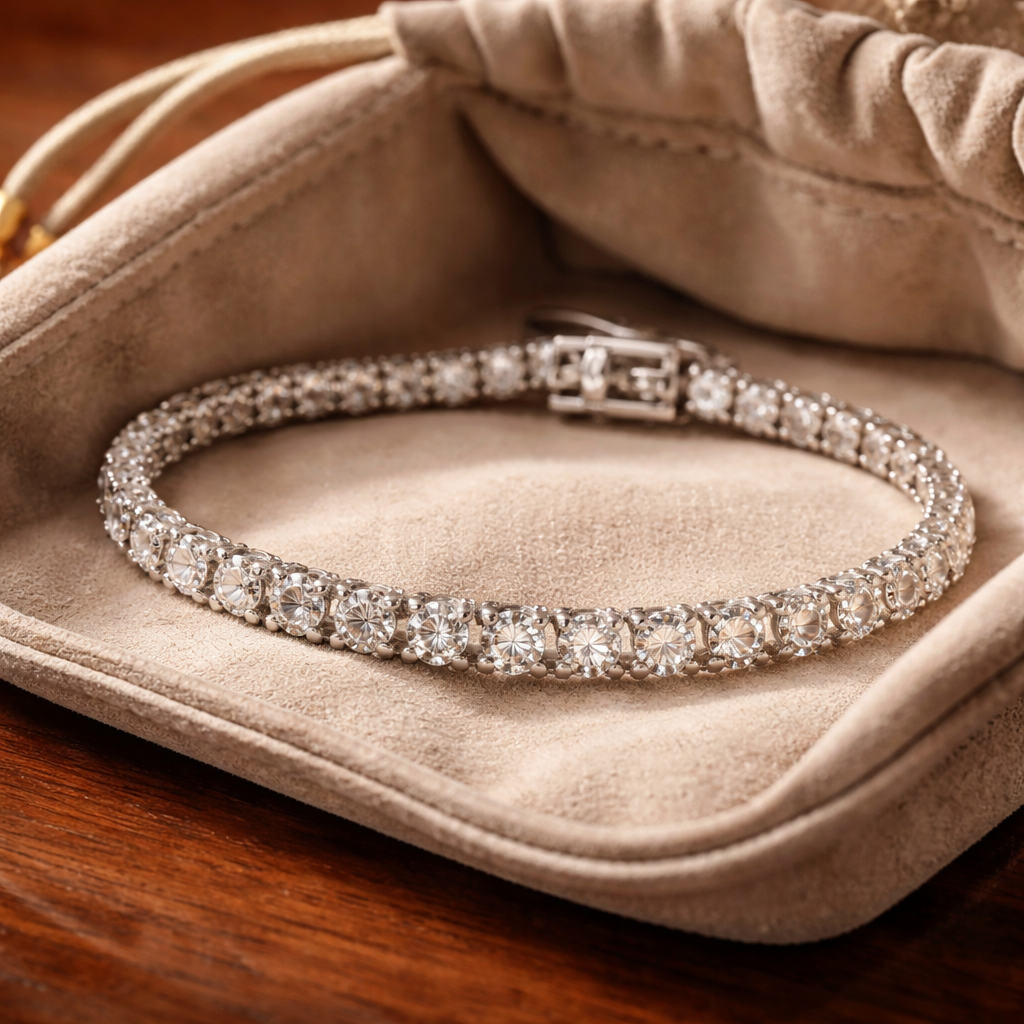
To make it effortless, turn the checklist into a habit: clean before you pack, store in its own pouch, wipe after humid trips, and give the clasp a weekly once‑over. When you treat your bracelet like a travel companion, it’ll stay radiant for every adventure you chase.
Conclusion
Let’s take a moment to breathe and look back at what we’ve uncovered about the diamond veneer bracelet. From picking the right metal and clasp to measuring the perfect fit and mastering a quick travel‑ready cleaning routine, every detail we covered is designed to keep your sparkle alive no matter how many time zones you cross.
Think about the last time you slipped a fresh piece on at the gate and felt that instant confidence boost – that’s the power of a well‑chosen, well‑maintained bracelet.
So, what’s the quick cheat sheet?
- Choose a metal that matches your style and tolerates travel wear (silver, rose gold, or rhodium‑plated).
- Pick a double‑lock or safety‑chain clasp for security through TSA.
- Measure your wrist, add a half‑inch for comfort, and verify the fit with your travel wardrobe.
- Clean with mild soap, a soft brush, and store in a breathable pouch after each trip.
By turning these four habits into a pre‑flight ritual, you’ll treat the bracelet like a trusted travel companion rather than a fragile accessory.
Ready to make every layover feel like a runway? Explore our curated collection and pick the piece that speaks to your jet‑set lifestyle – the perfect diamond veneer bracelet is waiting to tag along on your next adventure.
FAQ
How do I know if a diamond veneer bracelet will fit comfortably on a long‑haul flight?
First, measure your wrist with a flexible tape, then add about a half‑inch (1.3 cm) for movement. When you try the bracelet at home, move your arm like you’re reaching for a boarding pass or a coffee cup. If it slides up a bit but stays secure, you’ve got the sweet spot. A snug‑but‑not‑tight fit prevents the piece from rattling against your wrist during turbulence while still feeling effortless.
Can I wear a diamond veneer bracelet through airport security without it getting damaged?
Absolutely. The veneer coating is designed to resist scratches, and the metal bases—whether sterling silver, rose gold, or rhodium‑plated—hold up to the metal detectors. Just place the bracelet in a soft pouch before you go through the scanner; the pouch protects it from any accidental bumps. In our experience, travelers who follow this simple step never see a dull spot after a trip.
What’s the best way to clean a diamond veneer bracelet after a humid destination?
Grab a bowl of warm water, add a drop of mild dish soap, and let the bracelet soak for 20‑30 seconds. Use a soft toothbrush to gently brush each setting, then rinse under lukewarm water. Pat dry with a lint‑free cloth and pop it into its breathable travel pouch. This quick routine removes humidity‑induced residue and keeps the carbon‑diamond coating sparkling.
Is a double‑lock clasp really necessary, or can I use a standard clasp?
If you’re hopping between lounges, boarding gates, and cocktail bars, a double‑lock or safety‑chain clasp is a lifesaver. It gives you two points of security, so even if one latch loosens, the second keeps the bracelet from slipping off. For high‑net travelers who value both style and peace of mind, the extra few dollars are worth the confidence of knowing your sparkle stays put.
How often should I replace the breathable pouch that stores my bracelet?
Think of the pouch like a shoe box for your jewelry—when it starts to smell or shows signs of wear, swap it out. A fresh, lint‑free pouch every few months ensures the bracelet breathes and doesn’t pick up unwanted oils from previous trips. Keeping the pouch clean also prevents micro‑scratches when you slide the piece in and out.
Can I layer a diamond veneer bracelet with other accessories without causing damage?
Yes, but give each piece its own breathing room. Slip the bracelet into its pouch first, then place watches or other bracelets on top, avoiding direct metal‑on‑metal contact. This prevents tiny scratches and lets each item retain its shine. Many of our fashionista customers love a stacked look, but they always separate the pieces in soft pouches before packing.
What should I do if the clasp gets stuck while I’m on a layover?
Stay calm and locate a small, clean flat surface—like the back of a seat tray. Gently wiggle the clasp with your thumb and forefinger; sometimes a tiny bit of moisture from a water bottle helps loosen it. If it still won’t budge, use a tiny jeweler’s screwdriver to coax the latch open. In a pinch, a local hotel’s front desk often has a simple tool kit that can help.