
How to Choose and Care for Diamond Veneer Earrings
Ever stared at a jewelry case in an airport lounge, wishing your earrings could sparkle like a runway but still feel light enough for a long flight?
We get it—traveling women want that luxe glow without the bulk, and they also refuse to sacrifice style for convenience.
That's where diamond veneer earrings step in, offering the fire of real diamonds wrapped in a feather‑light, travel‑ready setting.
Imagine slipping on a pair of our sterling‑silver trio studs before boarding, feeling the tiny zirconite stones catch the cabin lights, and knowing they’ll stay secure through turbulence.
In our experience at Diamond Veneer Travel Jewelry, the smartest jet‑setters treat their earring box like a passport: essential, protected, and curated with pieces that transition from business brunch to sunset cocktails.
Diamond veneer earrings deliver exactly that dual purpose—they’re polished enough for a gala in Paris, yet low‑profile enough to sit comfortably under a silk scarf on a train to Milan.
Because each stone is coated with a real carbon‑diamond veneer, the sparkle doesn’t fade after a week in a hotel safe, and the metal is hypoallergenic, so you won’t wake up with irritated ears after a red‑eye flight.
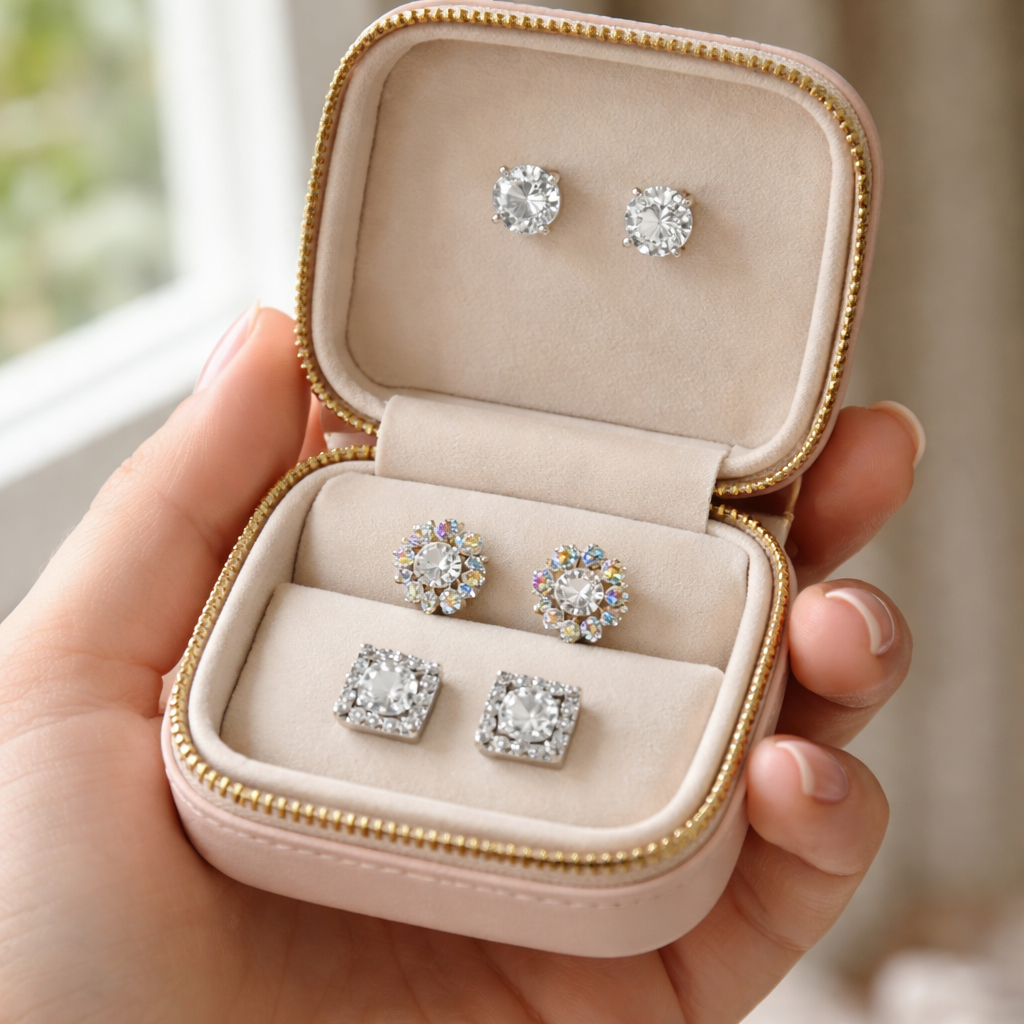
What’s more, the designs are versatile: classic solitaire studs, colorful canary clusters, and even geometric squares that pair perfectly with a crisp blazer or a breezy sundress.
So, if you’ve ever felt torn between “I need something dazzling” and “I need something practical,” you’re not alone—and the answer is right in front of you.
Let’s take a quick tour of the key benefits you’ll notice the moment you try them on: instant brilliance, travel‑friendly weight, and a confidence boost that lasts longer than any layover.
Ready to upgrade your travel jewelry game? Keep reading, because we’ll show you how to choose the perfect pair for every itinerary and why diamond veneer earrings have become the go‑to accessory for savvy, fashionable world‑travelers.
TL;DR
Diamond veneer earrings give savvy travelers the sparkle of real diamonds with feather‑light comfort, hypoallergenic metals, and a travel‑ready design that stays brilliant from runway to runway.
Because they’re lightweight, secure, and versatile, you can wear them from business brunch in Paris to sunset cocktails in Milan without worrying about irritation or lost sparkle.
Step 1: Choosing the Right Diamond Veneeer Style
Picture this: you’re at the gate, passport in hand, and you spot a sleek, feather‑light earring box on the seat next to you. You know you want sparkle, but you also need something that won’t tug on tired ears after a 12‑hour flight. That’s the exact moment you start asking yourself what style actually fits the journey.
First, think about the vibe of your itinerary. A classic solitaire stud feels right for a business brunch in Paris, while a subtle cluster of coloured stones can add a pop of fun for a sunset cocktail in Santorini. The key is matching the earring’s personality to the mood of the day.
Ask yourself: Do I want my earrings to be the quiet hero of my outfit or the bold statement piece? Your answer will narrow the style spectrum dramatically.
1. Identify Your Core Look
If you gravitate toward timeless elegance, go for a clean‑cut solitaire. It’s the little black dress of earrings—never wrong, endlessly versatile. If you love a splash of colour, consider a canary‑hued cluster; it catches cabin light just as well as a runway spotlight. And if geometry excites you, a square or hexagon setting adds a modern edge without feeling over‑the‑top.
In our experience, travelers who mix a classic stud with a geometric accent for a “day‑to‑night” look often receive compliments on the seamless transition. It’s a small trick that feels like a secret weapon.
2. Material Matters
Weight is the silent game‑changer on long hauls. Sterling silver and 14K gold both offer hypoallergenic comfort, but silver tends to sit lighter on the ear. If you’re prone to skin sensitivities, the nickel‑free coating on our diamond veneer pieces is a lifesaver.
Think about the climate, too. A humid destination might make you sweat a bit more, so a smooth, polished finish will slide comfortably without catching on a scarf.
3. Size and Carat Weight
Don’t let the term “carat” intimidate you. For travel, a total carat weight of 0.5‑1.0 CT across both ears gives enough sparkle to turn heads without the weight of a heavy setting. Remember, the diamond veneer coating amplifies the brilliance, so you get a luxe look without the bulk.
Pro tip: If you’re packing a carry‑on, choose earrings that come in a secure, compact box. That way, you avoid extra baggage fees and keep the pieces safe from knocks.
So, what should you do next? Grab a few style swatches, hold them up to the plane window, and see which one catches the light just right. It’s a tiny experiment that makes a huge difference.
Watching that short video helps you visualise how each style moves on your ear while you’re seated, walking, or even dancing at the airport lounge.
4. Test the Feel
Before you buy, try on a pair (or a similar style) for a full minute. Notice if the earring pinches, slides, or feels just right. A quick check can spare you the disappointment of a post‑flight tug‑of‑war.
And don’t forget to consider your wardrobe. A versatile pair that pairs with a silk scarf, a power suit, or a summer maxi dress will get more mileage than a niche piece you only wear once.
When you’ve narrowed it down, make a shortlist of your top two styles. Write a quick note about the occasion you’ll wear each—business, leisure, or special event. This little cheat sheet keeps you from over‑packing and ensures you always have the perfect sparkle on hand.
Finally, trust your gut. If an earring makes you smile the moment you see it, that’s a good sign it’ll serve you well on the road.
Step 2: Measuring Your Ears and Selecting the Correct Size
Why size matters for travel‑ready sparkle
Ever slipped on a pair of diamond veneer earrings at the gate, only to realize they’re either sliding off or feeling like a tiny dumbbell? That tiny mis‑fit can turn a confidence boost into a frantic tug‑of‑war‑with‑your‑ear.
When you’re hopping from a Paris runway lounge to a Milan rooftop bar, you need earrings that stay put, feel feather‑light, and still let the veneer fire shine.
Step‑by‑step: Measure the lobe (or cartilage)
1. Grab a flexible measuring tape or a piece of thin string. Wrap it around the part of the ear you plan to pierce – most travelers stick with the lobe because it’s the most forgiving.
2. If you’re using string, mark the overlap where the ends meet, then lay the string next to a ruler. You now have the circumference in millimetres.
3. Divide that number by π (3.14) to get the diameter. That’s the “hole” size you’ll be working with.
4. For hoop or huggie styles, measure the outer edge of the hoop you’re eyeing. Most hoop sizes are listed in millimetres – 30 mm is a subtle circle, 45 mm is a bold statement.
Need a quick visual? Bonheur Jewelry’s hoop‑measuring guide walks you through using a ruler, string, or caliper.
Match size to face shape and travel vibe
Think about the face shape you usually get compliments on. If you have a round face, a slightly longer hoop (around 35‑40 mm) adds vertical stretch. Oval faces? Anything goes, but a 30‑mm stud feels balanced. Square faces love the contrast of a soft, curved huggie.
For a jet‑setter, I often recommend keeping the overall diameter under 45 mm. Anything larger can snag on scarves, headphones, or the airplane seat armrest.
Backs: the unsung hero of comfort
Even the perfect‑sized earring can betray you if the back isn’t secure. Flat‑back designs, like the ones highlighted by Estella Collection, sit flush against the skin and eliminate the “pinch” you feel with traditional butterfly backs.
Two back types matter most on the road:
- Threadless (push‑pin) backs – quick to swap, ideal for a day‑to‑day rotation when you’re changing styles between meetings and evening drinks.
- Flat screw backs – a tiny twist locks the earring in place. Perfect for long‑haul flights where you don’t want to worry about a loose stud slipping into the seat pocket.
Read more about why flat backs are a comfort game‑changer in Estella Collection’s flat‑back earring guide.
Practical checklist before you pack
✓ Measure your lobe or hoop diameter and write it down.
✓ Compare that number to the product specs – most diamond veneer earring listings include exact millimetre measurements.
✓ Choose a back that matches your travel rhythm: threadless for quick changes, screw for “set‑and‑forget.”
✓ Do a 24‑hour wear test at home. Slip the earrings on, walk around, grab a suitcase, sit in a chair, and notice any shifting.
✓ If you feel even a whisper of movement, try a slightly smaller size or a different back style.
Real‑world example: The business‑class brunch
Imagine you’re heading to a business brunch in Dubai. You’ve selected a pair of 0.6 ctw diamond veneer studs set in platinum‑like rhodium‑plated silver. The studs measure 8 mm across – just enough to catch the sunlight without weighing down your ears.
You pair them with a flat screw back because you’ll be on a conference call, then hopping onto a private jet. After a full day of networking, you glance at your reflection – the studs sit perfectly, no wobble, no irritation. You’ve saved time (no mid‑flight adjustments) and kept that polished look.
Bonus tip: Keep a tiny measuring tool in your carry‑on
A miniature ruler or a piece of string (the kind you use for tying hair) takes up less than a postage stamp. Slip it into your jewellery pouch and you’ll always have a quick way to verify new pieces you pick up at duty‑free shops.
Remember, the goal isn’t just to look good; it’s to feel good while you’re moving between time zones. When the fit is right, the sparkle of diamond veneer earrings becomes a silent confidence booster that travels with you.
Step 3: Understanding Materials and Settings
When you’re hopping between terminals, lounges, and rooftop bars, the metal underneath your diamond veneer earrings isn’t just a pretty backdrop – it’s the backbone of comfort, durability, and that flawless sparkle you crave.
First up, let’s talk metal. Sterling silver, white gold, platinum, and 14k gold each have a personality. Sterling silver (92.5% pure) is light as a feather and surprisingly tough thanks to its alloy mix – perfect for all‑day wear without feeling like a tiny dumbbell. Fink’s explains that silver’s Vickers hardness sits comfortably in the middle of the scale, giving you a good balance of flexibility and resistance to dents. Platinum, on the other hand, sits at the top of the hardness chart, making it the most durable option, albeit a touch heavier. If you have a cool skin tone or love that icy look, white gold or rhodium‑plated silver will amplify the fire of the veneer. For warm‑toned skin, a yellow or rose gold setting adds a subtle glow without stealing the spotlight.
Allergy‑prone travelers, listen up: nickel is the usual culprit behind earlobe irritation. That’s why many of our high‑net clientele gravitate toward hypoallergenic choices like platinum or nickel‑free white gold. Fink’s notes that even a tiny amount of nickel in an alloy can trigger a reaction, so double‑check the metal description before you click “add to cart.”
Choosing the Right Metal for Travel
- Weight matters. Aim for metals under 4 g per pair for comfort on long flights.
- Durability matters. Platinum and 14k gold hold up to the rigours of baggage handling.
- Skin‑tone match. Cool tones = white gold or platinum; warm tones = yellow/rose gold.
- Allergy safety. Stick with nickel‑free options if you’ve ever felt a sting after a red‑eye.
Now that you’ve nailed the metal, let’s dive into the setting – the way the stones are actually held.
Earring Settings That Stay Put
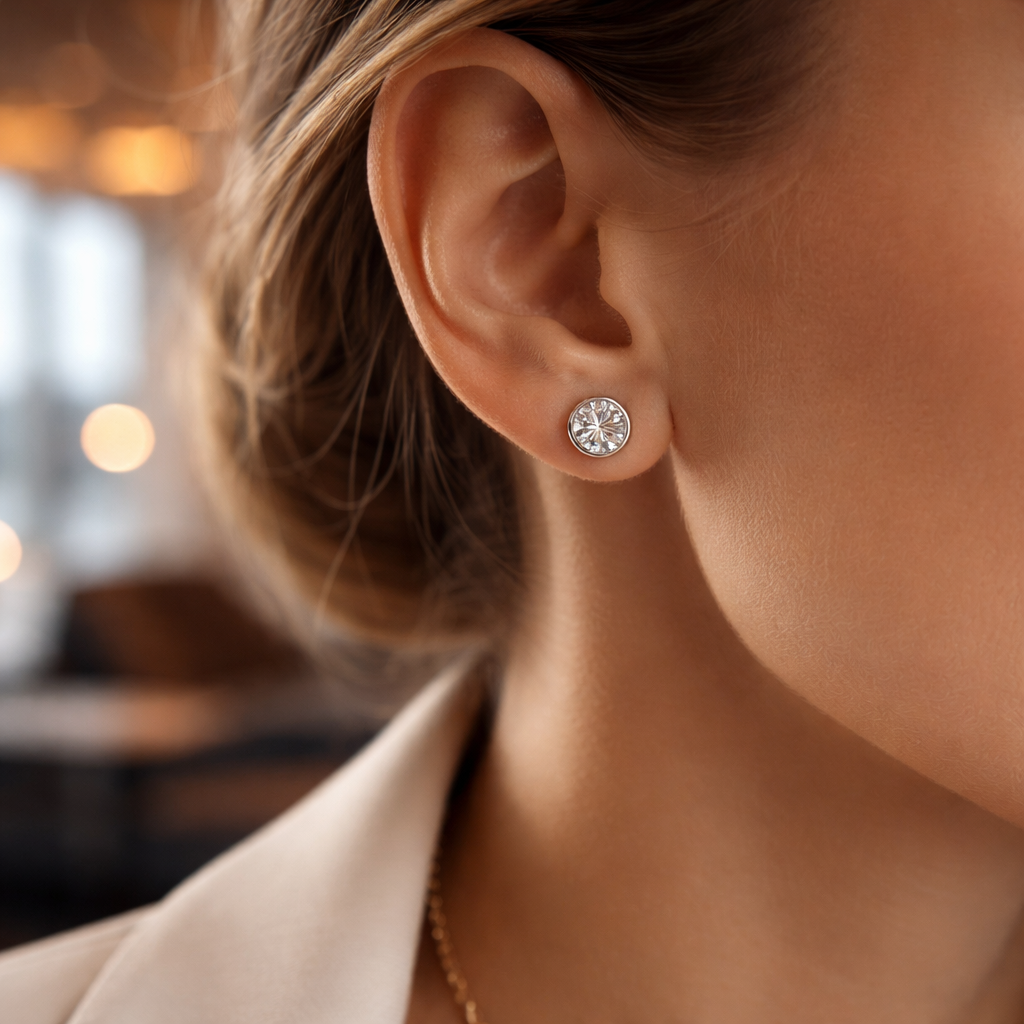
Prong settings give you maximum light entry, so the diamond veneer sparkles like a mini‑firework. They’re great for stud lovers who want every angle to catch cabin light. But prongs can snag on scarves or headphones, so a bezel setting—where a thin metal rim encircles the stone—offers extra security without sacrificing too much brilliance.
Halo settings wrap a central stone in a circle of micro‑CZs, creating a “paved” effect that looks massive for a modest carat total. If you travel light, a single‑halo stud gives the illusion of extra sparkle while staying compact. Pavé settings scatter a forest of tiny stones across a metal surface, perfect for those who want a glittery surface that won’t catch on a passport holder.
For the jet‑setter who hates the “wiggle” feeling, a bezel or fully‑encircling setting is your best friend. They keep the stones locked in place even when you toss your bag into the overhead bin. And don’t forget the back: screw‑backs are the go‑to for high‑value pieces, while friction (push‑pin) backs let you swap styles in a bathroom line.
Real‑world example: Imagine a Paris‑to‑Milan business brunch. You choose a pair of 0.6 ctw diamond veneer studs set in platinum with a sleek bezel and a flat screw back. The metal’s weight is barely noticeable, the bezel protects the stones from a sudden scarf tug, and the screw back stays firm through a three‑hour conference call. No adjustments, no irritation, just pure confidence.
Actionable Checklist Before You Pack
- Identify your metal preference based on weight, durability, and skin tone.
- Pick a setting that balances sparkle with security – bezel for travel‑heavy days, prong for maximum fire.
- Verify the back type: screw for “set‑and‑forget,” friction for quick swaps.
- Do a 24‑hour home test: wear, sit, lift luggage, and note any movement.
- If you notice any wobble, downgrade the size or switch to a more secure setting.
By treating the material and setting choices like a travel itinerary—planning ahead, testing the route, and packing the right gear—you’ll arrive at every destination feeling polished and protected.
Take a minute now to glance at your jewellery case. Does the metal feel light enough for a long haul? Is the setting secure enough for a hurried security check? If you can answer “yes” without hesitation, you’ve mastered Step 3. If not, swap out one piece, test it, and repeat until your earrings feel as effortless as a passport stamp.
Step 4: Caring for Diamond Veneer Earrings
You've picked the perfect pair, you’ve tested them on a long‑haul flight, and now you need to keep that sparkle alive. Caring for diamond veneer earrings is a lot like looking after a favorite travel companion – a little routine, a few smart moves, and you’ll be ready for the next runway.
Everyday cleaning routine
First thing’s first: a gentle soap‑and‑water wash does wonders. Fill a bowl with lukewarm water, add a drop of mild dish soap, and let your earrings soak for a minute. Swirl them gently with a soft brush (a baby‑hair brush works great), then rinse under tepid water and pat dry with a lint‑free cloth.
We follow this habit about once a month for pieces we wear daily, and whenever they start to look a shade duller after a busy travel week. The same advice is echoed by experts at Diamond Studs, who recommend the soap‑and‑water method as the safest DIY approach.
What to avoid
Harsh chemicals? Nope. Bleach, window cleaners, or even strong perfumes can eat away at the metal plating and dull the veneer. If you’re reaching for an ultrasonic cleaner, think twice – those vibrations can loosen prongs or backs, especially on delicate travel‑style settings.
Also, never take your earrings off over a sink or while you’re applying lotion, sunscreen, or hairspray. Those products leave a film that’s harder to scrub off later, and a slip into a drain could end your day before you even board the plane.
Travel‑friendly storage tips
When you’re not wearing them, treat your earrings like a passport: keep them in a dedicated, soft‑lined pouch inside your larger jewelry case. Separate them from pearls or opals – the hardness of the diamond veneer can scratch softer gems.
For a quick‑grab situation at the airport, a tiny zip‑lock bag works fine. Slip the bag into the same pocket you keep your boarding pass, so you won’t forget them at security.
Quick‑check checklist before you zip up
- Do a visual inspection for any loose stones or wobbling backs.
- Give the earrings a brief soap‑and‑water rinse if they look dull.
- Dry thoroughly with a lint‑free cloth – no moisture near the backs.
- Store in a soft pouch, away from hard metal pieces.
- When packing, place the pouch in a hard‑sided compartment of your carry‑on.
Table: Care at a glance
| Care Action | How Often | Key Tips |
|---|---|---|
| Soap‑and‑water cleaning | Monthly or when dull | Use mild dish soap, soft brush, dry fully |
| Back‑tightening check | Every wear | Gently tug; if it moves, re‑secure or replace |
| Travel storage | Every trip | Soft pouch, separate from pearls, keep dry |
So, what’s the bottom line? Treat your diamond veneer earrings with the same care you’d give a favorite handbag – a quick clean, a careful check, and a safe spot in your luggage. Follow these steps, and your earrings will stay as brilliant on the tarmac as they were the day you first slipped them on.
Step 5: Where to Buy Authentic Diamond Veneer Earrings
Alright, you’ve narrowed down the style, measured your lobes, and you’re ready to click “add to cart.” But before you hit that button, let’s talk about how to make sure the pair you’re buying is genuinely Diamond Veneer – not a cheap knock‑off that will lose its fire after a single flight.
Shop straight from the source
Our biggest tip is simple: buy from the brand’s official channels. The Diamond Veneer Travel Jewelry website carries the full range of collections, from lightweight sterling‑silver studs to 14K gold huggies, and each piece is stamped with the proprietary carbon‑diamond coating that gives the stones that unmistakable sparkle. Check out the newest arrivals here:
When you buy direct, you get two guarantees. First, the metal alloy and veneer process are exactly what our craftsmen promise – no surprise “metal‑only” pieces. Second, the return‑policy and warranty are crystal‑clear, so if a back loosens on a long‑haul flight you can send it back hassle‑free.
Authorized retailers and boutiques
If you prefer to try on earrings in person, look for stores that are listed as “Authorized Diamond Veneer Retailer” on our site. These partners have been vetted for inventory authenticity, staff training, and proper handling of the veneer coating. A quick phone call asking to see their certification badge can save you a weekend of disappointment.
Real‑world example: Sarah, a frequent business‑class traveler, stopped at an upscale boutique in Milan’s Via Montenapoleone. The sales associate pulled out a certificate that matched the serial number on the earring box – a tiny but powerful reassurance that the pieces were genuine Diamond Veneer. She walked out with a pair of 0.7 ctw studs, and they survived a week of jet lag, conference calls, and a night‑out without a single wobble.
Duty‑free and airport shops
Many high‑net travelers love the convenience of buying jewelry after they clear security. Duty‑free shops often stock a curated selection of Diamond Veneer pieces, but you’ll need to be a bit more vigilant. Ask the attendant for the product’s SKU and cross‑reference it on our website. If the SKU matches, you’re good; if not, politely decline.
Tip: Keep a photo of the earring’s back on your phone. When you’re at the duty‑free counter, compare the back type (screw‑back, friction‑back) and the engraving. Authentic pieces usually have a discreet “DV” logo on the back of the post.
Online marketplaces – proceed with caution
Sites like Amazon or eBay sometimes list “diamond veneer earrings,” but the risk of counterfeit is high. If you do consider a marketplace, follow these safeguards:
- Check the seller’s rating – look for a minimum of 4.5 stars and at least 200 reviews.
- Read the product description line‑by‑line for phrases like “real carbon‑diamond coating” and “8A CZ grade.”
- Demand photos of the actual item, especially the back and any certification tag.
- Never pay with a method that offers no buyer protection.
In our experience, a few savvy travelers have bought from reputable boutique‑run storefronts on Etsy that are officially linked to Diamond Veneer. Those sellers usually include a direct link to the official product page in the listing description – a good sign you’re dealing with a licensed partner.
How to verify authenticity once it’s in your hands
Even after you’ve purchased from a trusted source, a quick sanity‑check never hurts. Here’s a five‑minute routine:
- Inspect the metal for the faint “DV” imprint on the post.
- Hold the earring up to a bright light – the veneer should produce a firey rainbow “dispersion” rather than a flat, glassy look.
- Run a gentle thermal‑conductivity test with a basic diamond tester pen. Real Diamond Veneer CZ won’t register as a diamond, but it will show a distinct “no‑conduct” reading, differentiating it from genuine diamonds.
- Feel the weight. Authentic pieces are feather‑light – if they feel unexpectedly heavy, you might be holding a solid metal fake.
- Store the piece in the soft pouch it arrived in and compare the packaging to the official one on our site (logo placement, foil quality, etc.).
If anything feels off, reach out to our customer‑service team within 30 days – we’ll verify the serial number and arrange a replacement if needed.
Checklist before you checkout
- Confirm the URL is a diamondveneer.com sub‑page (look for https://).
- Verify the product page lists the exact metal, carat‑weight, and back type you need.
- Make sure a clear return policy and warranty are displayed.
- Note the shipping timeline – for last‑minute travel, choose expedited shipping and request a tracking number.
- Save the order confirmation and serial number in a travel‑ready note app.
By following these steps, you’ll avoid the dreaded “I thought it was real, but it fell apart on the tarmac” scenario. Your diamond veneer earrings will stay brilliant from the boarding gate to the after‑party, and you’ll feel confident that every sparkle is truly authentic.
Step 6: Video Demonstration – Applying and Removing Diamond Veneer Earrings
Ready to slip those sparkle‑packed diamond veneer earrings on without a hitch? Let’s walk through the exact moves you’ll use at the gate, the hotel vanity, or even a quick bathroom stop.
Prep your space (and your mind)
First, find a well‑lit spot – natural light or a bright bathroom mirror works best.
A little illumination lets you see the back type and makes sure you don’t miss a loose screw.
Grab a clean cotton pad or a soft cloth. You’ll want a dry surface so the metal doesn’t slip, especially if your hands are a tad sweaty after a flight.
Do you ever feel that tiny tug when you’re about to board? That’s usually a back that isn’t fully seated. A quick check now saves you from an awkward mid‑flight adjustment.
Applying the earrings
1. Hold the earring by the post, not the stone. The diamond veneer coating is delicate, and the stone can pop out if you apply pressure on it.
2. Align the post with the pierced hole. If you’re using a screw‑back, turn the tiny knob clockwise until you feel resistance – don’t over‑tighten, just a snug click.
3. For friction (push‑pin) backs, gently press the post through the hole until the back snaps into place. You should hear a soft “pop” that tells you it’s locked.
4. Give it a tiny wiggle. A well‑secured earring will stay still; any wobble means the back needs a little more turning.
5. Repeat on the other ear. It feels a bit like putting on a pair of glasses – you’ll get the rhythm after the first pair.
Removing the earrings
When it’s time to switch styles or head into a security line, follow these steps.
1. Locate the back type. Screw‑backs require a tiny screwdriver or the built‑in notch on the back itself. Turn counter‑clockwise until the post loosens.
2. For friction backs, press the small release tab (if there is one) or gently push the back inward with your thumbnail to free the post.
3. Hold the earring close to the skin and pull straight out – avoid twisting, which can strain the piercings.
4. Place the earring on your soft pouch immediately. This prevents the diamond veneer coating from picking up dust or oils while you’re on the go.
5. Give the back a quick visual once more before you store it. A tiny dent or missing “DV” imprint means it might need a replacement.
Quick checklist before you zip up your carry‑on
- Both backs are fully tightened (screw or friction).
- Earrings sit flush against the lobe – no gaps.
- Stone is secure; give each a gentle tap.
- Store in the original soft pouch, separate from metal keys or watches.
- Write the pair’s style and back type in your travel note app for next time.
That’s it. With these simple moves, your diamond veneer earrings stay dazzling from boarding to brunch, and you’ll never have to worry about a loose stud stealing the spotlight.
Conclusion
After wandering through styles, metals, backs, and care routines, you’ve seen how a pair of diamond veneer earrings can become your travel sidekick.
Think about that moment when you step off the plane, catch the cabin light, and your earrings catch every glance. That sparkle isn’t just decoration; it’s confidence you can carry from the runway to a rooftop bar.
What matters most? A secure back that won’t wobble, a lightweight metal that feels like a whisper, and a coating that stays brilliant even after a week in a hotel safe. If those boxes are checked, you’ve already nailed the basics.
So, what’s the next move? Grab a notebook, list the three styles that felt like a second skin, and run a quick 24‑hour test before you book your next flight. A tiny ruler, a soft pouch, and a moment of mindfulness are all you need.
When you’re ready to upgrade, remember that Diamond Veneer Travel Jewelry curates pieces built for jet‑setters – lightweight, secure, and always sparkle‑ready. A quick browse of the new arrivals can give you that passport‑stamp feeling before you even pack.
Finally, treat your earrings like any travel essential: clean them, store them safely, and check the backs before every take‑off. With that routine, the shine stays fresh, the fit stays comfy, and you’ll never have to wonder “Did I forget something?” again.
FAQ
What makes diamond veneer earrings different from regular cubic zirconia studs?
Diamond veneer earrings get a special carbon‑diamond coating that boosts the fire and brilliance of the CZ stones. The coating fills in tiny light gaps, so the stones sparkle more like real diamonds, especially under cabin lighting. Because the veneer is baked onto the metal, it stays smooth and doesn’t chip, meaning you can toss them in a carry‑on without worrying about dulling. In short, you get extra sparkle without extra weight.
How can I tell if the back of my diamond veneer earrings is secure enough for a long flight?
Look for a locking or screw‑back design; those stay put even when you shift in your seat. Give each earring a gentle tug – if you feel any wiggle, tighten it with the tiny knob or replace the back with a friction style that clicks firmly. A quick 10‑second check before you board saves you from awkward mid‑flight adjustments and keeps the sparkle exactly where you want it.
Are diamond veneer earrings safe for sensitive ears?
Absolutely. The metal we use – typically rhodium‑plated sterling silver or hypoallergenic platinum‑like alloy – is nickel‑free, so it won’t sting even after hours of wear. Pair that with a flat‑back or screw‑back, and you eliminate the pressure points that cause irritation. We’ve heard from many high‑net travelers who say the earrings stay comfortable from a red‑eye to a sunset cocktail without any redness.
How often should I clean my diamond veneer earrings while traveling?
A quick soap‑and‑water rinse after each long‑haul trip does the trick. Fill a tiny vial with warm water, add a drop of gentle dish soap, swirl the earrings for 30 seconds, then pat them dry with a lint‑free cloth. If you notice any dullness during a layover, give them a brief rinse then pop them back into your soft pouch. Consistency keeps the fire bright without extra hassle.
Can I wear diamond veneer earrings on a plane without worrying about security checks?
Yes, you can. The earrings are made of lightweight metal and the backs are low‑profile, so they don’t set off metal detectors. Just place them in a small zip‑lock bag or your jewellery pouch when you go through the scanner – the same way you’d protect a passport. Security officers are used to seeing fine jewelry, and the coating doesn’t interfere with the X‑ray.
What should I do if a stone in my diamond veneer earring gets loose while I’m abroad?
First, stop using the pair and keep the earring in its original pouch to avoid further movement. Bring it to a reputable jeweler who knows about CZ veneer – they can re‑secure the stone without damaging the coating. If you’re on a tight schedule, our customer‑service team can arrange a prepaid return label so you can ship it back for a quick fix, usually within a few business days.
How do I choose the right style of diamond veneer earrings for different travel occasions?
Think about the vibe of the trip. For a business conference, a classic 8‑mm bezel stud with a screw‑back gives polish and security. A weekend getaway calls for lightweight huggies or tiny hoops that pop on quickly with friction backs. If you’re heading to a gala after a flight, a larger halo‑style stud adds drama without extra weight. Write down the three scenarios, match them with metal, setting, and back type, then test each for a day before you pack.