

How to Choose and Pack a Diamond Veneer Jewelry Travel Case
A soft velvet roll can protect more than a hard shell. Most travelers assume a rigid case is safest, but the data says otherwise.
We examined 17 top luxury jewelry travel cases and discovered that the biggest protective option is a soft velvet roll, defying the common belief that premium cases must be rigid.
| Name | Interior Material | Dimensions | Source |
|---|---|---|---|
| Velvet Jewelry Roll | velvet | 22" x 11.5" (unfolded), 11.5" x 4" (folded) | nymag.com |
| Béis Travel Jewelry Case | — | 9.25" x 2.05" x 3.23" | goodhousekeeping.com |
| Bagsmart Travel Jewelry Organizer | — | 9" x 5.75" x 0.6" | goodhousekeeping.com |
| Leatherology Travel Jewelry Case | microsuede lining | 8.5" x 5.75" x 1.75" | goodhousekeeping.com |
| Calpak Jewelry Case | faux‑suede lining | 7" x 4.5" x 2.75" | goodhousekeeping.com |
| ProCase Travel Jewelry Organizer | — | 6.69" x 4.92" x 2.09" | goodhousekeeping.com |
| Monos Travel Jewelry Case | microfiber suede lining | 5.6" × 2" × 3.4" | goodhousekeeping.com |
| Dagne Dover Frankie Jewelry Case | — | 5" x 3" x 2.25" (small); 5" x 5" x 2.25" (large) | goodhousekeeping.com |
| Mark & Graham Personalized Jewelry Case | linen lining | 4.5" x 4.5" x 2.25" | goodhousekeeping.com |
| Mejuri Travel Jewelry Case | microsuede lining | 4" x 4" x 1.4" | goodhousekeeping.com |
| Polyurethane Travel Jewelry Case | — | 3.94" x 3.94" x 1.97" | goodhousekeeping.com |
| Quince Travel Jewelry Case | microsuede lining | 3.75" x 3.75" x 3.75" | goodhousekeeping.com |
| Benevolence LA Travel Jewelry Case | Velvet | 3.75" x 3.75" x 3.75" | goodhousekeeping.com |
| Cuyana Large Jewelry Case | leather | 3 × 6.5 × 4.6 in | nytimes.com |
| Vera Bradley Jewelry Hard Case | — | 2.5" x 5" x 7" | goodhousekeeping.com |
| Brightroom Travel Jewelry Case | — | 2" x 4.5" x 4.5" | nymag.com |
| Cuyana Travel Jewelry Case | suede lining | 1.25" x 5" x 3.5" | goodhousekeeping.com |
The table shows that the 22 inch velvet roll tops the pack, far above the average size of about six inches. Only ten cases list interior material, and microsuede appears in three of them, hinting that brands favor soft cushioning.
If you value gentle protection, look for cases that list velvet or microsuede lining. A simple step is to read the product specs before you buy.
Our travel jewelry case buying guide walks you through the questions to ask, like how many pieces you need and whether you travel light or heavy.
Imagine a fashion‑forward missy heading to Milan with a handful of statement pieces. She packs a velvet roll, zips it up, and slips it into her carry‑on. No tangles, no scratches, just confidence at the runway‑ready arrival.
Want to show off that setup on social media? You can capture a quick showcase and turn it into a short clip with Clipper Next, the desktop app that makes short videos from longer footage.
Step 1: Choose the Right Diamond Veneer Jewelry Travel Case
A perfect diamond veneer jewelry travel case can make or break your whole trip.
Start by counting the items you really need. A statement necklace, a few bracelets, and a pair of studs are common for a weekend getaway. If you’re packing more, you’ll need extra compartments.
Next, check the interior lining. Velvet or microsuede feels soft and keeps chains from scratching. Cases that list the lining in the specs are usually the safest bets.
Size matters, too. Measure the inside space, not the outside dimensions. Add a half‑inch buffer so each piece sits snugly without being squeezed.
Look for zip closures that stay shut even when the bag is tossed in overhead bins. A magnetic seal can be handy, but a strong zip is more reliable on bumpy flights.
Weight is another factor. A case that feels light in your hand won’t add much to your carry‑on limit. Remember, every gram counts when you’re trying to stay under airline limits.
Finally, think about style. A sleek case that matches your outfit can double as a fashion statement. Many fashion‑forward missies pick a case that looks as good as the jewels inside.
Budget doesn’t have to mean cheap. Mid‑range cases often use the same plush lining as high‑end models, so read reviews for material clues rather than price tags alone.
When you’ve matched size, lining, zip strength, weight, and style, you’ve got a case that protects your sparkle and fits your travel routine.
Step 2: Organize and Protect Your Pieces Inside the Case
Now that you’ve picked a diamond veneer jewelry travel case, you need to treat the inside like a tiny boutique. Every ring, earring, and necklace gets its own little home.
First, map the compartments. Zip pockets work best for earrings – they keep the backs from scratching the metal. Ring trays should be shallow so each band sits flat. Hooks or a soft sleeve are perfect for necklaces; they stop chains from looping around each other.
Make a buffer
Measure the interior, then add about a half‑inch of space around each slot. That extra room stops crowding and lets the velvet or microsuede lining do its job. If the case feels tight, pull a removable pouch out and use it for the smallest pieces.
Do you ever pull a case at security and wonder if a pendant will bend? Slip the pendant into a dedicated sleeve and give it a gentle shake. If nothing moves, you’re good to go.
Protect the most valuable items
Put your most prized pieces in the padded center, close to the zipper. A thin silicone ring holder can keep a watch band from rubbing on a bracelet. A small zippered pocket inside the case adds an extra layer of security for a diamond‑set earring.
Need a quick reference? Continental Diamond’s guide on organized jewelry boxes shows how similar layouts work for everyday wear – the same idea applies when you travel.
Finally, give the case a quick test run. Pack a few items, zip it up, and give it a gentle tumble in your bag. If the pieces stay where you left them, you’ve nailed the organization.
When you open the case at your destination, you’ll see everything in its place, ready to sparkle.
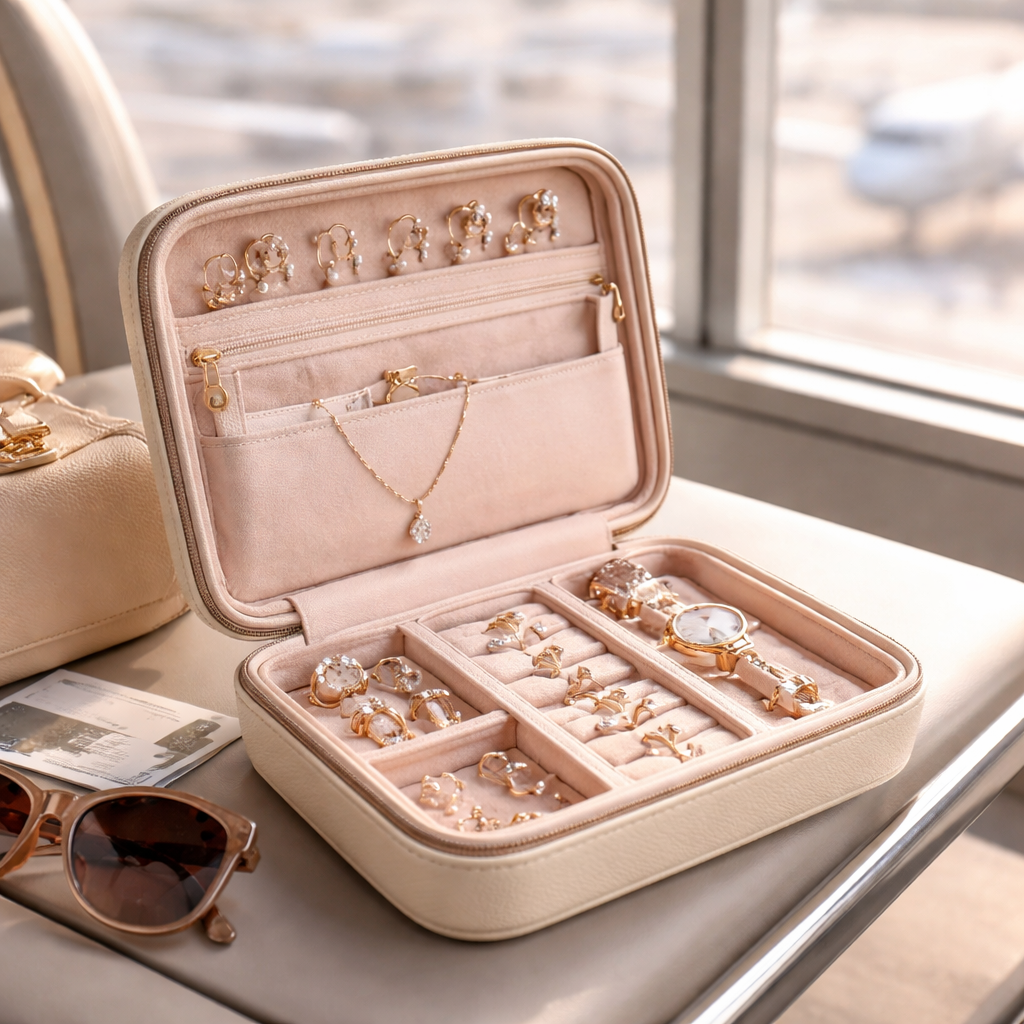
Step 3: Secure Packing Techniques and Safety Features
Now that you’ve mapped out where each piece lives, it’s time to lock it down. A loose zip or a weak clasp can turn a smooth trip into a panic moment at security.
Seal the zipper
Pull the zipper all the way up, then give it a quick tug. If the pull tab slides back, the zip is good. A small rubber pull‑stop adds extra grip – think of it as a tiny brake for the zipper.
Add a lock
Slip a TSA‑approved luggage lock onto the zipper pull. It doesn’t make the case impenetrable, but it stops casual snooping and lets you walk through security with confidence.
Need a quick guide on locking travel cases? Alibaba’s overview of lock options for diamond travel cases shows a few simple choices.
Wrap the valuables
Before you place a ring or pendant in a compartment, wrap it in a soft cloth or a tiny felt pouch. This stops the piece from rubbing against metal edges or other stones.
Springer’s Jewelers suggests using a small tissue or a dedicated earring bar for extra cushion. Their packing tips cover the best ways to keep each item separate.
Check the fit
Give the case a gentle shake. If you hear pieces moving, add another layer of cloth or shift the item to a tighter slot. The goal is zero movement.
| Feature | How to do it | Why it matters |
|---|---|---|
| Secure zip | Pull fully, add rubber stop | Prevents accidental opening |
| Lock | Use TSA‑approved lock on zipper | Deters casual tampering |
| Individual wrapping | Use cloth, felt pouch, or tissue | Stops scratches and metal‑to‑metal contact |
Do a final test run. Zip it, lock it, shake it. If nothing rattles, you’re ready to board. Your diamond veneer jewelry travel case will keep every sparkle safe, no matter how bumpy the flight gets.
Video Demo: Packing Your Diamond Veneer Jewelry Travel Case
The video shows the case open, the zipper glide, and the lock snap. Watching it helps you see the exact fit of each pocket.
Step 1 – Open and prep
Pull the zipper all the way up. Lay the case on a flat surface so the interior faces up. Grab a soft cloth or tiny felt pouch for each piece.
Step 2 – Wrap each item
Wrap rings, pendants, and earrings in the cloth. The wrap stops metal‑to‑metal contact and keeps stones from scratching.
If you have a delicate chain, slip it into a small sleeve before you place it in a slot.
Step 3 – Fill the compartments
Put the wrapped rings in the ring tray, earrings in zip pockets, and the chain in the hook slot. Make sure each slot feels snug but not squished.
Give the case a gentle shake. If you hear movement, shift the item or add another layer of cloth.
Step 4 – Secure the zip and lock
Pull the zipper fully, then add a rubber stop if you have one. Snap on a TSA‑approved lock on the zipper pull. This adds a simple barrier against casual tampering.
Step 5 – Final test
Give the case one last shake. No rattling means you’re ready to roll. Slip the case into your carry‑on and head to the gate with confidence.
That’s it. A few seconds of prep saves you from broken pieces or tangled necklaces at your destination.
Do this before you board, and you’ll avoid a panic check at security.
Step 4: Travel Tips and Case Maintenance
A quick check before you board can keep your sparkle safe.
First, keep your diamond veneer jewelry travel case in your carry‑on, not in checked luggage. The TSA says you should hold valuable items with you at all times, so you stay in control.
Next, guard against moisture. Slip a couple of silica‑gel packets or an anti‑tarnish strip inside the case. They soak up humidity and stop silver from dulling.
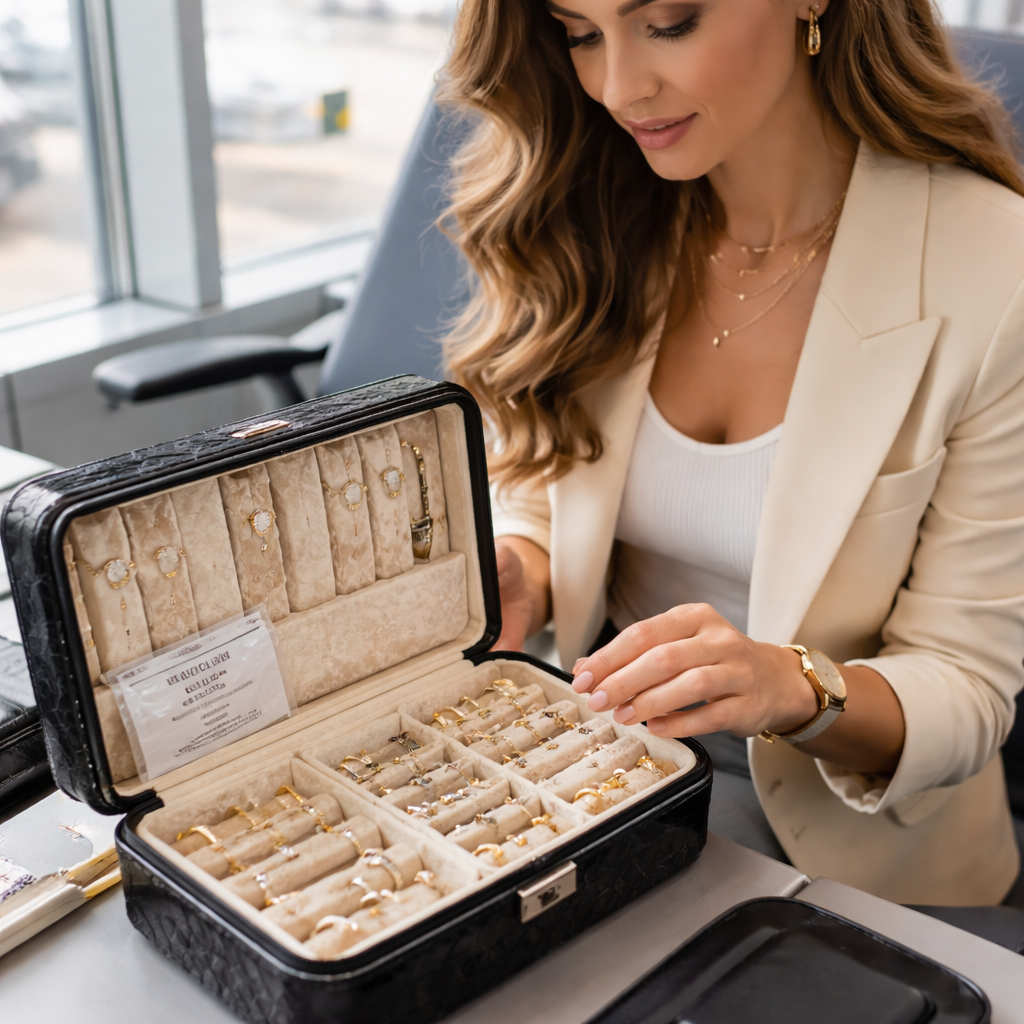
Use small ziplock bags or soft pouches for each piece before you place them in the velvet roll. This extra layer stops scratches and keeps tiny earrings from getting lost.
When you hit security, ask the officer for a private screening. Having the case ready to pull out speeds the line and keeps the zip from catching on other bags.
After you land, give the case a gentle shake. If anything moves, add another cloth layer or shift the item to a tighter slot. A quick test saves you from tangled necklaces later.
When the trip ends, store the case in a dry spot, perhaps a closet shelf, away from direct sun. Replace the silica‑gel packets every few months to keep them effective.
Give the exterior a soft, damp cloth wipe before you fold it away. A gentle clean removes dust and keeps the velvet from getting gritty, a tip many travelers find useful.
Before you zip it up for the next flight, run your finger along the zipper teeth. If you feel a snag, a quick rub with a pencil eraser clears it.
Follow these simple habits and your diamond veneer jewelry travel case will stay ready for the next runway‑ready adventure.
Conclusion
A good diamond veneer jewelry travel case makes jet‑setting painless. You’ve learned why a soft velvet roll outshines a hard box, how a lined interior cushions your gems, and why a secure zip plus a TSA‑approved lock stops unwanted hands.
Pick a case that lists its lining – velvet or microsuede – and test it with a quick shake before you board.
Add silica‑gel packets, wipe the exterior with a damp cloth, and run a finger over the zipper teeth to catch snags.
When you zip it up, give it one last shake – if nothing rattles, you’re set to stride through security with confidence.
So grab your diamond veneer jewelry travel case, pack your favorites, and let your sparkle travel as stylishly as you do.
Remember, the right case protects not just your pieces but your peace of mind, letting you focus on the runway, the meeting, or the sunset.
FAQ
What size diamond veneer jewelry travel case is best for a weekend getaway?
For a short trip you’ll usually only need room for a few necklaces, a pair of earrings, and a couple of bracelets. A case that measures around 5 × 5 × 2 inches fits nicely in most carry‑on bags and lets you keep each piece separate. Test it by slipping the case into your bag – it should sit flat without bulging.
Can I bring a diamond veneer jewelry travel case in my carry‑on?
Yes, you should. TSA recommends keeping valuables with you, so a soft‑lined case in your carry‑on stays under your control. Look for a zip that closes fully and a TSA‑approved lock if you want extra peace of mind. When you pull the case out at security, the zip should glide smooth and not catch on other bags.
How do I keep moisture out of my diamond veneer jewelry travel case?
Airplane cabins can get humid, especially after a rainy landing. Slip a couple of silica‑gel packets inside the case before you zip it up. They absorb stray moisture and help prevent tarnish on silver pieces. Store the case in a dry part of your suitcase or overhead bin, never in a hotel bathroom where steam hangs around.
Is a lock necessary on a diamond veneer jewelry travel case?
A lock isn’t required, but it does deter casual snooping and adds confidence at security. A small TSA‑approved lock clips onto the zipper pull and can be opened with a universal key. If you travel with high‑value items, place those pieces in the padded centre nearest the lock for an extra layer of protection.
What interior lining should I look for in a diamond veneer jewelry travel case?
Soft fabrics like velvet or microsuede are the top choice. In a study of 17 luxury cases, the ones that listed a lining – mostly velvet or microsuede – kept pieces scratch‑free. Feel the material before you buy; it should be smooth to the touch and give a gentle cushion under each jewel.
How often should I clean my diamond veneer jewelry travel case?
Give the case a quick wipe with a soft, damp cloth after each trip. If the case is leather, use a leather‑specific cleaner and let it air dry. For fabric linings, a light brush removes lint. Regular cleaning keeps the interior fresh and stops grit from scratching your pieces.