

Travel Jewelry Organizer for Beach Vacation Couples
Packing jewelry for two is the part most couples forget until the last minute , and then regret at the resort. One tangled necklace, one lost earring back, and a drawer full of sand is all it takes. This guide walks you through exactly how to organize, co-pack, and protect your jewelry so you both look sharp from the beach to the dinner table.
Step 1: Choose the Right Jewelry Organizer for Two
The goal here is simple: find a case that fits both your pieces without turning into a second carry-on. Start by taking stock of what you both plan to bring. Write it down. Two pairs of earrings, a bangle, a ring, a necklace. Now double that for your partner. That's the real inventory a good organizer has to handle.
Look for a case with separate, soft-lined compartments. Velvet or microfiber pockets stop metal-on-metal contact, which is the main cause of scratches in transit. A secure zip closure matters too , a loose snap will pop open in an overhead bin and scatter everything.
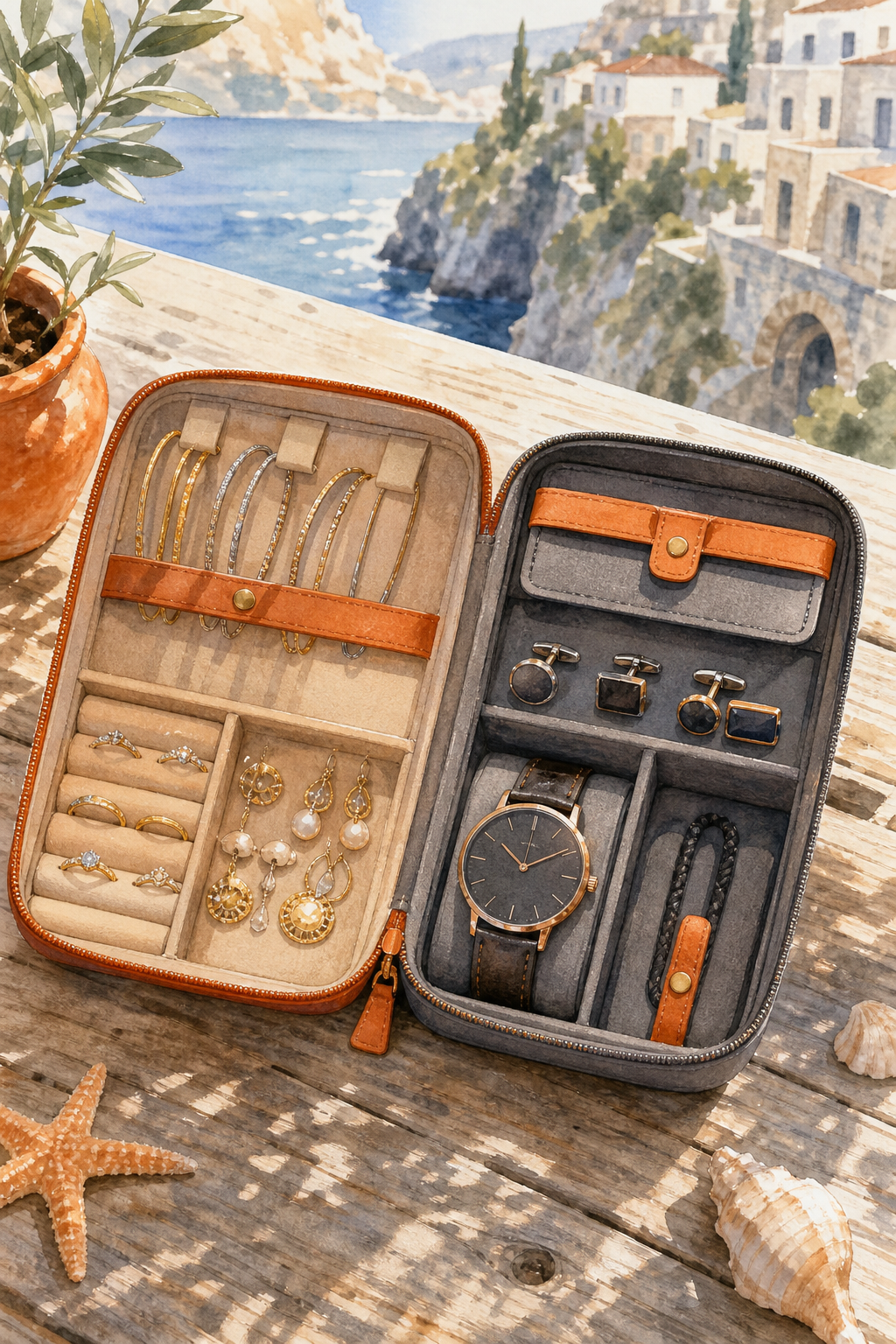
Hard-shell cases protect bangles and heavier cuffs from getting bent under luggage pressure. Soft roll-up cases, on the other hand, pack flat and work well when you're only bringing delicate pieces. A good rule of thumb: if you're traveling with any piece that cost over $100, go hard-shell.
One underrated feature is a built-in hook or hang loop. Many airport hotels have minimal counter space, and a case you can hang on a bathroom door hook keeps jewelry accessible without spreading it across a wet vanity.
At Diamond Veneer Travel Jewelry, the pieces are designed with this exact packing reality in mind. Lightweight cubic zirconia bangles and chandelier earrings give the look of fine jewelry at a fraction of the weight, which means they fit into smaller compartments without the anxiety of traveling with irreplaceable heirlooms.
Step 2: Pick Lightweight, Versatile Jewelry That Transitions Day to Night
The classic over-packing mistake is bringing too many statement pieces that only work for one outfit. Nine well-chosen pieces with different chain lengths, textures, and formats can create more combinations than most people pack in 20 items.
The principle is variety without volume. Mix chain weights , a fine link necklace layers differently than a box chain, so they work together instead of tangling. Mix metals or finishes. A matte bangle next to a polished cuff reads as intentional, not mismatched.
For beach vacation packing, think in three modes:
- Daytime pool or beach: A simple stud earring, a lightweight bangle, nothing that'll panic you if it gets wet or sandy.
- Casual exploring: Small hoops or short drops, one layered necklace combination, a thin ring.
- Evening dinner or cocktails: One chandelier earring pair does the heavy lifting. Keep the neck simple so the ears read.
A lightweight chandelier drop earring hits that evening mode perfectly. Look for styles that are light enough to wear for hours but catch the light the way a fine piece would. Pair them with a plain neckline and you're done , no necklace needed.
For daytime, an open cubic zirconia bangle is exactly the kind of piece that works at the pool, at lunch, and still looks right at a beach bar at sunset. It's light. It doesn't catch on towels. And because it's cubic zirconia rather than fine diamond, you're not stressed about salt water or sunscreen touching it.
For men or anyone who wants a clean wrist piece, a flat rectangular links bracelet packs flat and pulls a casual beach look together without effort.
The real test for any piece you're considering: can it do two out of three modes above without changing? If yes, it earns a spot in the organizer.
Step 3: Pack Smarter — Prevent Tangles, Scratches, and Loss
Tangles are not a packing inconvenience , they're a time thief. Fifteen minutes at the resort untangling a necklace while your partner waits is a real way a beach vacation starts badly. The fix is simple and takes two minutes before you zip the bag.
For necklaces, thread each chain through a plastic drinking straw, then clasp it closed. The straw holds the chain straight so it physically cannot loop around itself. Slip it into its own compartment or a small zip-lock bag. No tangle. This is one of those tricks that sounds too simple until you actually use it.
Earrings go into individual small fabric pouches or sit in their own compartment cups. If you're using a flat travel case without earring holders, push each post through a small piece of foam or a button. The back stays on and the pair stays together.
Rings sit in the deepest compartment of the case or in a small pill organizer if you're bringing multiples. Each slot holds one ring, so they can't scratch each other. This is especially useful when you're bringing a CZ stone ring and don't want the prongs to catch on a softer metal band.
CZ ranks 8 to 8.5 on the Mohs hardness scale , harder than most metals but softer than sapphire or diamond. That means it can scratch other CZ pieces if they rub together in transit, which makes individual compartment packing non-negotiable for stone pieces.
Before closing the case, do one fast check: lift the case and give it a gentle shake. Anything shifting around needs another layer of padding. A folded piece of microfiber cloth between two bangles is enough. The goal is zero movement inside.
Step 4: Co-Pack as a Couple — Shared Organizer vs. Twin Organizers
This is the decision most travel jewelry guides skip entirely, and it's actually worth thinking through before you're at the airport.
A shared organizer works when you're both traveling light on jewelry. One case, two sides. Fewer items to track through security. Easier to find everything in one place at the hotel. The drawback: if your partner pulls out their section at 7am and wakes you up hunting for cufflinks, that's a problem.
Twin organizers make more sense when one person has significantly more pieces than the other, or when your jewelry styles are completely different and compartments don't map well together. Each person controls their own case, packs at their own pace, and doesn't have to negotiate over space.
The loss-risk column is the one most couples don't think about. If a single shared case gets left in a resort safe or a taxi, both people lose everything. With twin organizers, one person's jewelry is always safe. For longer trips or anywhere you'll be moving between multiple hotels, twin organizers are the smarter call.
If you're coordinating your vacation looks as a couple, you might also find it useful to check out the best apps for couples in 2026, several of them include shared packing lists and itinerary tools that let you sync your outfits and accessory plans before you leave.
Step 5: Pack Jewelry Safely for Water Activities and Beach Days
This step gets skipped in almost every packing guide. The beach is where most jewelry damage actually happens , not in transit.
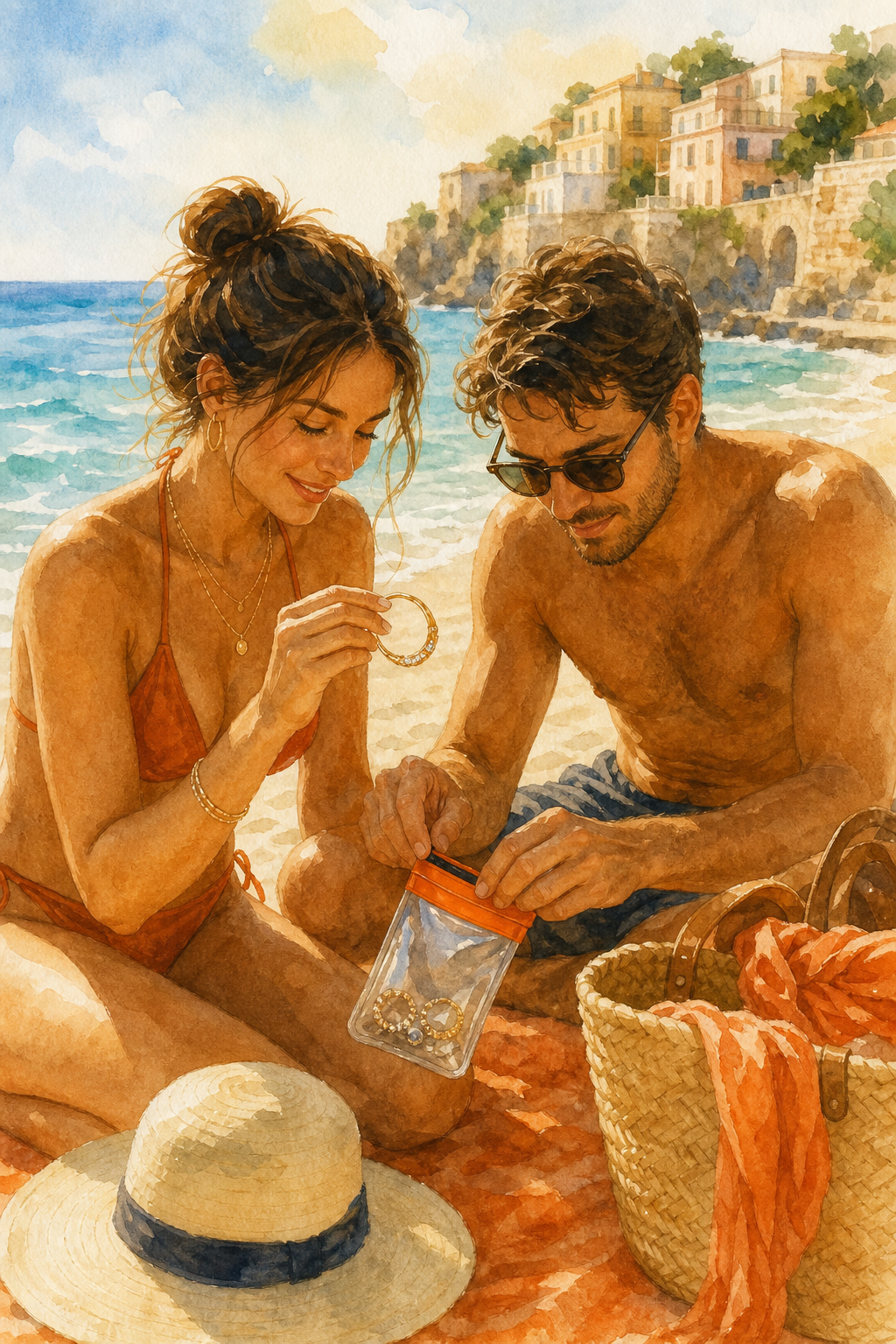
Saltwater corrodes metal faster than most people expect. Even one swim with sterling silver earrings can leave a dull film that takes real effort to remove. Chlorine from pools is equally aggressive. The rule is simple: remove jewelry before entering any water. Full stop.
But you need somewhere to put it. The best solution for beach days is a small waterproof zip pouch , the kind marketed for electronics but equally useful for jewelry. Drop your rings and earrings in before you head into the water. Zip it. Leave it in your beach bag under a towel. Nothing gets wet, sandy, or lost in the surf.
For couples who want to wear something in the water , maybe a wedding band or a meaningful piece , silicone rings are the answer. They don't corrode, they don't attract sand to a setting, and they won't slip off in cold water the way a metal band can. Pack the real ring safely and swap in a silicone band for swim time.
The short version of good post-swim care is this: as soon as you're out of the water, rinse any piece that got exposed to salt or chlorine with fresh water, pat dry with a microfiber cloth, and put it back in its pouch before it touches anything sandy.
Sand is the other enemy. A single grain of sand caught under a prong can scratch a stone over time. Shake out your beach bag before putting your jewelry case back in it. Better yet, keep the jewelry case in a separate inner pocket of the bag so it never touches sand directly.
Step 6: Clean and Maintain Jewelry On the Go
A quick clean at the hotel takes two minutes and makes a real difference in how your pieces look for the rest of the trip. Sunscreen, salt air, and body oils all build up on metal and stone surfaces. After a beach day, even a piece that looks fine can have a dull film sitting on it.
Pack a small microfiber cloth , the kind used for glasses or phone screens works perfectly. One quick wipe after a day out removes most of the surface residue. For anything stickier, dampen the cloth with a small amount of water and a single drop of mild soap. Dab, don't rub hard. Dry immediately.
Avoid using hotel soap bars directly on jewelry. Many contain added moisturizers or fragrances that leave a residue. Stick to plain hand soap or dish soap if available.
Anti-tarnish strips are worth packing for longer trips. Drop one into each zip-lock pouch or compartment. They absorb the sulfur compounds in the air that turn silver gray overnight. They're thin, cheap, and take up almost no space. For a week-long beach vacation, one strip per pouch is enough.
For cubic zirconia specifically, the cleaning protocol matters because CZ can develop a cloudy look when oils from skin accumulate on the surface. A microfiber wipe after wearing and before storing keeps the stones looking sharp. Avoid abrasive cloths , even a slightly rough fabric can create micro-scratches on the facets that dull the sparkle over time.
The Bold Resin Hinged Magnetic Gold Cuff Bangle ($49.99) from Zirconmania Fashion Jewelry is a good example of a piece that cleans easily on the go , the smooth resin surface wipes clean in seconds, and the magnetic closure means no fiddling with a clasp after a long day at the beach.
Step 7: Integrate Your Jewelry Organizer Into Your Packing System
A jewelry organizer that just floats loose in your suitcase gets jostled, compressed, and ends up at the bottom under your shoes. The last step is fitting it deliberately into your overall packing layout so it's protected and accessible.
The best placement for a jewelry case is the top layer of your carry-on or in a dedicated interior zip pocket. Carry-on luggage is always the right choice for jewelry , checked bags get thrown, stacked, and handled roughly in a way that can pop open even a well-latched case. TSA allows jewelry in carry-ons, and a soft zip pouch or clear bag around the case helps agents see it quickly without you needing to unpack.
If you're using packing cubes for clothes, your jewelry case slots in alongside them rather than inside them. Think of it as its own cube , same logic, different purpose. Keep it in the same spot every time you repack so you're never hunting for it at 6am in a dark hotel room.
For couples using twin organizers, a simple color-code system helps. Different case colors, or a small colored luggage tag on each case, means you're not opening the wrong one in dim light. It sounds minor until you're running late for a dinner reservation.
That principle applies directly to jewelry. The case goes in last before you zip, so it comes out first when you arrive. No digging through folded clothes to find it.
If you're traveling on a flight, keep your jewelry case in your personal item (the bag under the seat) rather than the overhead bin. Overhead bins get full and bags get shifted around. Under the seat, your case stays exactly where you put it.
Pairs of pieces that you'll wear together , say, a bangle and matching earrings , should live in adjacent compartments in the case. When you're getting ready at the hotel, you want to reach in once and have the complete look ready, not puzzle through separate pouches. Plan the case layout around actual outfits, not just jewelry types.
Diamond Veneer Travel Jewelry's pieces are built for exactly this kind of travel-first mindset. Lightweight, durable, and styled to work across multiple outfit contexts , they reduce the number of pieces you need to bring without reducing the number of looks you can pull off. Fewer pieces in the organizer means less packing stress for both of you. To explore more ideas specifically for cruise-style itineraries that involve multiple port stops and formal evenings, a dedicated guide for cruise couples covers how to scale this system for longer trips.
FAQ
What is the best type of jewelry organizer for a beach vacation couple?
A dual-section, soft-lined hard-shell case is the best option for most couples. It protects pieces from compression in luggage, keeps both people's jewelry separated, and is light enough for a carry-on. Look for a case with velvet or microfiber compartments, a secure zip, and enough room for your two largest pieces , usually a bangle and a necklace.
Should couples share one jewelry organizer or each bring their own?
It depends on how much jewelry you're each bringing and your travel style. A shared organizer saves space and keeps everything in one place for trips where you're each packing three to five pieces. Twin organizers make more sense when your collections differ in size or style, or when you want independent access without waking each other up. For trips longer than five nights, twin organizers reduce the risk of losing everything at once.
How do you keep jewelry from getting damaged at the beach?
Remove all jewelry before swimming in salt water or a pool , both corrode metal. Store pieces in a small waterproof zip pouch while you swim. After any salt or chlorine exposure, rinse the piece with fresh water immediately and dry with a microfiber cloth. Keep your jewelry case in a separate inner pocket of your beach bag so it never sits directly on sand.
Is cubic zirconia jewelry good for beach vacations?
Yes. Cubic zirconia ranks 8 to 8.5 on the Mohs hardness scale, making it durable enough for daily vacation wear. It gives the sparkle of fine diamonds without the anxiety of traveling with irreplaceable stones. Pieces from Diamond Veneer Travel Jewelry , like the Zirconite chandelier earrings and open bangles , are designed specifically for active travel, keeping the weight down and the look polished.
How do you prevent necklaces from tangling in a travel jewelry case?
Thread each necklace chain through a plastic drinking straw before clasping it closed. The straw keeps the chain straight and physically prevents it from looping around itself. Place each straw-threaded necklace in its own compartment or zip-lock bag inside the case. This takes under a minute per necklace and completely eliminates the tangling problem that ruins most jewelry packing attempts.
What jewelry should couples pack for a beach vacation?
Focus on versatile pieces that shift from daytime to evening without swapping the whole look. A lightweight bangle or two, one or two earring pairs (a small stud for daytime, a chandelier drop for evenings), and one simple ring per person is enough for a week. Pick pieces in mixed textures and chain weights so they layer well. Avoid bringing anything irreplaceable , save those for home.
Conclusion
The couples who enjoy their beach vacation the most are the ones who stopped worrying about their jewelry on day one. A well-organized case, a few versatile pieces from Diamond Veneer Travel Jewelry, and the packing habits in this guide get you there. Start by inventorying what you both actually plan to wear, then pick a case that fits it , the rest follows naturally. Browse the Diamond Veneer Travel Jewelry collection to find lightweight, travel-ready pieces that look sharp from the beach to the dinner table without adding stress to your bag.