

Travel Jewelry Organizer with RFID for Honeymoon
Every travel jewelry organizer marketed for honeymoons has one thing in common right now: none of them include RFID blocking. A review of 12 popular styles found zero with RFID protection built in, which means couples bringing fine cubic zirconia pieces or sterling silver on a trip are more exposed than they think. This guide walks you through exactly how to fix that gap and keep your jewelry safe from check-in to cocktail hour.
Step 1: Understand What RFID Protection Actually Does for Your Jewelry
RFID stands for Radio Frequency Identification. It's the same wireless technology used in contactless credit cards, hotel key cards, and some modern passports. A thief with a cheap RFID reader can skim card data from a few feet away without touching your bag.
Your jewelry itself doesn't carry an RFID chip. But your credit card, passport, and hotel room key do. And on a honeymoon, those items travel with your jewelry every single day. A jewelry organizer that doubles as an RFID-blocking pouch protects the whole travel kit, not just the earrings.
Passive RFID tags can be read from a distance without the cardholder's knowledge, which is exactly why RFID-blocking fabric became standard in passport wallets and travel pouches. The surprising gap is that this shielding hasn't crossed over into jewelry organizers yet, even though those organizers sit in the same bag as your cards.
So what does RFID-blocking fabric actually do? It uses a metallic weave, usually carbon fiber or aluminum, that disrupts the radio frequency signal before it reaches the chip. You won't feel it. It won't affect your jewelry. But it stops a scanner from reading your card data through the bag wall.
The fix is straightforward. Buy a jewelry organizer you love for its compartments and build quality, then slip your cards and hotel key into a separate FTC-recommended RFID-blocking sleeve inside the same case. That way you get the organization you want and the protection your trip needs. By the end of this step, you should know exactly why RFID matters for your travel setup and what product pairing solves it.
Step 2: Choose the Right Organizer Style for Your Honeymoon Itinerary
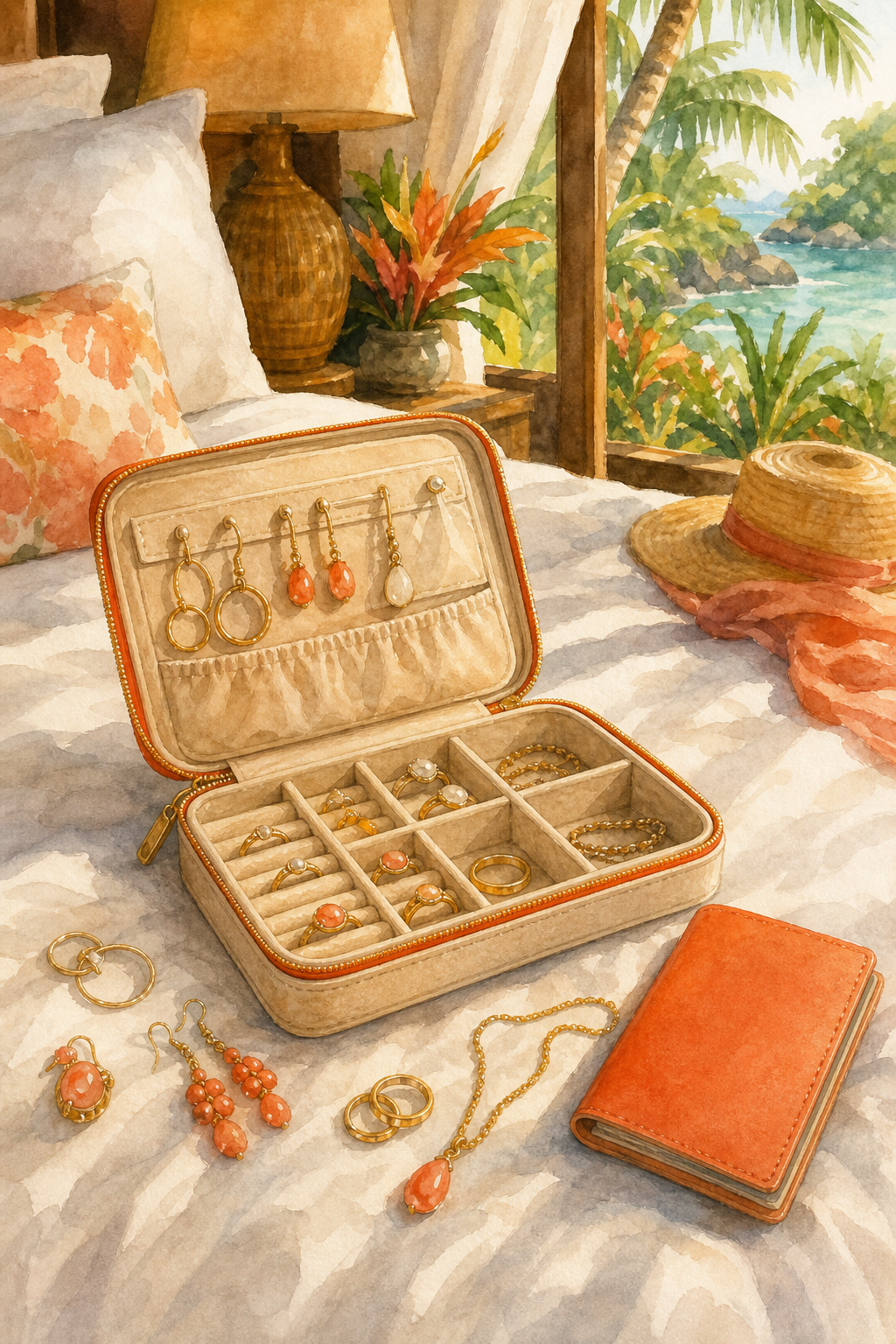
Your itinerary shapes everything about which organizer you pick. A four-night beach stay calls for something different than a two-week European city trip. Here's how to read your trip and match it to the right style.
Roll Organizers: Best for Short or Beach Trips
Roll-style organizers pack flat, unroll to reveal earring holders, a ring roll, and a small zip pocket. They're ideal if you're only bringing three or four pieces. One reviewer tested a mini travel jewelry organizer on a short trip and found it handled two to three necklaces, bracelets on top, and an earring side with a built-in divider. Compact. Tight. Nothing tangles.
Case Organizers: Best for Longer Trips
Hard or semi-hard case organizers give you more zones. The Iconic Jewelry Train Case style, for example, opens to a snap-off tray for rings or earrings, a big center space, a clear pouch, and two additional pouches. That's meaningful capacity for a two-week honeymoon where you need pieces for dinner, the beach, and a city tour.
Hanging Organizers: Best for Cruises or Resort Stays
Hanging organizers hook to a door or mirror and let you see everything at once. The Travel Jewelry Organizer in Parisian Paisley style offers elastic slip sides, a padded ring piece, two pouches on each side, a large central pouch, and space behind — making it a practical choice for cruising, where small cabins leave little counter space.
For a full breakdown of case sizing and interior dimensions, the Diamond Veneer Travel Jewelry case buying guide covers how to measure usable interior space and match it to your actual pieces, including the half-inch buffer trick that stops you from stuffing rings in like sardines.
One thing to note: material data is sparse across the category. Only a quarter of reviewed organizers listed their fabric, with options ranging from soft suede-like velvet to faux leather. If feel and durability matter to you, check the product listing carefully before buying. Don't assume premium pricing means premium material information.
Step 3: Pack Your Diamond Veneer Jewelry Pieces Safely and Smartly
Packing jewelry well is mostly about separation. Two pieces touching each other in a bag will scratch. A chain left loose will knot. A ring rolling around a hard case will pick up micro-scratches on the setting. Here's how to prevent all three.
Rings
Lay rings flat in a dedicated ring roll or a snapper pocket with individual slots. Diamond Veneer's 1CT Round halo engagement ring has a detailed setting with pave stones that can catch on fabric if the ring is loose. A ring roll holds it in place and keeps the prongs from snagging.
For thicker statement rings like the 10CT Asscher three-stone ring, use a padded tray section rather than a snapper. The width needs more room than a thin slot offers.
Necklaces
The single biggest mistake travelers make is tossing necklaces loose into a pouch together. They tangle in minutes. Instead, hook each necklace onto an individual snap or hang slot. If your organizer uses a flat necklace tray with individual clips, that's even better. For delicate pendant pieces, wrap the chain once around a small piece of velvet or a jewelry cloth before snapping it in. That keeps the chain from sliding and the pendant from swinging into the clasp.
Earrings
Post earrings do best in velvet cups or an earring card, where the post presses through and the backing snaps on the other side. Drop earrings need a snap-off tray where each pair sits in its own compartment. Mixing post earrings with drop earrings in the same pouch risks bending the hooks.
Before you zip the case, give it a quick shake. If anything slides or rattles, that piece needs a tighter slot or a small extra layer of fabric between it and the wall. A piece that moves in the case will arrive scratched.
After you've cared for your pieces during the trip, keeping them clean matters just as much as how you stored them. A soft cloth wipe-down and a simple soap soak can restore shine between wears without damaging stone or metal.
Step 4: Organize by Outfit and Occasion — A Honeymoon-Ready System
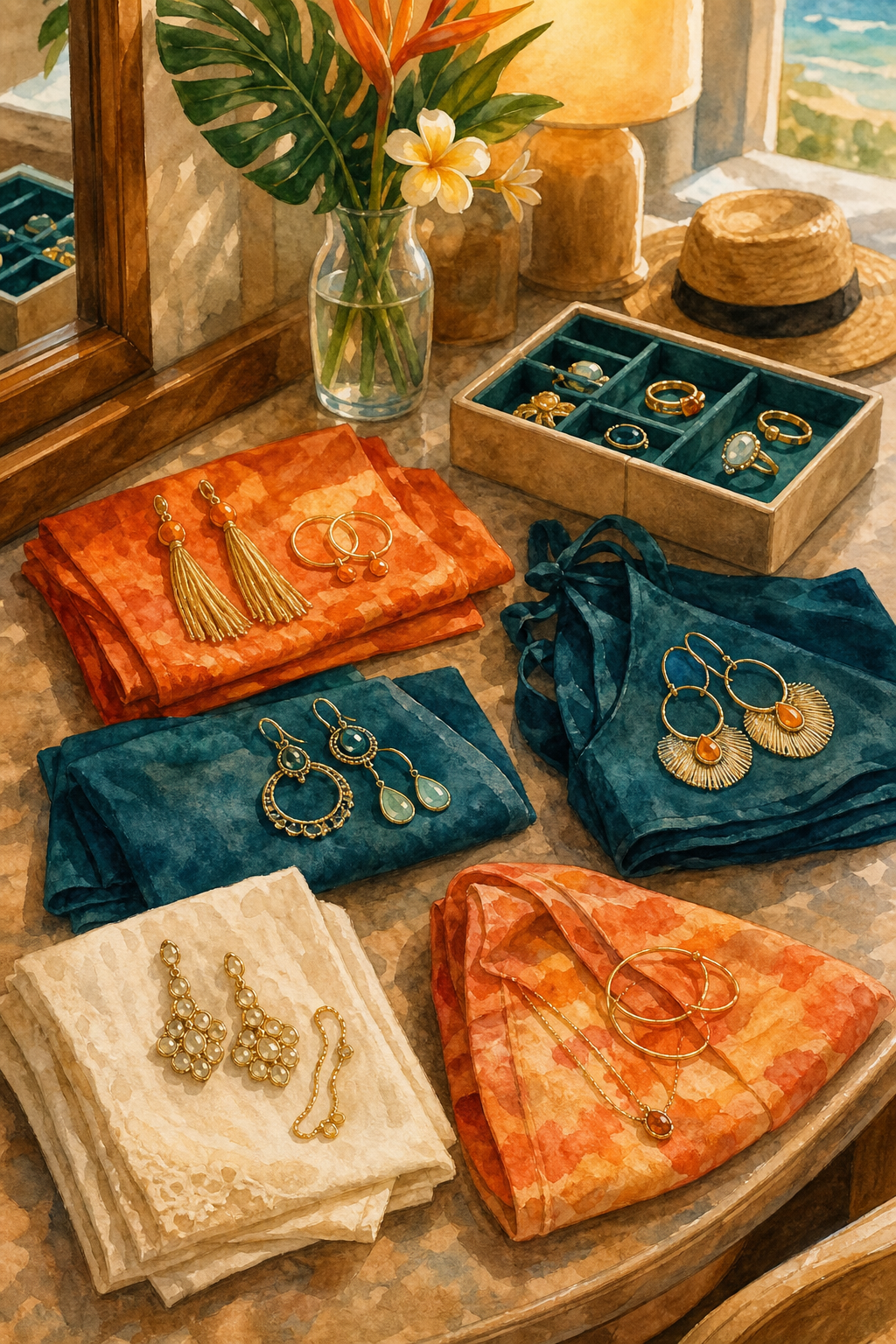
Random packing wastes time every morning. Organizing by outfit means you open the case, go to the right zone, and you're dressed in under two minutes. Here's the system.
Map Your Outfits First
Before you pack, write down each outfit and what jewelry it needs. Not every piece. Just the specific one you'd actually wear with it. A beach day calls for simple studs, not drop earrings. A dinner reservation calls for something with presence, like the 10CT TW Cubic Zirconia drop earrings from Diamond Veneer, which have genuine visual weight for low-light dining.
Group by Occasion, Not by Type
Most organizers sort by jewelry type: rings in one spot, earrings in another. That works for storage. But for a honeymoon, group by occasion instead. Use small zip-lock bags or individual pouches inside the organizer compartments, each labeled for a day or event. Dinner set goes in one pouch. Beach set in another. City tour set in a third. Then each morning you grab the pouch, not individual pieces.
Keep One "Daily Default" Set Accessible
Put your everyday pieces, the ones you wear regardless of the plan, in the most accessible spot in the organizer. That's usually the front zip pocket or the top snap tray. For many travelers, that's a pair of small studs and a simple ring. Everything else stays organized underneath, untouched until you need it.
This system also helps at security. You're not digging for an earring while the line moves. The daily default is on top, the rest stays zipped and flat in your carry-on. Clean and fast.
Step 5: Keep Your Jewelry Secure at the Hotel and On the Go
Getting organized is only half the job. Keeping pieces where you left them, both at the hotel and while you're out, takes a few deliberate habits.
At the Hotel
Most hotel rooms have a safe. Use it, but not for the whole organizer. The safe is for your most valuable pieces when you're not wearing them, typically your engagement ring if you're not comfortable wearing it to the pool, and any high-value items. The organizer itself can stay in the suitcase with the zipper locked.
Keeping valuables in hotel safes is one of the most practical steps travelers overlook. The same logic applies to jewelry. One photo of each piece before you travel also helps if you ever need to file an insurance claim.
A good two-step approach: lock the organizer case itself and, for the highest-value pieces, use a small zippered inner pouch with a snap-lock closure. That's two barriers between your jewelry and anyone who opens the wrong bag.
On the Go
Don't carry every piece you brought. Wear the day's set, leave the rest locked up. If your organizer has a compact form factor around 5 by 5 by 2 inches, it sits flat in a tote or carry-on without bulk. Anything larger draws attention and increases the risk of the whole case going missing.
For your RFID layer, keep your passport, hotel key, and cards in a dedicated RFID-blocking sleeve inside the same bag as your jewelry case. That way everything travels together and the protection travels with it. You don't need a separate bag for that. Just a sleeve inside the case's largest zip pocket handles the job.
One last thing: label the inside of your organizer with your name and email. If it gets left at a restaurant or spa, there's a path back to you. A small card tucked in the lid pocket takes thirty seconds and has saved more than a few trips from ending on a low note.
FAQ
Do travel jewelry organizers come with RFID protection built in?
No, not currently. A review of 12 travel jewelry organizers found that none of them include RFID blocking, including popular names known for travel accessories. To get RFID protection, pair your organizer with a separate RFID-blocking sleeve for your cards and passport stored in the same case.
What organizer style works best for a two-week honeymoon?
A semi-hard train case style works well for longer trips. It gives you snap-off trays, a clear pouch for small items, and extra side pouches. You get enough zones to keep beach jewelry, dinner pieces, and daily wear all separated without everything living in one pouch.
Can I bring a travel jewelry organizer in a carry-on bag?
Yes. Most travel jewelry organizers are carry-on friendly, especially compact roll and pouch styles around 5 by 5 by 2 inches. Keep the organizer in your carry-on rather than checked luggage so your pieces stay with you. TSA generally doesn't require you to remove a jewelry case at security, though metal-heavy pieces may show on the scanner.
How do I stop necklaces from tangling in a travel organizer?
Hook each necklace onto its own individual snap or clip slot. Don't stack two necklaces on the same hook. For extra protection on delicate chains, wrap the chain once around a small velvet cloth before clipping it in. That limits movement inside the compartment and keeps the pendant from swinging into the clasp.
Is Diamond Veneer jewelry durable enough for honeymoon travel?
Diamond Veneer cubic zirconia pieces in sterling silver are travel-usable because they're lighter than fine diamond jewelry, more replaceable if lost, and visually identical under most lighting. They pack well in any soft or hard organizer and don't require the level of insurance coverage that real diamond pieces do, which is a real advantage on an international trip.
What's the easiest way to organize jewelry for a honeymoon by outfit?
Group pieces by occasion rather than type. Use small zip pouches inside the organizer, one per event or outfit, labeled by day or activity. Keep your everyday default pieces in the most accessible outer pocket. This saves real time each morning and keeps you from digging through the whole case to find one earring.
Conclusion
The RFID gap in jewelry organizers is real and easy to close. Pick a case style that matches your trip length, add an RFID-blocking sleeve for your cards and hotel key, and pack your Diamond Veneer pieces by occasion rather than by type. Start with your outfit list before you pack, and everything else clicks into place. If you haven't mapped your pieces to your itinerary yet, that's the move to make today.